







Description
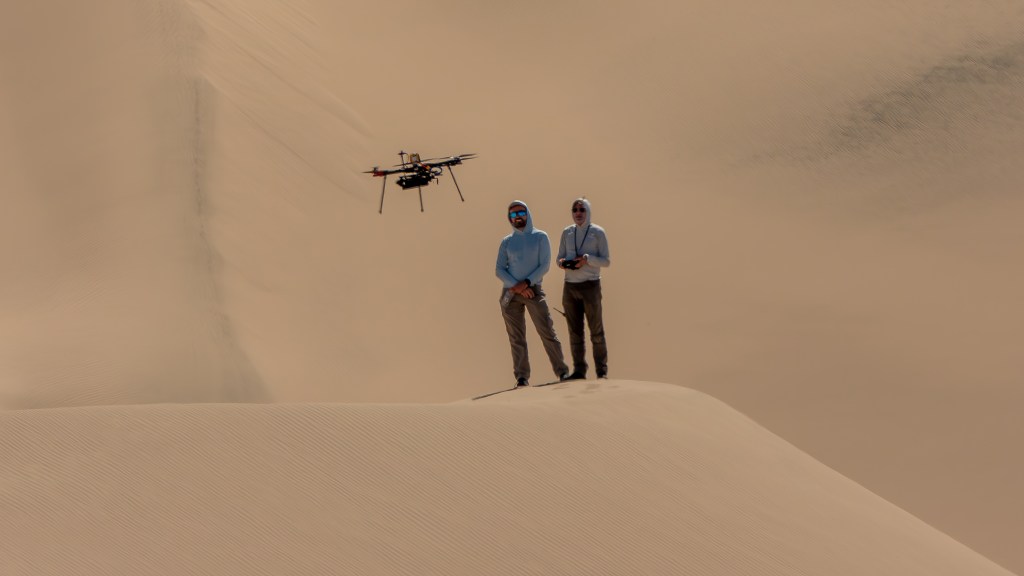
To lay the groundwork for NASA's VERITAS mission (Venus Emissivity, Radio science, InSAR, Topography, And Spectroscopy), members of the mission's international science team traveled in August 2023 to Iceland, using the island as a stand-in, or analog, for Venus. Using several techniques, the team studied a variety of rocky terrain, including this lava field featuring new rock from a recent flow, to better understand what the VERITAS mission will "see" when it studies Venus' surface.
The VERITAS orbiter will peer through the planet's thick atmosphere with a suite of powerful science instruments to create global maps of the planet's surface – including topography, radar images, rock type, and gravity measurements – as well as detect surface changes. VERITAS is designed to understand what processes are currently active, search for evidence of past and current interior water, and understand the geologic evolution of the planet, illuminating how rocky planets throughout the galaxy evolve.
NASA selected the VERITAS and Deep Atmosphere Venus Investigation of Noble gases, Chemistry, and Imaging (DAVINCI) missions in 2021 under the Discovery Program as the agency's next missions to Venus. The Discovery Program is managed by the Planetary Missions Program Office at NASA's Marshall Space Flight Center in Huntsville, Alabama, for the Planetary Science Division of NASA's Science Mission Directorate in Washington.
For more about the VERITAS mission: https://solarsystem.nasa.gov/missions/veritas/overview/