Freeze Frames
Test your knowledge of the many varieties of frozen water and how these icy realms are
connected to climate change.
Congratulations!
You're !
You scored
out of
10.
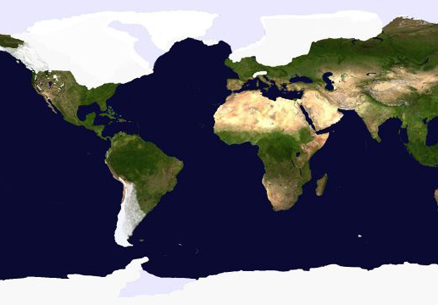
Ten to 11 percent of the land is covered by ice today. The vast majority of
Earth's ice is found in Antarctica. It has an ice sheet more than 1.8 kilometers
(1.1 miles) thick on average, and can be more than 4 kilometers (2.5 miles)
thick in some places.
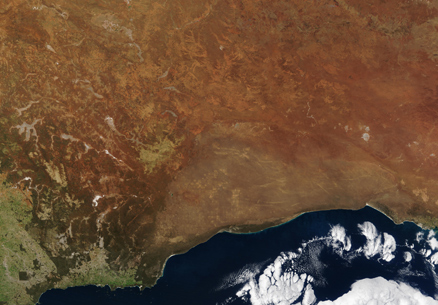
There are no glaciers on mainland Australia today. However, during the last
glacial ice age, which ended 10,000 years ago, Mount Kosciuszko had a small
glacier and Tasmania had many glaciers. The South Island of New Zealand still
has thousands of glaciers.
The salty ocean contains more than 97 percent of all the water on Earth, which
means that fresh water is relatively scarce. About 70 percent of Earth's fresh
water is held in ice caps and glaciers. The rest of the planet's fresh water
resides in lakes (27 percent), swamps (3 percent) and rivers (less than 1
percent).
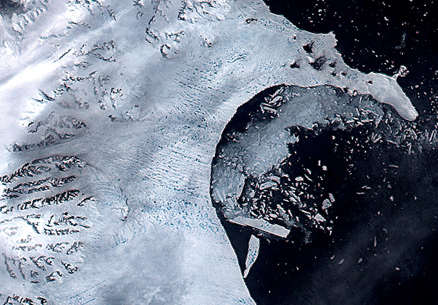
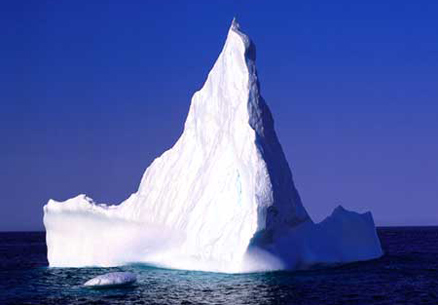
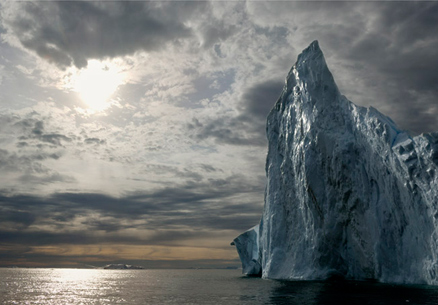
Antarctica is a continental land mass surrounded by ice shelves that flow into
the ocean. Although icebergs around the world come in different shapes and
sizes, tabular icebergs (large flat-topped ice masses) calve off Antarctic ice
shelves in the Southern Ocean and are carried away by winds and currents. Many
of these are massive in size, up to 80 kilometers (50 miles) long.
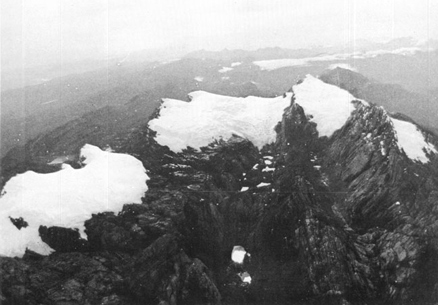
Because glaciers are made of ice, they are normally associated with cold regions
such as Iceland, Canada and Alaska, but tropical glaciers also exist in Earth's
equatorial mountain ranges where the elevation is high enough and cold enough
for ice accumulation. Tropical glaciers can be found at the tops of mountains in
Colombia, Venezuela, Ecuador, Peru, Bolivia, East Africa and Indonesia.
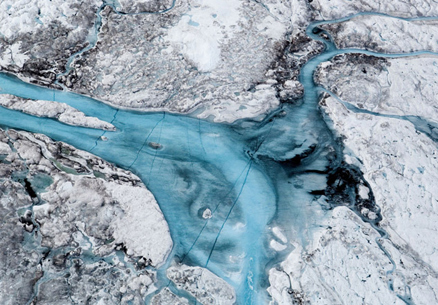
Ice sheets are large glaciers that cover much of Greenland and Antarctica.
Mountain glaciers, smaller than ice sheets, flow from high alpine areas. Even
though Antarctica holds the majority of Earth's ice, Greenland, which contains
only 10 percent, loses the most ice every year. If all 2.9 million cubic
kilometers (0.7 million cubic miles) of Greenland's ice sheet were to melt, it
would cause sea level to rise by 7.2 meters (23.6 feet).
California, Colorado, Montana, Oregon, Utah, Wyoming and Washington State all
have glaciers. Emmons Glacier in Washington State is the largest, with an area
of 11 square kilometers (4.2 square miles). Glacier National Park in Montana has
26 named glaciers, which are all shrinking in size. Alaska, not part of the
lower 48, has tens of thousands of glaciers.
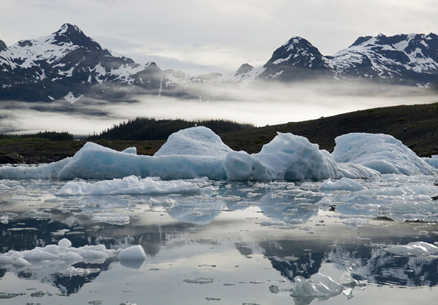
No, sea level does not rise when sea ice melts. Icebergs and frozen seawater do
melt with warming temperatures but do not cause sea level to rise because they
are already in the water. The volume of water they displace as ice is the same
as the volume of water they add to the ocean when they melt.
Roughly 12.4 trillion tons of land-based ice has been lost over the most recent
24 years of data, worldwide (1994-2017). Including all forms of ice everywhere,
Earth has lost 28 trillion tons of ice during that same period. If all of the
world's land-based ice melted, global sea levels would rise by about 66 meters
(216 feet).
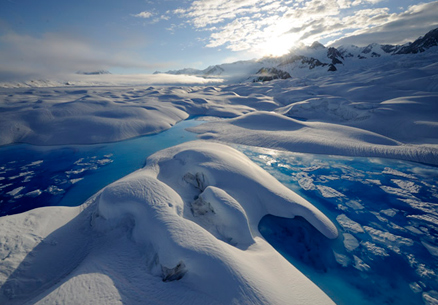
At high elevations, snow builds up to form glaciers, which flow downhill, extend
into warm areas and melt. An "equilibrium line" separates areas that experience
melt in summer from areas that stay ice-covered all year. If more ice melts than
accumulates, the glacier retreats. Over the period 2006-2016, seventy-three
billion tons of ice from Alaska and 197 billion tons from other mountain
glaciers around the world were lost, annually.