

















CloudSat
Type
LaunchED
Objective
Decommissioned
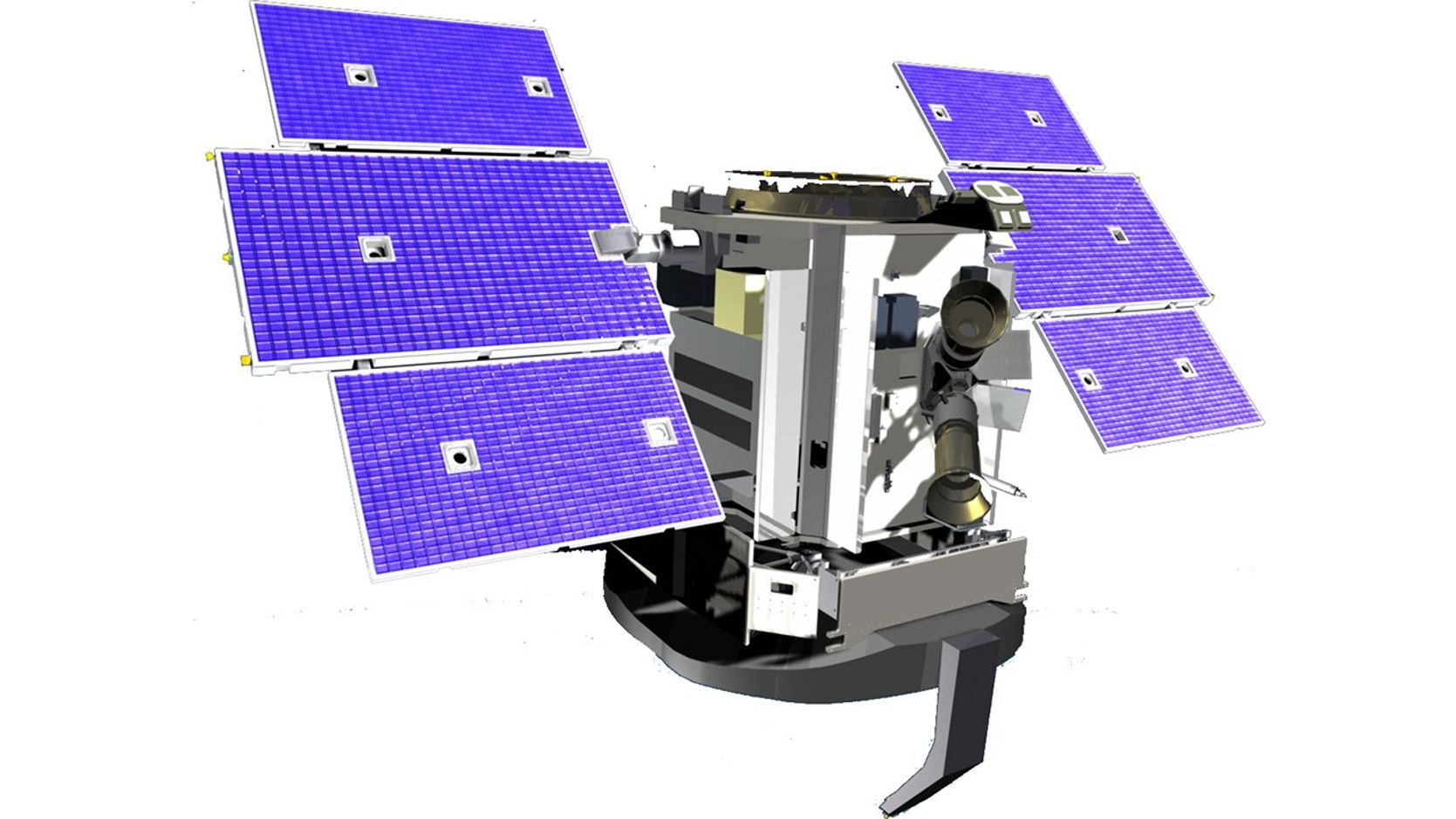
Key CloudSat Facts (at launch)
- Joint with Canada
- Orbit Type: Sun-synchronous
- Altitude: 705 km until 2018 (A-Train); 685–705 km after 2018 (C-Train)
- Inclination: 98.2°
- Period: 99 min
- Repeat Cycle: 16 days
- Dimensions: 2.3 m × 2.3 m × 2.8 m
- Mass: 847 kg
- Power: 1275 W
- Downlink: S-band to U.S. Air Force antenna network
- Prime Mission: 22 months
- Design Life: 3 years (lasted for 17 years)
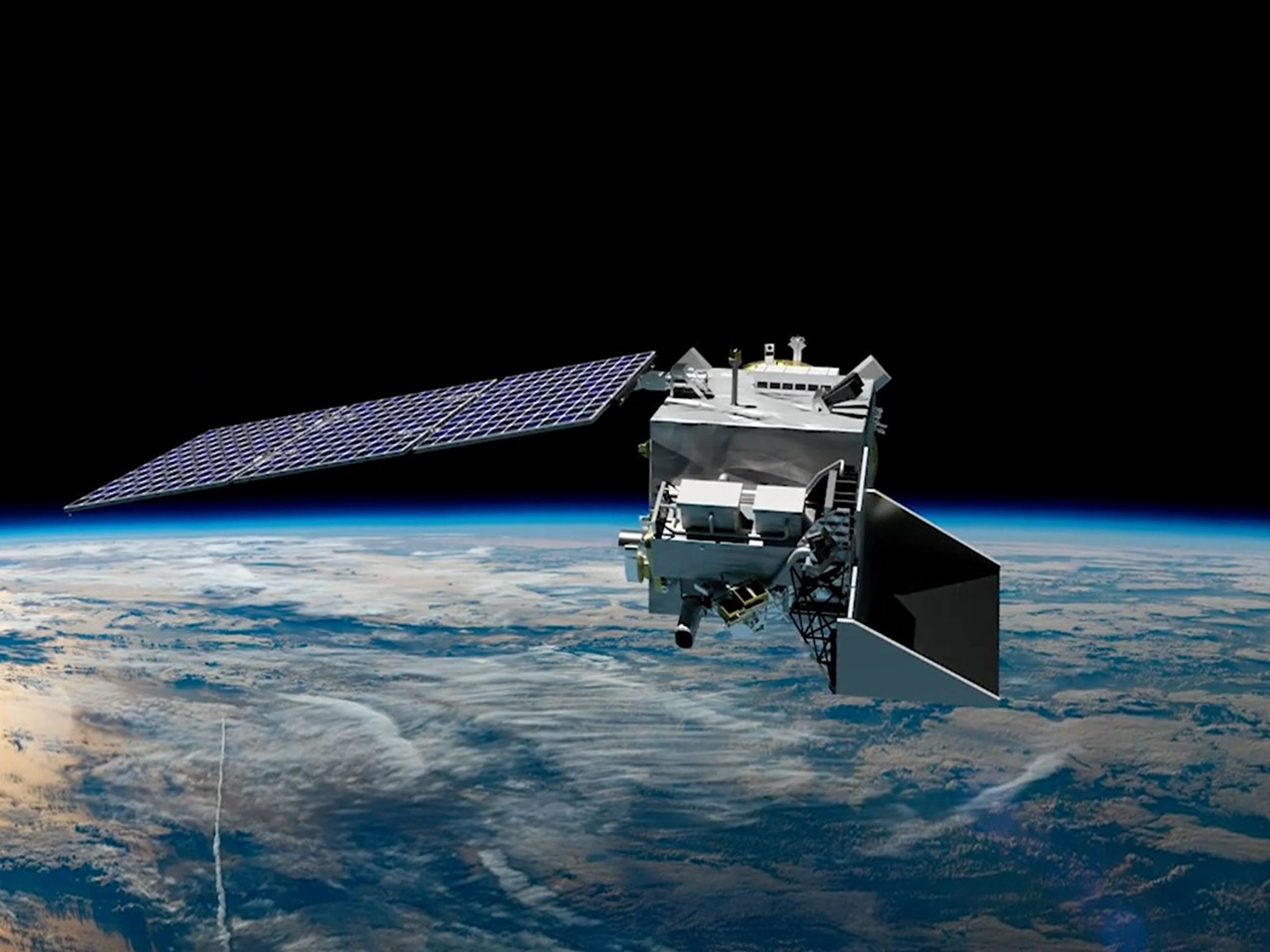
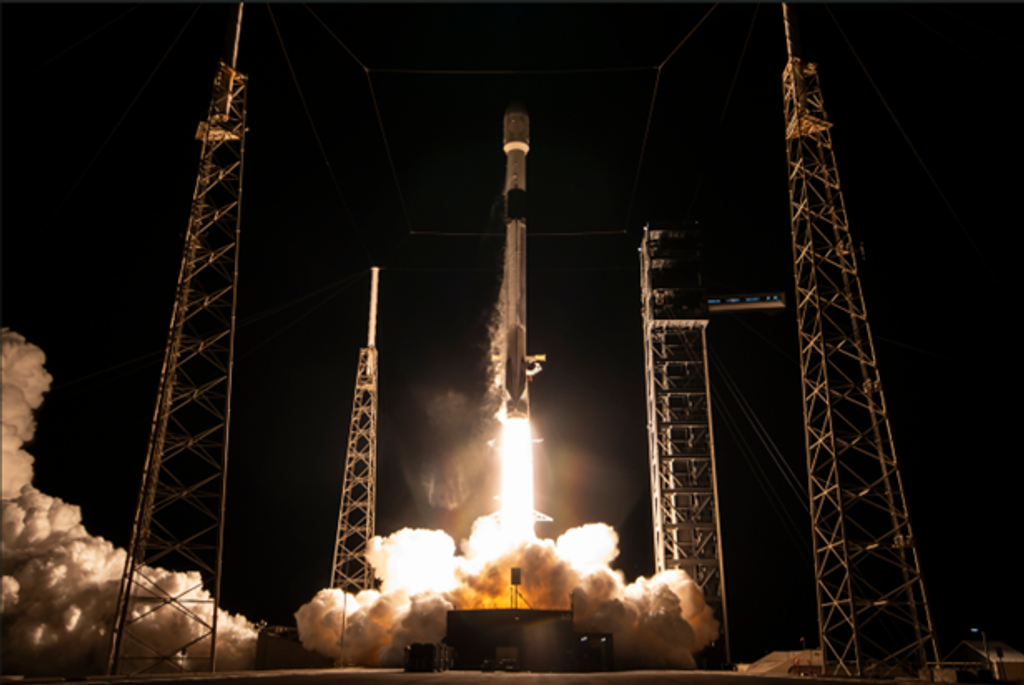
CloudSat was launched on April 28, 2006, to measure the vertical structure of clouds from space and better understand their role in Earth’s climate system. It flew in formation with the Cloud-Aerosol Lidar and Infrared Pathfinder Satellite Observation (CALIPSO) as part of the Afternoon Constellation, or A-Train, of Earth-observing satellites. Designed as a focused, single-instrument mission, CloudSat carried the Cloud Profiling Radar (CPR), a nadir-pointing 94 GHz (W-band) radar – the first of its kind in space – capable of detecting cloud ice, liquid water, and precipitation with exceptional sensitivity. Originally planned for just 22 months, the mission operated for more than 17 years.
CloudSat’s primary science objective was to provide the first global, three-dimensional survey of cloud vertical structure, overlap, and liquid and ice-water content. By sending pulses of microwave energy through the atmosphere and measuring the returned signal, the CPR created detailed vertical maps showing locations of cloud layers, transforming how scientists observe cloud systems. These measurements revealed how frequently clouds produce rain and snow worldwide, improved understanding of tropical cyclone structure and intensification, and supplied critical data for refining how clouds are represented in weather and climate models. Because clouds are one of the largest sources of uncertainty in climate projections, CloudSat’s observations significantly strengthened NASA’s ability to study Earth’s radiation balance, water cycle, and long-term climate change.
In response to technical issues that potentially affected the satellite’s maneuvering capability, CloudSat exited the A-Train on February 22, 2018, lowering its orbit by 10.5 km. In September 2018, CALIPSO executed a series of maneuvers to join CloudSat’s orbit, establishing the C-Train (for CloudSat and CALIPSO), which followed a slightly different ground track than the A-Train. However, the C-Train intersected the A-Train ground track about every 20 days which allowed for regular simultaneity between A-Train and C-Train instrument observations.
CloudSat radar science operations concluded on December 20, 2023, and the spacecraft completed final orbit-lowering maneuvers before passivation in April 2024. Over its lifetime, CloudSat produced an unprecedented global record of cloud properties, leaving a lasting legacy in NASA Earth science by improving weather forecasting, advancing climate model accuracy, and deepening understanding of how clouds regulate Earth’s environment.
Satellite and Instrument
The CloudSat bus was built at Ball Aerospace (now BAE Space and Mission Systems) and shipped to Vandenberg for launch on a Delta II rocket.
CloudSat’s lone instrument was a 94-GHz Cloud Profiling Radar (CPR) with 500-m vertical resolution. CPR was a downward-looking radar used to obtain measurements of Earth's cloud properties from space. These observations made it possible to survey the vertical structure and overlap of cloud systems and their liquid- and ice-water contents. Because the 94-GHz signal was not strongly attenuated by most clouds, the radar could detect more than 90% of all ice clouds and 80% of all water clouds.
The data returned from CPR have allowed scientists to better understand the role clouds play in regulating Earth's climate, thus improving their representation in atmospheric models as well as the accuracy of weather forecasts and climate predictions made using those models.
Data Access
Data are available from the CloudSat Data Processing Center
References
- A Useful Pursuit of Shadows: CloudSat and CALIPSO Celebrate Ten Years of Observing Clouds and Aerosols. The Earth Observer, Jul–Aug 2016 28:4, 4–15. This article, written for the tenth anniversary of CloudSat (and its sister mission, CALIPSO), presents a good overview of the two missions, their objectives, data, and science achievements after their first decade in orbit.
- Stephens, G. L., et al. 2002. The CloudSat Mission and the A-Train: A new dimension of space-based observations of clouds and precipitation. Bulletin of the American Meteorological Society 83:12, 1771–1790.
CloudSat Stories
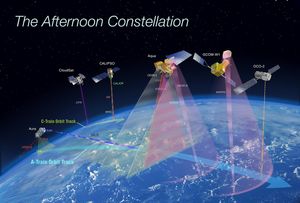
What is the A-Train? From their vantage point high above the Earth’s surface, NASA’s Earth-observing satellite missions are uniquely positioned…

A.32 Precipitation Measurements Mission and CloudSat and Calipso Science Team Recompete solicits investigations associated with the Precipitation Measurements Mission (PMM)…

Over the course of nearly two decades, its powerful radar provided never-before-seen details of clouds and helped advance global weather…
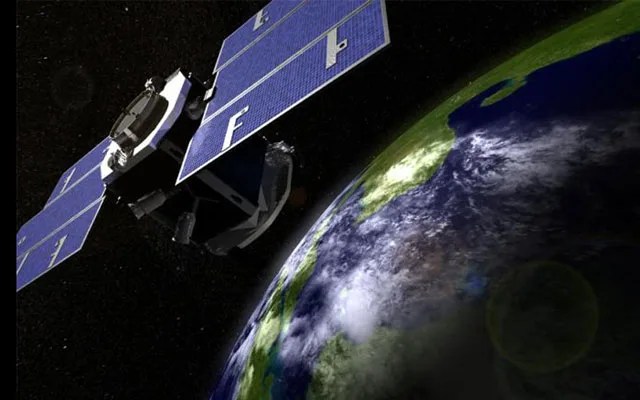
CloudSat was launched on April 28, 2006, to measure the vertical structure of clouds from space and better understand their…
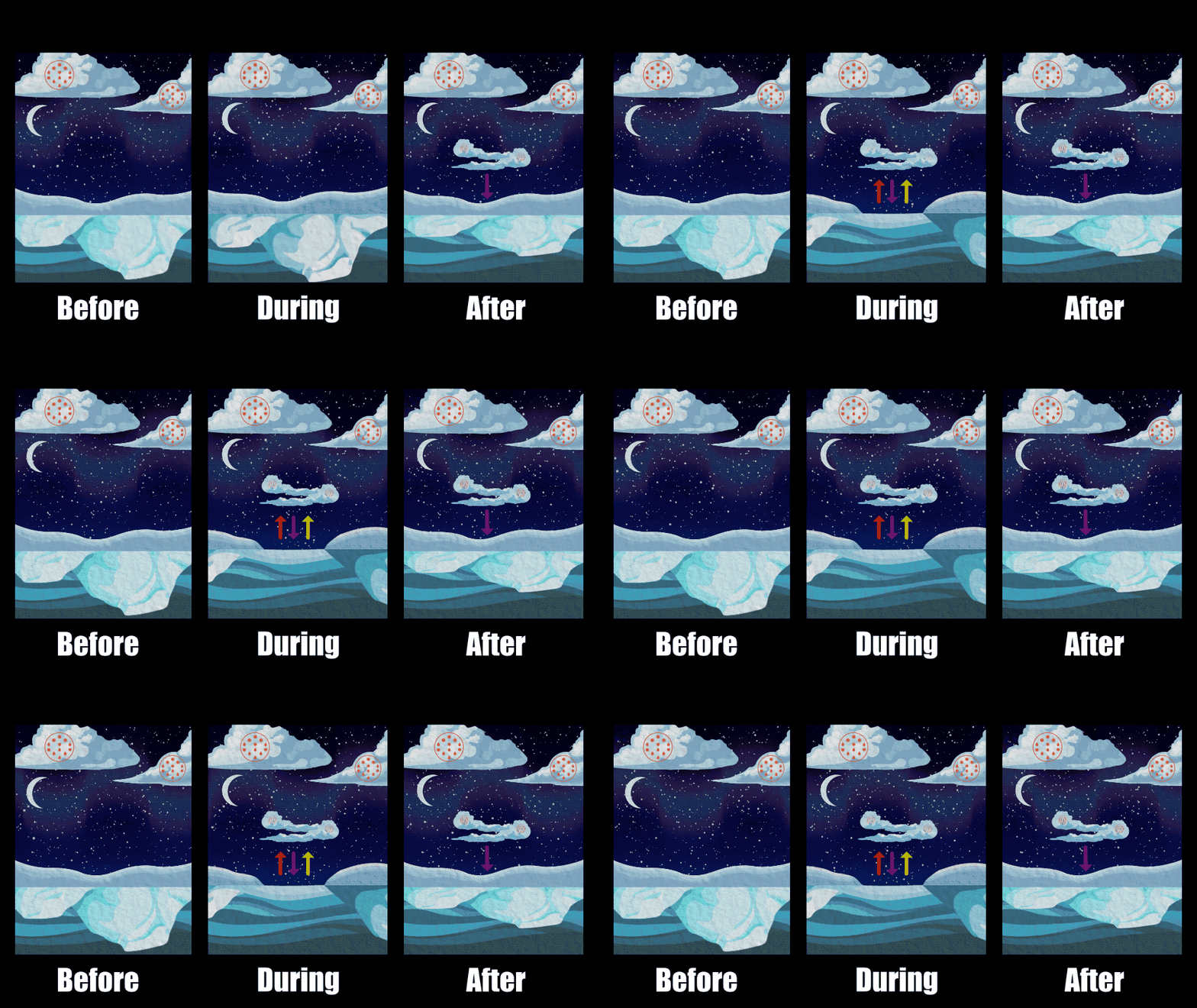
Clouds are one of the biggest wildcards in predictions of how much and how fast the Arctic will continue to…
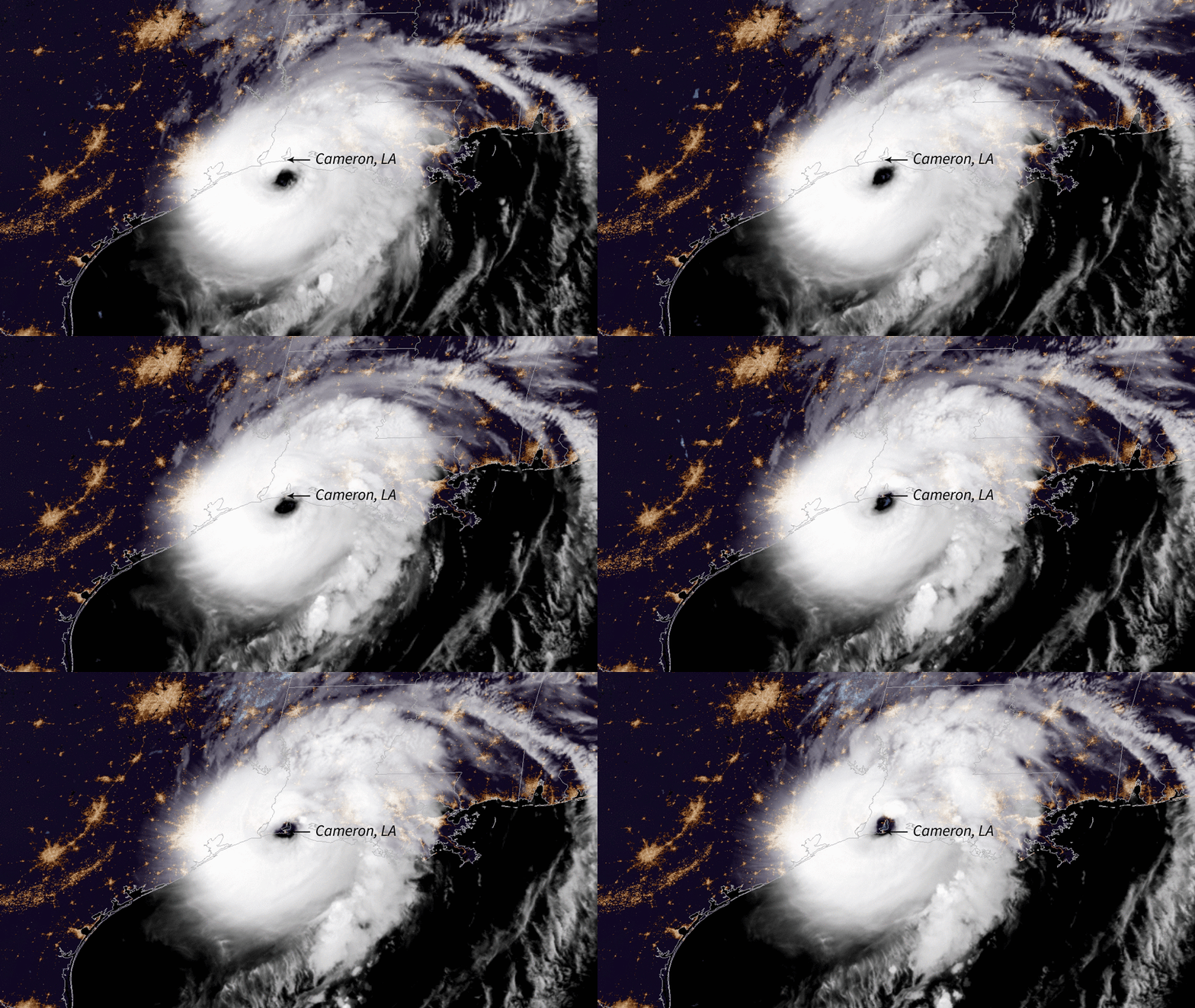
NASA research could help to improve forecasts of whether a hurricane will suddenly intensify, which could give people in its…
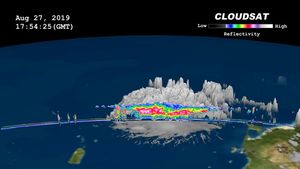
Data from NASA's CloudSat satellite, acquired on Aug., 2019, at 2 p.m. EDT (11 a.m. PDT) was used to make…

A stroke of luck brought the CloudSat radar directly over the center of one of the strongest typhoons of the…
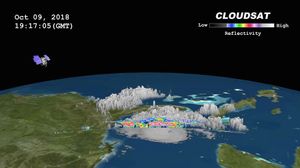
NASA's CloudSat satellite passed over Hurricane Michael on October 9, 2018, at 3:15 p.m. EDT (19:15 UTC) as the storm…
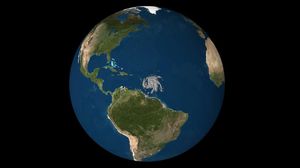
NASA's CloudSat satellite flew over Hurricane Maria on Sept. 17, 2017, at 1:23 p.m. EDT (17:23 UTC) as the storm…
NASA's CloudSat satellite flew over Hurricane Irma on Sept. 6, 2017 at 1:45 p.m. EDT (17:45 UTC) as the storm…
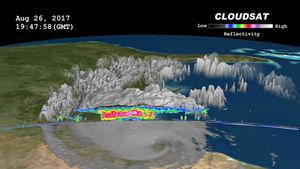
NASA's CloudSat satellite flew over then-Tropical Storm Harvey on Aug. 26, 2017, at 2:45 p.m. CDT (19:45 UTC) as the…