



















Description
Map Projected Browse Image
Click on image for larger version
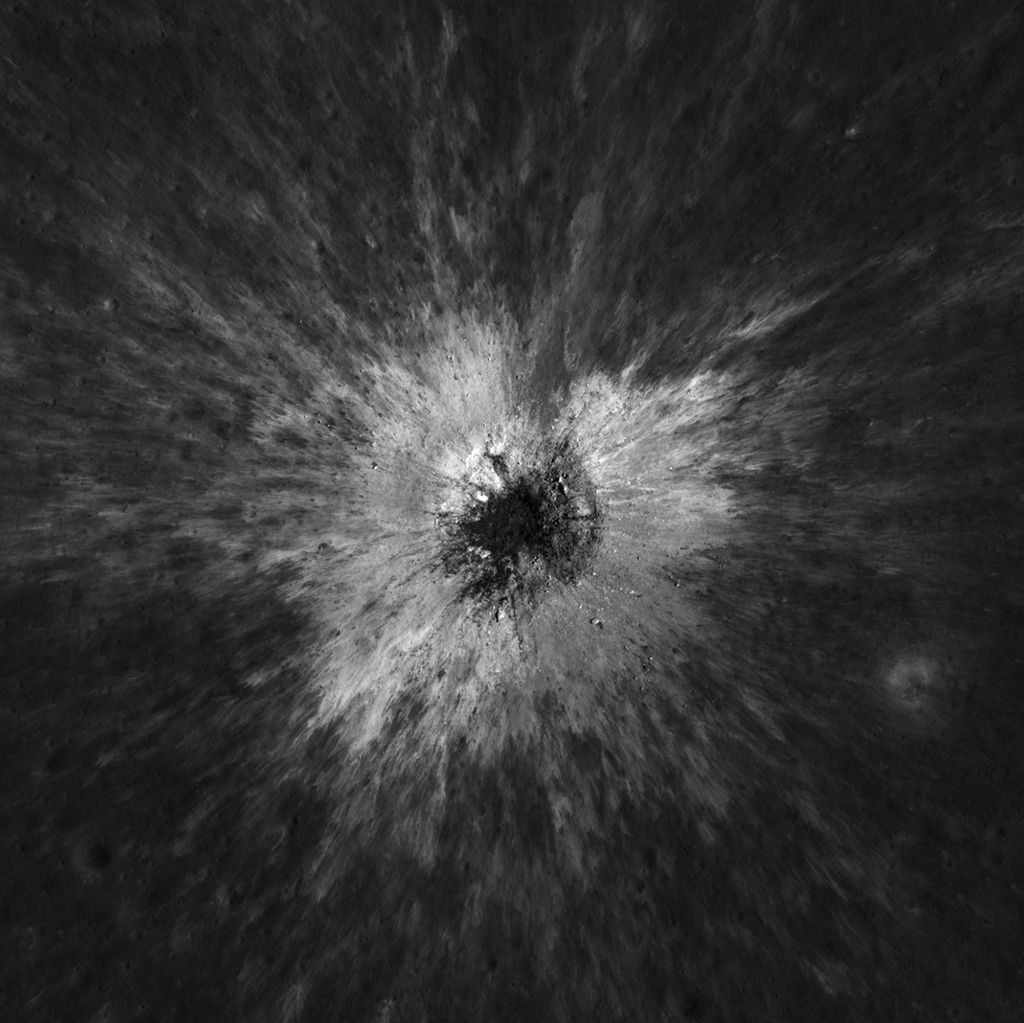
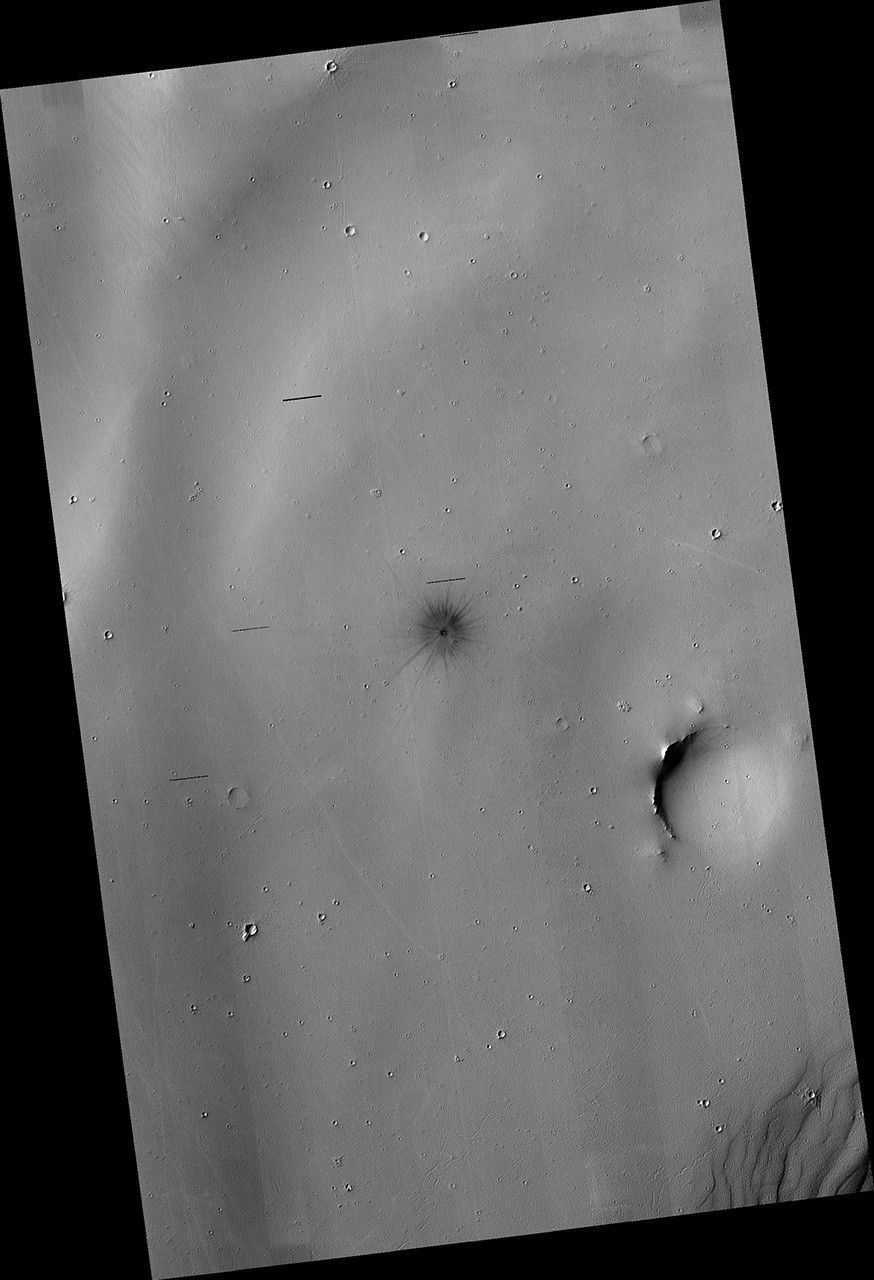
Mars and the Earth run into debris in space regularly, and on our planet, meteors usually vaporize in the atmosphere.
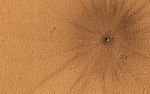
On Mars however, with a surface pressure 1/100th that of the Earth, the impactors generally make it to the surface. This particular impact took place on Mars sometime in the last 5 years. Although the crater is small, the rays of ejecta thrown out by the impact are easy to spot, stretching out almost a kilometer.
The map is projected here at a scale of 25 centimeters (9.8 inches) per pixel. (The original image scale is 25.6 centimeters [10.1 inches] per pixel [with 1 x 1 binning]; objects on the order of 77 centimeters [30.3 inches] across are resolved.) North is up.
The University of Arizona, in Tucson, operates HiRISE, which was built by Ball Aerospace & Technologies Corp., in Boulder, Colorado. NASA's Jet Propulsion Laboratory, a division of Caltech in Pasadena, California, manages the Mars Reconnaissance Orbiter Project for NASA's Science Mission Directorate, Washington.