























June Puzzler
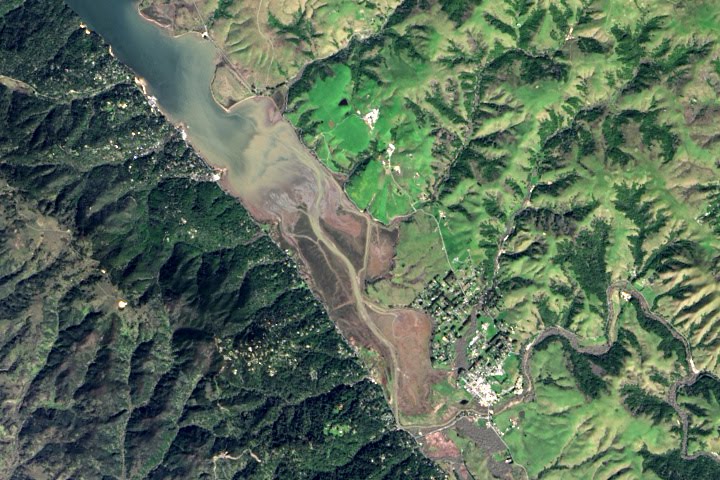
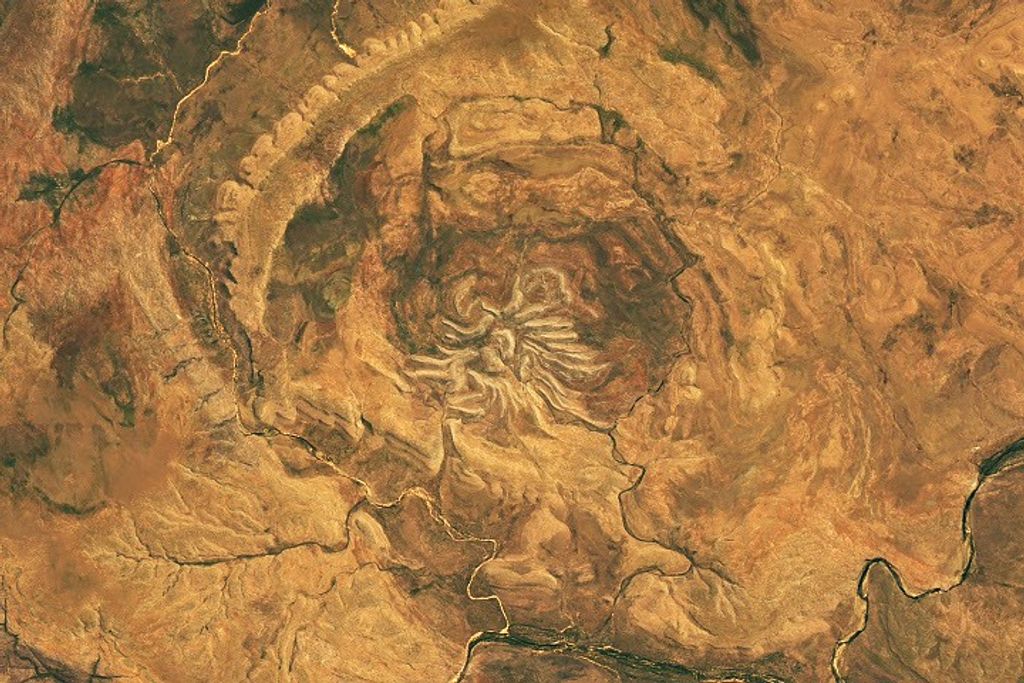
Every month on Earth Matters, we offer a puzzling satellite image. We usually ask you to identify the location of a scene, but that’s not enough this time. For the June 2017 puzzler (above) your challenge is to tell us what the image shows and what makes it interesting.
How to answer. Your can use a few words or several paragraphs. (If possible, try to keep it shorter than 300 words). Tell us the location, but realize we want to hear more than just the location. What features in the image say something about the geological, meteorological, or historical processes that shaped the landscape? What does it teach us about physics or chemistry or biology? How do you think scientists or others might use imagery like this to solve problems and make life better here on Earth? And what do you find notable about this image from a purely visual perspective?
The prize. We can’t offer prize money or a trip to Mars, but we can promise you credit and glory. Well, maybe just credit. Roughly five days after a puzzler image appears on this blog, we will post an annotated and captioned version as our Image of the Day. After we post the answer, we will also update this post and recognize readers who offered the best responses. Please include your preferred name or alias with your comment. If you work for or attend an institution that you want us to recognize, please mention that as well.
Recent winners. If you’ve won the puzzler in the past few months, or if you work in geospatial imaging, please sit on your hands for at least a day to give others a chance to play.
Good luck!
Editor’s Note: Congratulations to Julia H. and Thomas Edwards for being the first readers to solve the puzzler on the Earth Observatory site. Carl Huffman answered first on Facebook. See a labeled version of the June puzzler here.
