
















NASA’s PUNCH Tracks Comet Discovered by SOHO Spacecraft
From August to October, NASA’s PUNCH (Polarimeter to Unify the Corona and Heliosphere) mission tracked comet 2025 R2 (SWAN) — one of the thousands of comets discovered in images from the SOHO (Solar and Heliospheric Observatory) spacecraft, a joint mission between NASA and ESA (European Space Agency) that launched 30 years ago Tuesday.
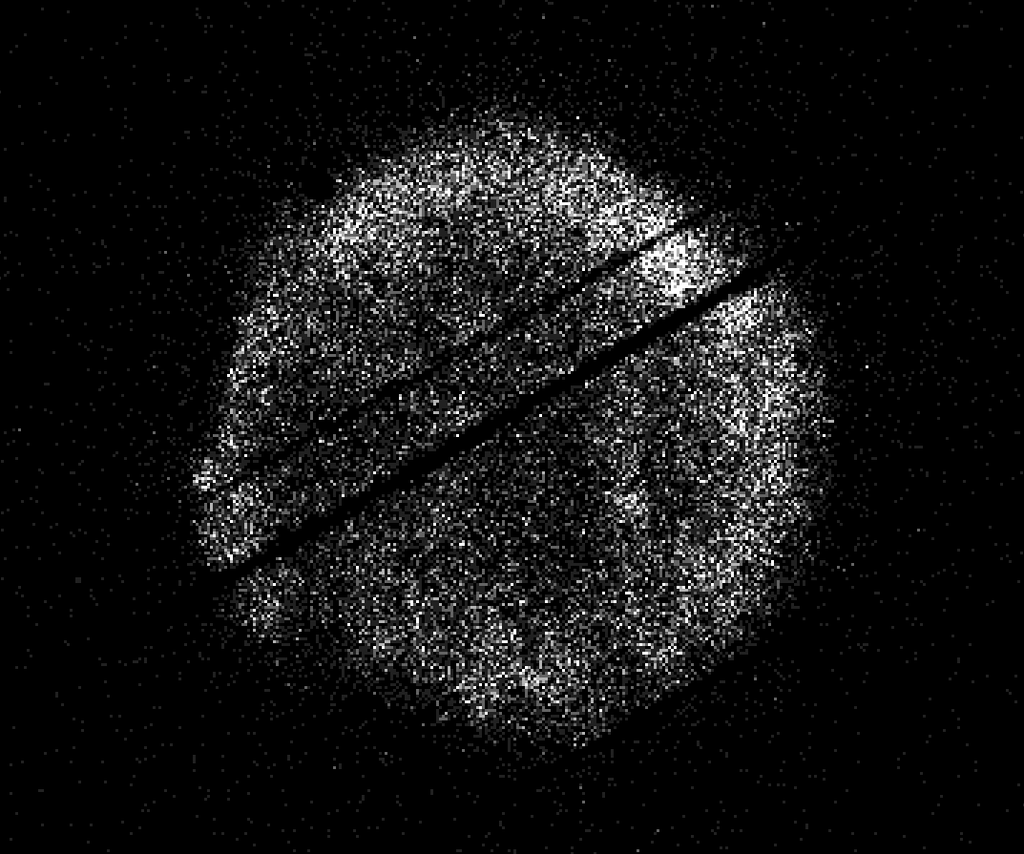
Capturing a new image of the comet every few minutes, PUNCH’s observations may be the longest any comet has been tracked with such frequency, says the mission’s principal investigator, Craig DeForest of the Southwest Research Institute in Boulder, Colorado.
“Other comets have been tracked at once-per-day cadence for years,” DeForest said. “What’s new here is the few-minute cadence of observation.”
Comet 2025 R2 (SWAN) was first spotted by Ukrainian amateur astronomer Vladimir Bezugly on Sept. 11 in images taken by the SWAN (Solar Wind Anisotropies) instrument aboard SOHO. Over 5,000 comets have been discovered — many by citizen scientists — in SOHO images over its three decades of operation.
After comet SWAN’s discovery, scientists looked to see whether PUNCH had also spotted the comet and found it in PUNCH images taken as early as Aug. 7. Comet SWAN continued to appear in PUNCH’s field of view until early October, with the mission capturing a new image of it every four minutes through Oct. 5.
Over that time, PUNCH watched the comet’s tail grow, shrink, and flicker under the influence of the solar wind, a never-ending stream of particles flowing outward from the Sun. The PUNCH mission is designed to study how the solar wind travels out from the Sun and influences the planets, such as Earth, and other objects, such as comets, throughout the solar system.
“Watching the Sun’s effects from multiple vantage points — and with different types of instruments — is what gives us a complete picture of the space environment,” said Gina DiBraccio, heliophysicist and acting director of the Solar System Exploration Division at NASA’s Goddard Space Flight Center in Greenbelt, Maryland. “We use these same tools to track and analyze how space weather impacts our astronauts, our spacecraft, and our technology here on Earth.”
Southwest Research Institute, based in San Antonio, leads the PUNCH mission and operates the mission’s four spacecraft from its facilities in Boulder, Colorado. The mission is managed by Space Science Mission Operations at NASA Goddard for the Science Mission Directorate at the agency’s headquarters in Washington.
by Vanessa Thomas
NASA’s Goddard Space Flight Center, Greenbelt, Md.
