





















NASA Fieldwork Spotlight: Iceland
NASA's Goddard Instrument Field Team (GIFT) studies Earth's extreme environments to advance planetary science. Explore snapshots of their 2025 expedition in Iceland here.
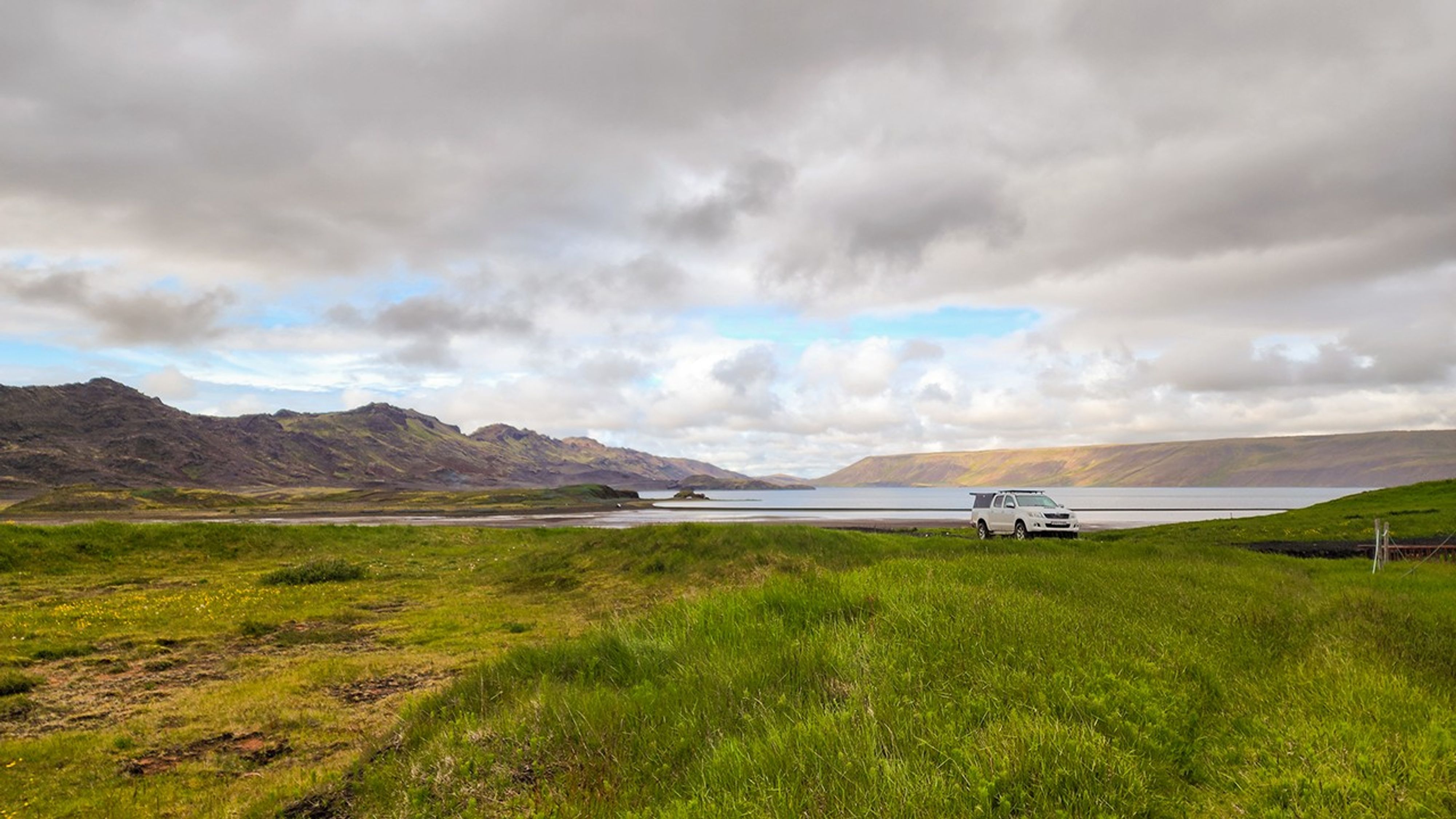
It's a bright, summery June afternoon in southern Iceland.
-
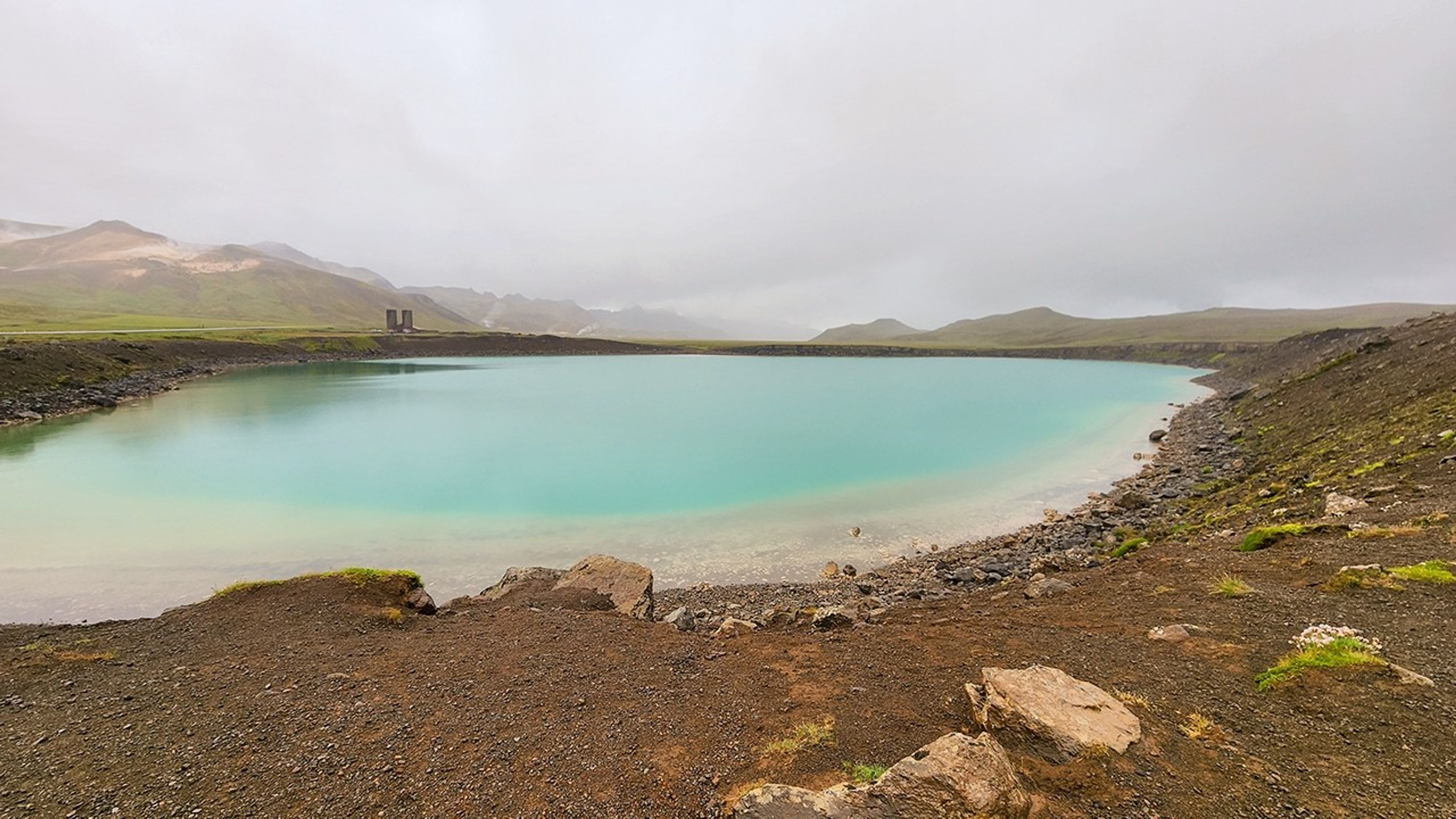
The wind rips across Lake Kleifarvatn.
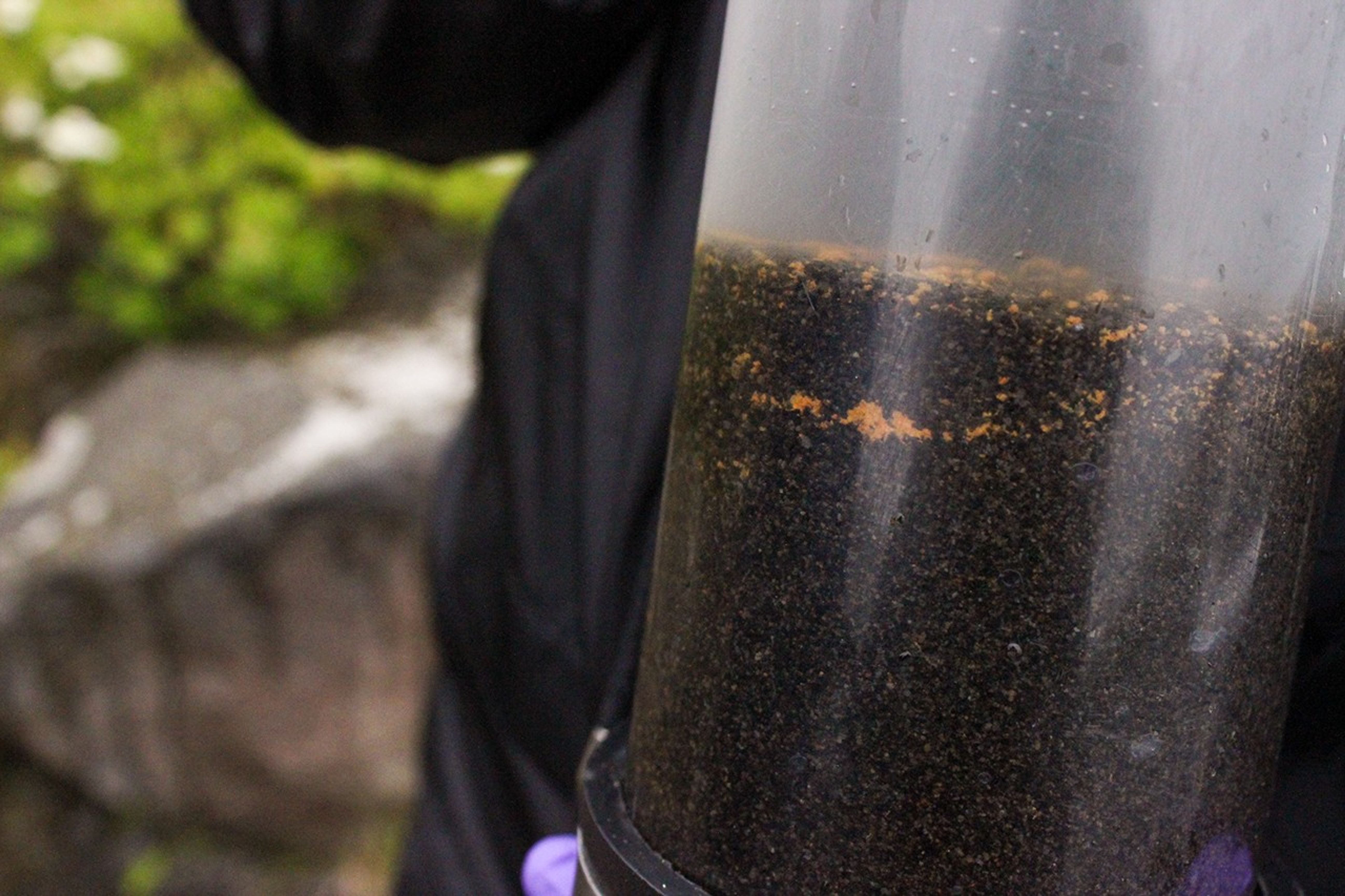
Two scientists in cheetah-print waders with pink piping wade into the crystal-clear, 40-degree water, sample tube at the ready. Their eyes are trained on the orange, blue, and brown deposits lining the submerged rocks. From the shore, the rest of their team watches quietly, huddled against the icy wind. A head breaks the surface 100 feet away — another scientist returning from a dive more than 50 feet down. The diver has collected a sample from the lake floor: a goldmine of data that, to the untrained eye, looks like plain old dirt.
 Zachary Garvin and Dina Bower collect samples from Lake Kleifarvtn in Southwest Iceland.NASA/Yesenia Arroyo
 -
Elsewhere on the island, scientists hike through hail and haul equipment across miles of rugged terrain.
Iceland’s diverse volcanic environments and geothermal sites are stand-ins for other worlds. These are analog environments, places on Earth whose geology, chemistry, and conditions resemble those of other planets and moons. NASA's Goddard Instrument Field Team (GIFT) is spread out across the island, inspecting Enceladus-like underwater vents shimmering just beyond their scuba masks, detecting buried ice that can train us for Moon exploration, looking for clues about Mars’ watery past in a muddy riverbed, and more. Because to understand distant worlds, sometimes you have to start by getting your boots (and wetsuits) dirty here on Earth.
 Pools of water in Seltun, a geothermal site in Southwest Iceland.NASA/Yesenia Arroyo
 -
“Team Lava” | Fagradsfjall
Team Lava traverses the rugged slopes of Fagradalsfjall, near Grindavík, where fresh volcanic vents and lava flows tell a story only a few years old. The team set out to study how these vents form and change over time, with an eye toward comparing them to similar volcanic features spotted on Mars and the Moon.
 Close up of lava texture in Southwest Iceland.NASA/Yesenia Arroyo
"Team Ice"
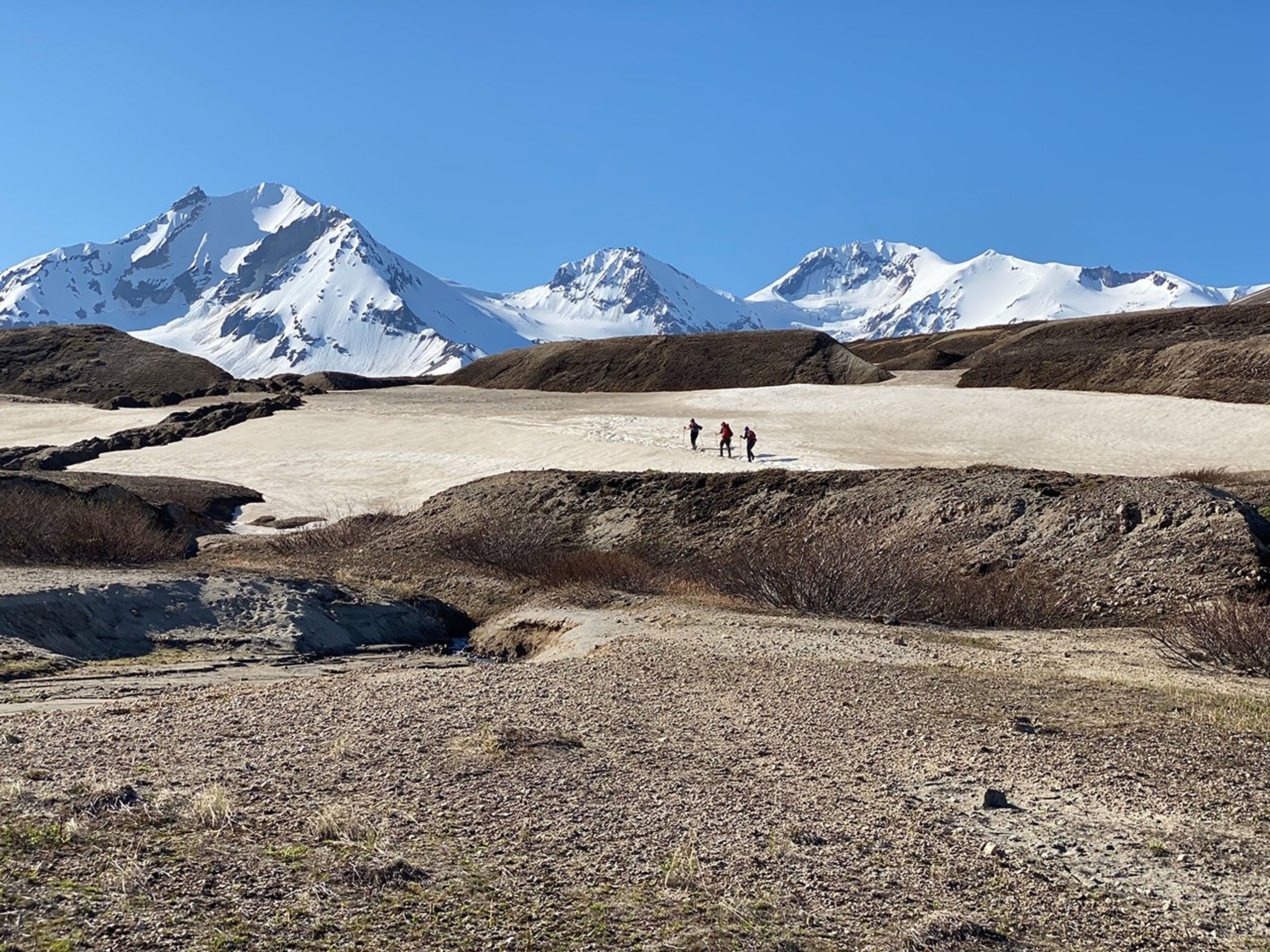
Climb along with Team ICE as they persevere through five days of hail to find the ice motherlode on Hekla.
-
"Team Atomic" | Lake Kleifarvatn, Engjahver
Can we find out if Martian landscapes are derived from ancient hot springs just by looking at minerals from orbit? Team Atomic aims to use their Icelandic samples to understand how the minerals and chemistry of hydrothermal vent deposits evolve over time.
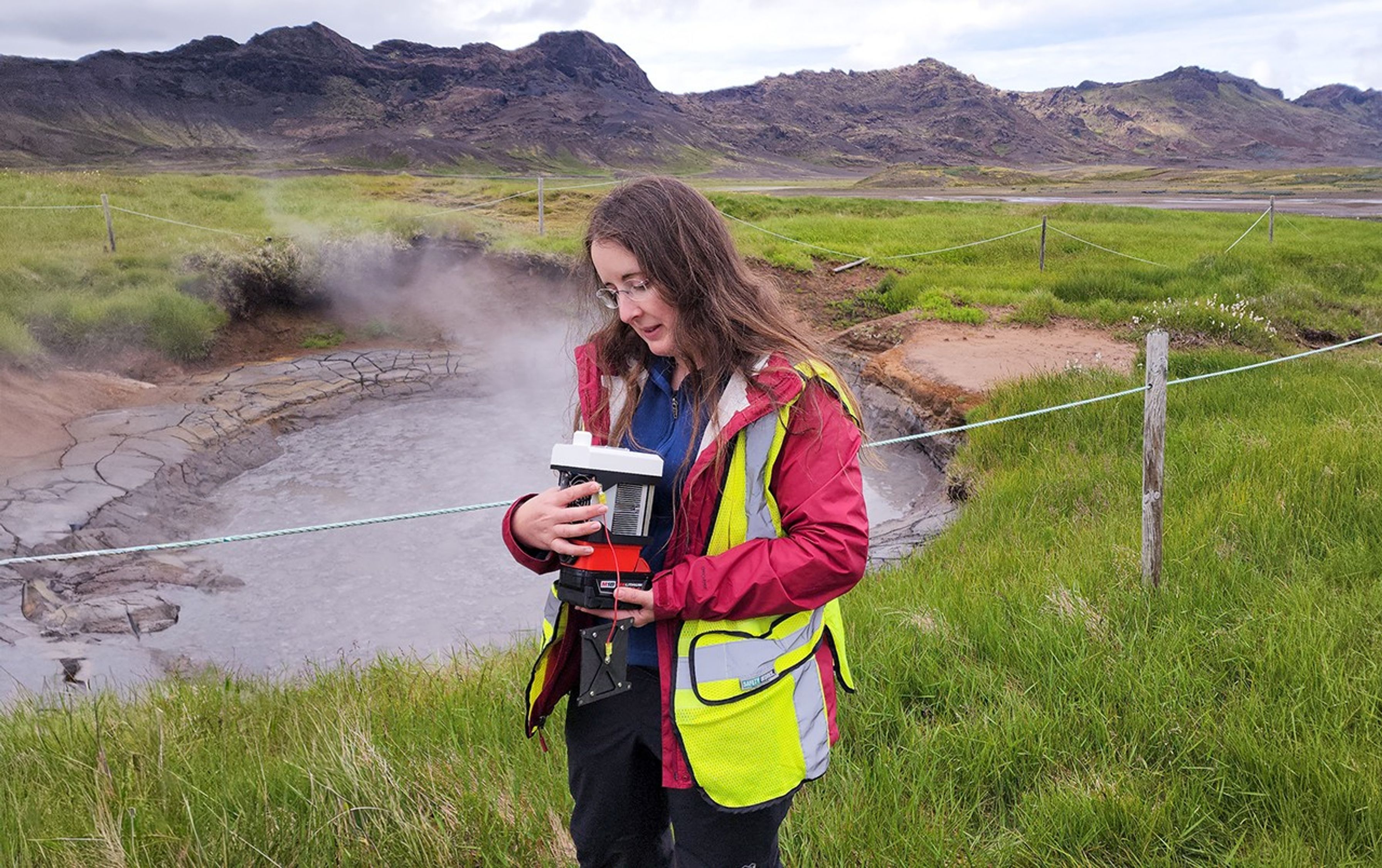 Amy McAdam inspects a blackbody, a calibration tool for a hyperspectral imaging instrument, in Southwest Iceland.Yesenia Arroyo
 -
“Team SulpHur” | Seltún, Engjahver
The SulpHur team has set their sights on a curious Martian mystery: native sulfur, a pure version that is uncombined with any other elements. This bright yellow mineral, discovered on Mars for the first time in 2024 by NASA’s Curiosity rover, was never expected to turn up in Gale crater, and scientists are still puzzling over how it formed there.
 Jeff Berger, Doug Archer, and Justin Hayles collect clay samples near a fumarole in Southwest Iceland.NASA/Yesenia Arroyo
"Team M&M"
Follow Team M&M ("Mud and Mars") to the Stóra Laxá river as it carves through the Icelandic hills, revealing basalt rock deposited by volcanoes.
-
"Team Carb" | Lake Kleifarvatn
Team Carb takes their work below the surface of Lake Kleifarvatn, a freshwater lake with a volcanic and mineral composition strikingly similar to Martian terrains including Gale and Jezero craters. The team is hunting for preserved organic molecules and specific mineral patterns that only form in the presence of water and heat —the same conditions that might have sparked life on early Earth.
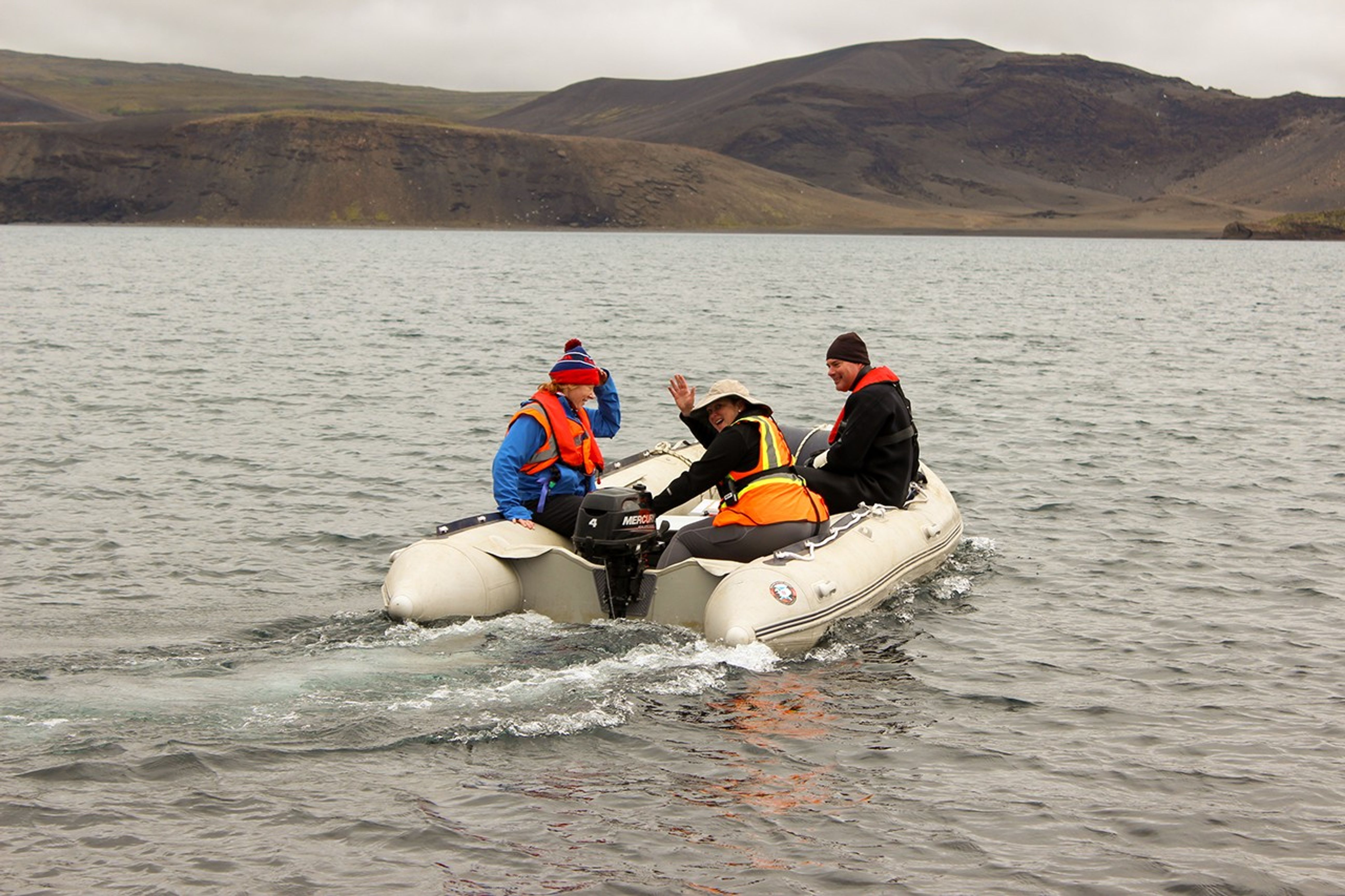 Jen Stern, Roy Price, and Bethany Theiling take off for their first day collecting samples on Lake Kleifarvatn in Southwest Iceland. Bethany waves.NASA/Yesenia Arroyo
 -
"Team Gas" | Lake Kleifarvatn, Lake Grænavatn
The Gas team's work began with one large, inflatable, logistical challenge: carrying a very heavy boat, motor and all, to the water’s edge. Lake Grænavatn is a remnant of a maar-type volcanic explosion, which leaves behind a crater and is typically filled and transformed into a lake. As its name hints, the water at Grænavatn is green, a result of its high sulfur content.
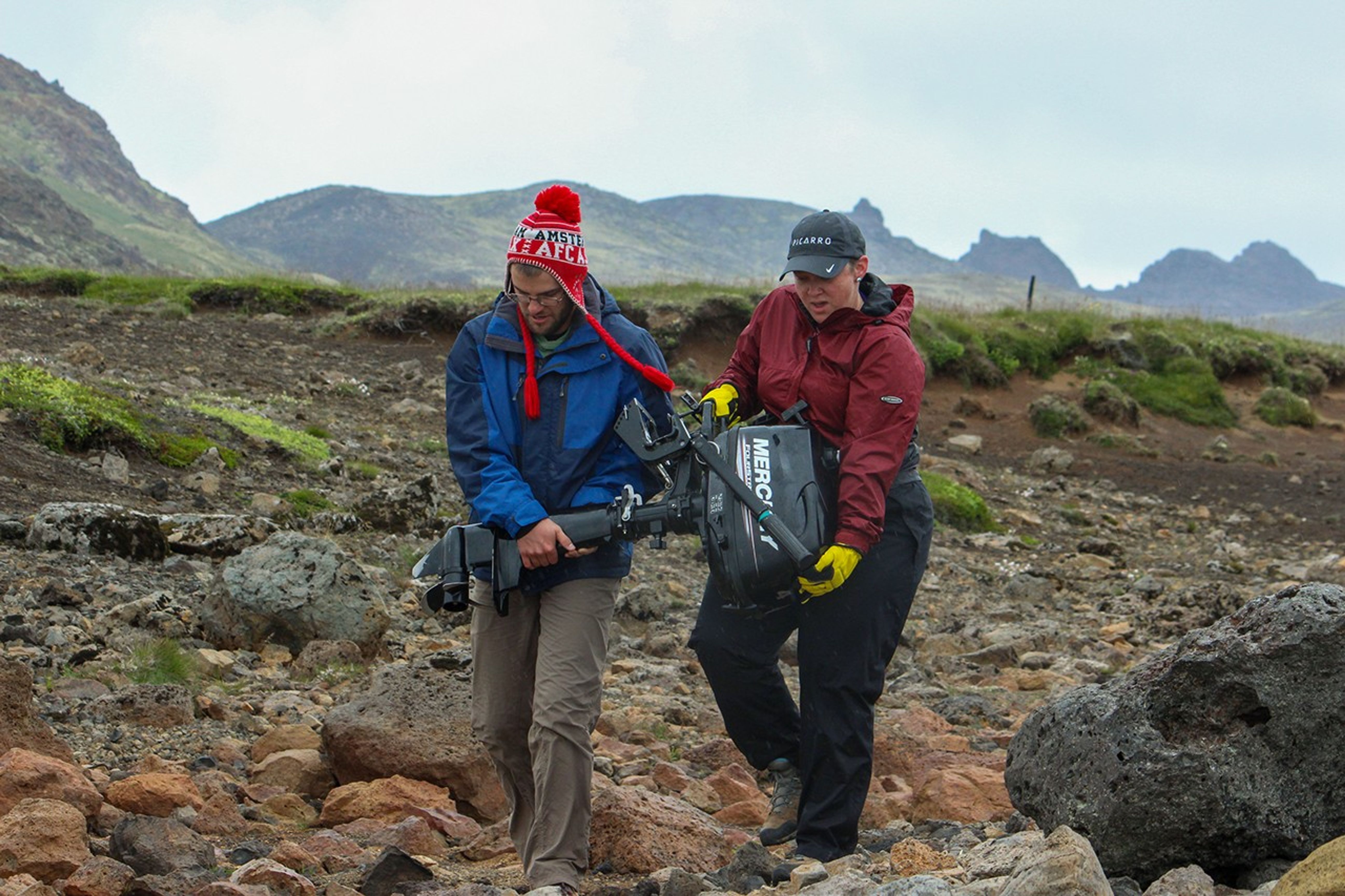 David Burtt and Bethany Theiling carry a boat motor to the edge of Lake Grænavatn in Southwest Iceland.NASA/Yesenia Arroyo
Diving Lake Kleifarvatn
Explore the depths of Lake Kleifarvatn and learn about our solar system's icy ocean worlds.
-
Eight teams. One island. Countless worlds.
In Iceland’s volcanic landscapes, GIFT’s scientists practice a fundamental truth of planetary exploration: where you stand changes what you see. From a distance, we can make out the general geologic patterns of other planets, but things really come into focus with the lessons we learn in places like Iceland.
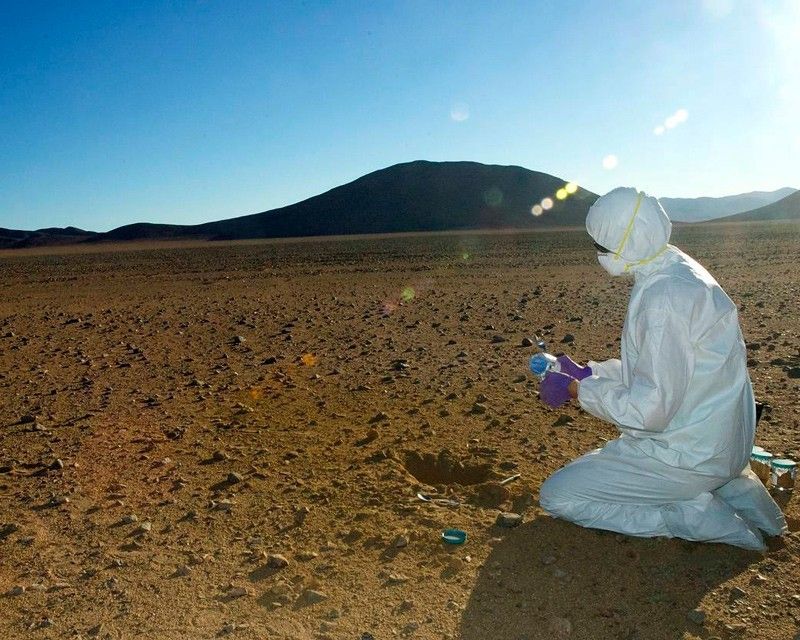
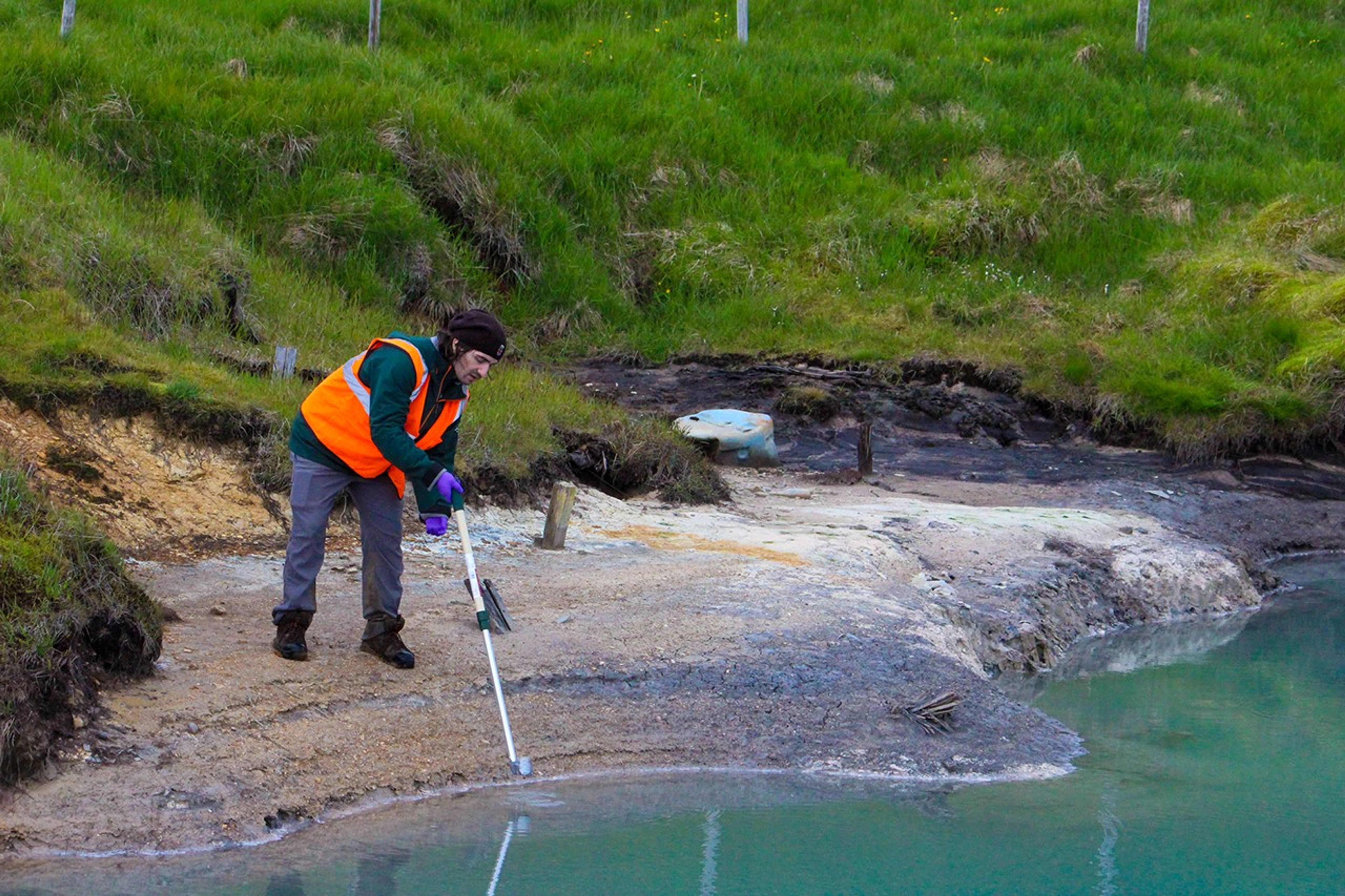 Zach Garvin, a member of Team Atomic, takes a sample from a small pond in Southwest Iceland during a GIFT expedition in June 2025.NASA/Yesenia Arroyo
 -
Iceland won’t tell us everything about worlds beyond Earth, but it can teach us how to look.
This is the power of fieldwork, and what makes it irreplaceable. You can’t recreate this kind of science in a lab or from satellite images alone. You need teams willing to wrap instruments in sweaters, to get stuck in knee-deep clay, and to spot something unexpected that changes your whole mission plan. The cold shock of lake water, the acrid smell of sulfur, and the weight of equipment across miles of lava are all part of the process. As NASA moves forward with the exploration of the Moon, Mars, and worlds we’ve barely begun to understand, this collaborative, adaptable spirit is what transforms distant mysteries into discoveries.
 A group of scientists hike back to their vehicle on the beach nearby Lake Kleifarvtn in Southwest Iceland.NASA/Yesenia Arroyo
The path to understanding other worlds starts with fieldwork.
Our planet isn't the only place with volcanoes, impact craters, quakes, and erosion. Similar environments on different worlds are called planetary analogs.
Learn More about The path to understanding other worlds starts with fieldwork.