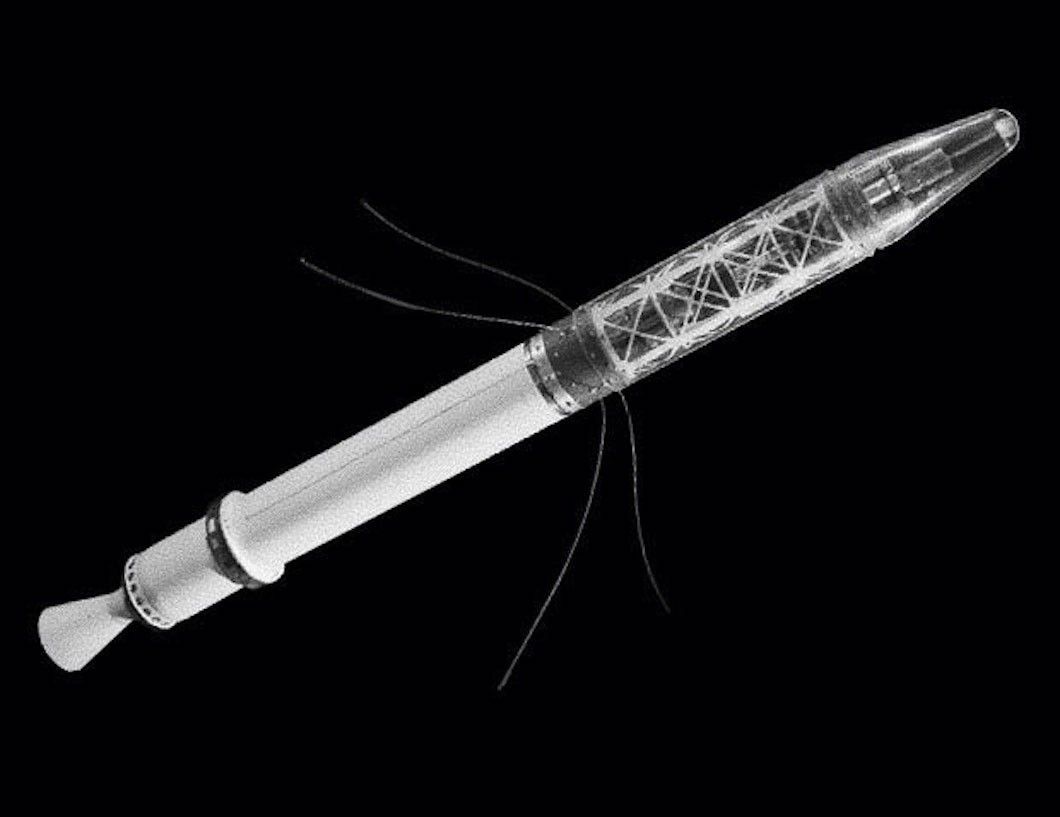










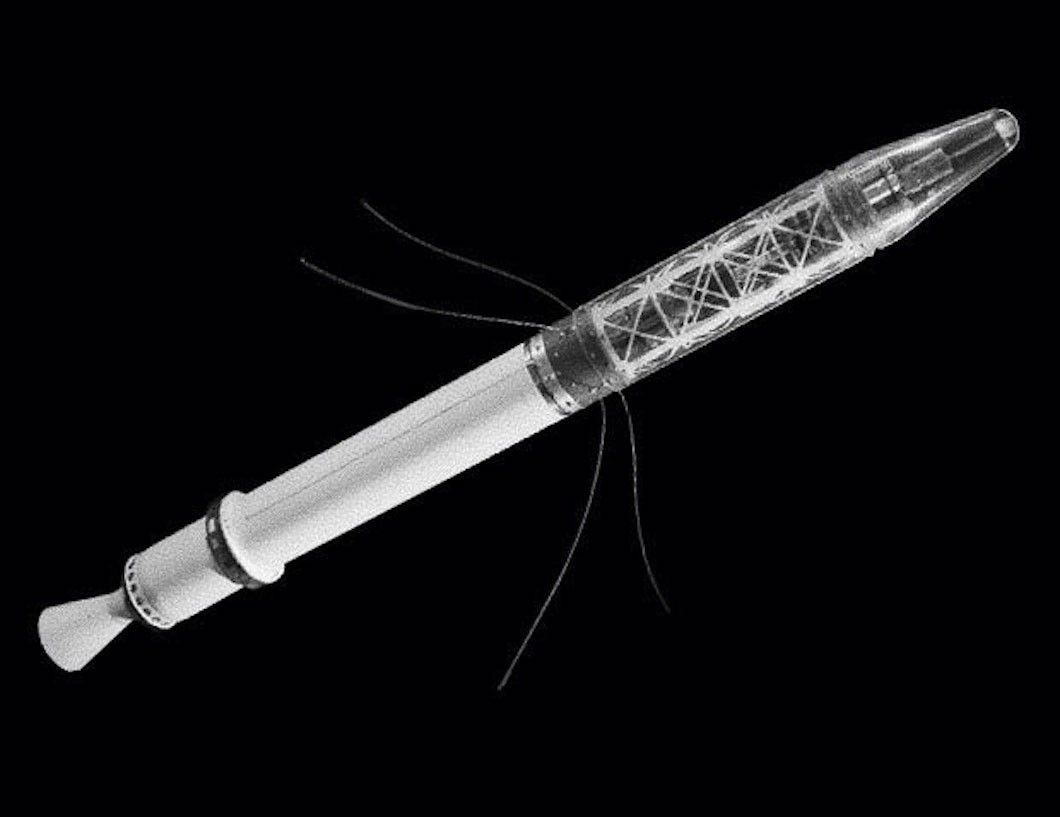
Explorer 1 Model With Cutaway Showing Science Components
The International Geophysical Year — which ran from July 1, 1957 to Dec. 31, 1958 — marked the beginning of the "Space Race." In 1957, the Soviet Union became the first nation to successfully put satellites in orbit — Sputnik 1 in October and Sputnik 2 in November. On Jan. 31, 1958, the United States joined the space age with the successful launch of Satellite 1958 Alpha, better known as Explorer 1, from Cape Canaveral, Florida. Explorer 1 was the first satellite to carry out a successful science mission. Explorer 1’s modified Geiger counter, designed by University of Iowa physicist James Van Allen, detected the radiation bands around Earth that were later renamed the Van Allen Belts. Wernher von Braun at the U.S. Army’s Ballistic Missile Agency in Huntsville, Alabama, directed development of the Jupiter-C rocket that carried Explorer 1 into space. Explorer 1 was designed and built at the Jet Propulsion Laboratory in Pasadena, California, under the direction of William H. Pickering.
Image Credit: NASA
- X
https://science.nasa.gov/image-detail/amf-9bcfb023-d24f-4bb0-be6b-a105463e95c7/
Image CreditNASA
Size1060x817px