









Explore Air Quality with NASA
Where Does NASA Fit?
NASA instruments — on satellites, planes, and the ground — constantly collect data on air quality. NASA-funded scientists track the sources and concentrations of major pollutants and their movement through the atmosphere. They provide managers and policymakers with Earth observations that can inform decisions around air quality for economic and human benefit.
Air's Ingredients
Watch to learn what air quality is and why it’s so important for NASA to study it.
Air Quality Essentials
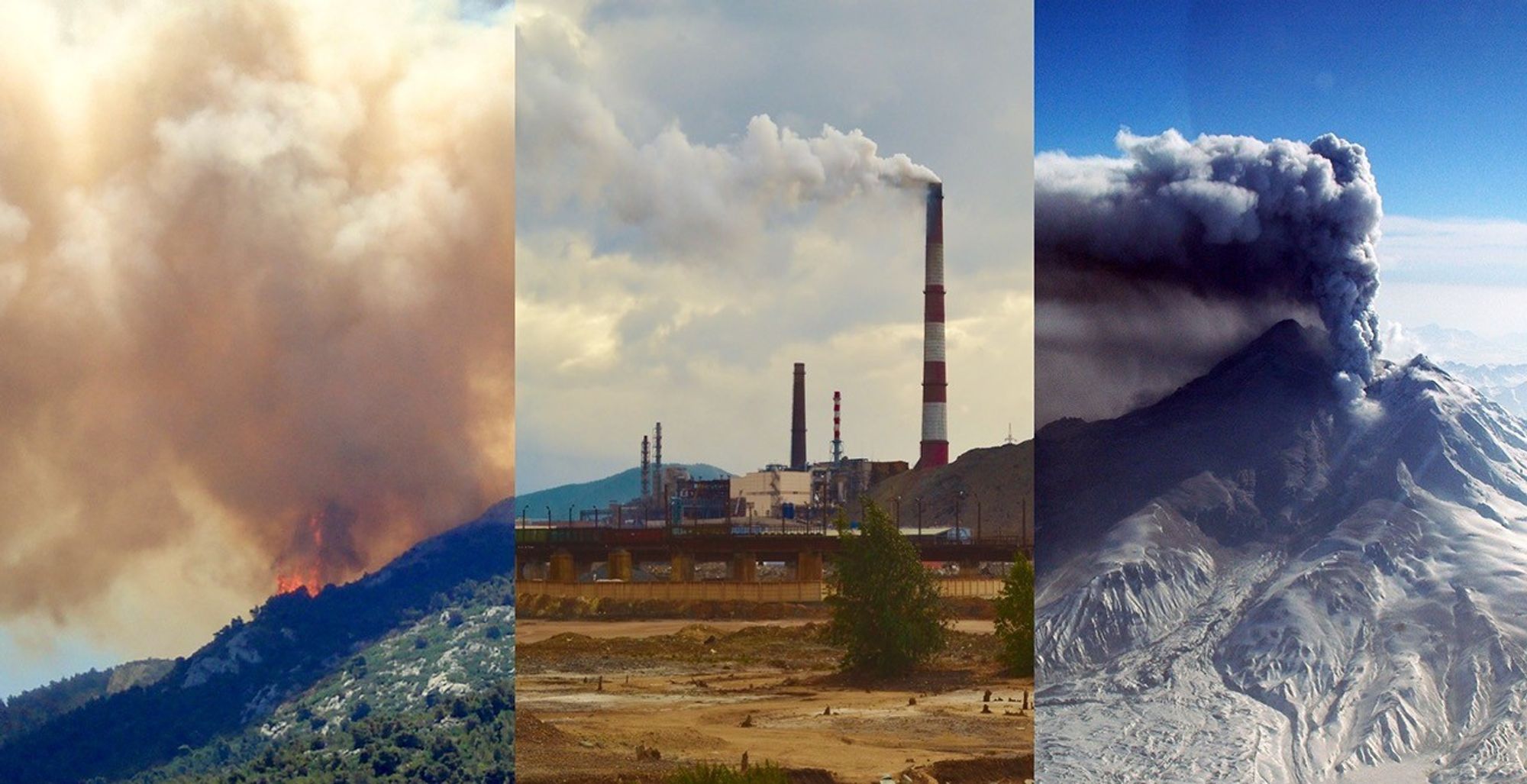
Air is a stew of components—some natural, some introduced by human activity.

Curious Universe Podcast: Tiny but Mighty
NASA scientists talk about what's in the air.
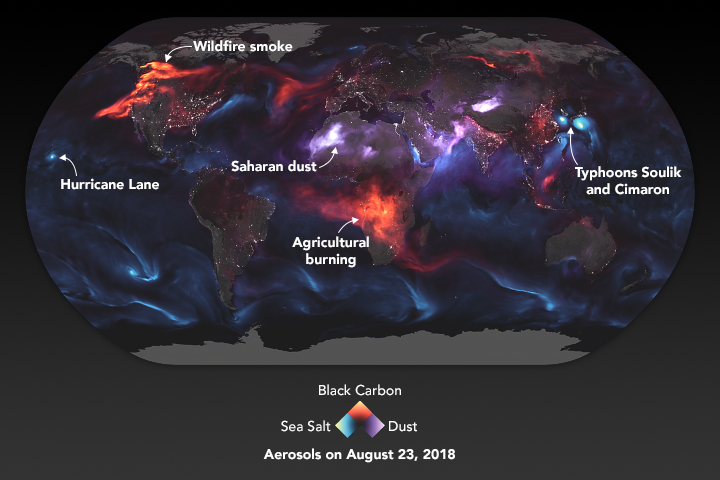
Just Another Day on Aerosol Earth
NASA satellites trace ingredients of air worldwide on one particularly representative day in the life of planet Earth.
Aerosols
in the Air
NASA merges satellite and ground-based observations, advanced models, and computing power to study aerosols in the atmosphere.
Air Quality News
Find stories based on NASA data, observations, and models.
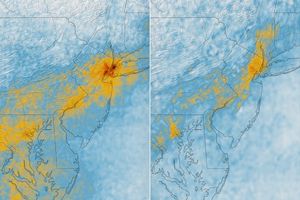
The TEMPO mission helped scientists track morning nitrogen dioxide that contributed to afternoon ozone along the New York–Washington corridor in…
An astronaut’s photo, taken en route to the Moon, reveals our planet and its place in space in a novel…

Satellites observed striking upper-atmosphere phenomena generated by an intensifying tropical cyclone.
How NASA Sees the Air We Breathe
NASA and NOAA, among other agencies, worked together this summer through the STAQS and AEROMMA missions to calibrate and validate NASA’s new TEMPO satellite. The satellite and missions combined aim to not only better measure air quality, and the major pollutants that impact it, but also to improve air quality, from street to stratosphere. This effort was documented during the August 2023 campaign leg, which took place over the Chicago region.