



















APOD
Astronomy Picture of the Day
Discover the cosmos! Each day a different image or photograph of our fascinating universe is featured, along with a brief explanation written by a professional astronomer.

The Antennae
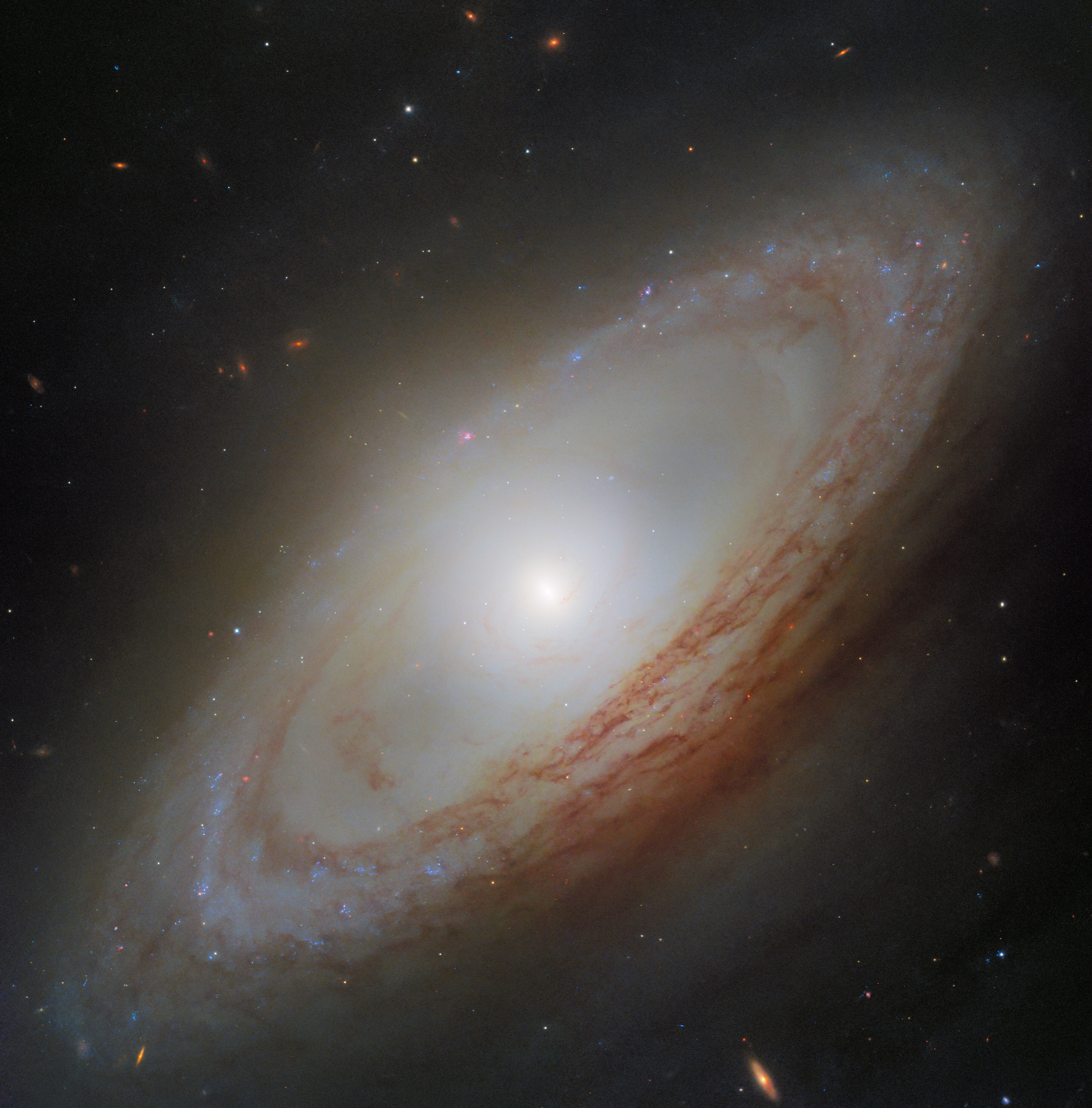
Explanation: Some 60 million light-years away in the southerly constellation Corvus , two large galaxies have collided . But stars in the two galaxies - NGC 4038 and NGC 4039 - don't collide in the course of the ponderous, billion year or so long event . Instead, their large clouds of molecular gas and dust do, triggering furious episodes of star formation. Spanning about 500 thousand light-years, this stunning view reveals new star clusters and matter flung far from the scene of the accident by gravitational tidal forces. Of course , the visual appearance of the far-flung arcing structures gives the galaxy pair its popular name - The Antennae. Recorded in this deep image of the region at the tip of the upper arc is a tidal dwarf galaxy NGC 4038S, formed in the cosmic debris.
| Date | June 30, 2006 |
|---|---|
| Credit | Credit & Copyright: Daniel Verschatse ( Antilhue Observatory ) |
| Authors & editors: | Robert Nemiroff (MTU) & Jerry Bonnell (UMCP) |
| A service of: |
ASD at NASA / GSFC, NASA Science Activation & Michigan Tech. U. |