














The Earth Observer
The Earth Observer newsletter, published by NASA's Science Support Office (Code 610) at the Goddard Space Flight Center, was an authoritative source for consolidating NASA Earth Science news for over three decades. Past issues are available for download via the Archives Page.
The Archives Page also has a Bibliography, which while not intended to be an exhaustive list, presents an overview of the history that were chronicled and preserved in The Earth Observer during the publication’s nearly 37 years of reporting on NASA Earth Science.

The Earth Observer Archives
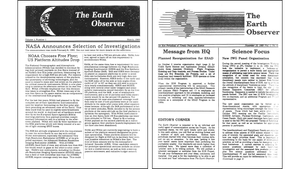
The Archives section includes a table listing all published issues of The Earth Observer saved in PDF format as well as an annotated bibliography of historical articles published in The Earth Observer.
Editor's Corner
These editorials chronicle NASA Earth Science history since 1989 – from the perspective of the EOS Senior Project Scientist. Each individual column reports on important “current” events that were taking place in NASA Earth Science at the time they were written.
It is with a heavy heart that I announce that NASA Earth Science Communications has directed The Earth Observer to…
NOTE TO READERS: After more than three decades associated with or directly employed by NASA, Steve Platnick [GSFC—Deputy Director for…
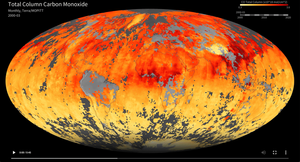
NASA’s Earth science missions have continued to demonstrate remarkable adaptability and innovation, balancing the legacy of long-standing satellites with the…
Feature Articles
Read stories about the history and accomplishments of current and former NASA Earth Science missions, programs, field campaigns, and outreach events, as well as a variety of other topics of interest to NASA Earth Science past, present, and future.
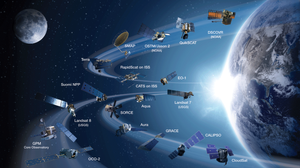
An Intertwined History: The Earth Observer and EOS The Earth Observer, a newsletter issued for nearly 37 years, will release its last online content at the close of 2025. This newsletter evolved in parallel with NASA’s Earth Observing System (EOS).…
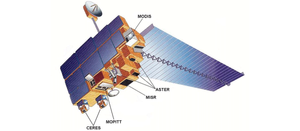
Launched into the night sky more than 26 years ago, on Dec. 18, 1999, from Vandenberg Air Force Base (now Space Force Base), Terra was NASA’s first Earth Observing System (EOS) flagship mission to study Earth’s land surface from space
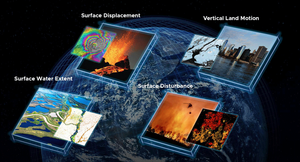
Introduction The Observational Products for End-Users from Remote Sensing Analysis (OPERA) project represents a strategic initiative designed to address critical satellite data needs identified by federal agencies. Established in 2021 by the NASA/Jet Propulsion Laboratory (JPL), OPERA responds to priorities…
Meeting Summaries
Read reports on Earth Science mission and instrument Science Team meetings, on science and applications workshops, and on other science meetings taking place both within NASA Earth Science and in the broader national and international Earth science communities.

Introduction The Clouds and the Earth’s Radiant Energy System (CERES) was initially designed in the late-1980s and early-1990s as a…

Introduction Launched in Feb. 2024, NASA’s Plankton, Aerosol, Cloud, ocean Ecosystem (PACE) mission is a cornerstone of Earth system science…
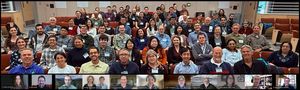
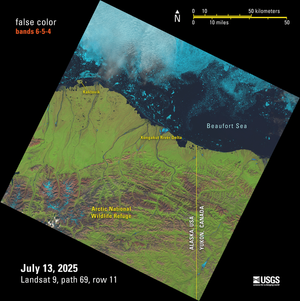
Introduction The NASA Arctic–Boreal Vulnerability Experiment (ABoVE) is a large-scale ecological study in the northern regions of North America (Alaska…


Earth Observer Staff

Steven E. Platnick
EOS Senior Project Scientist

Alan B. Ward
Executive Editor

Dalia Kirshenblat
Managing Editor

Doug Bennett
Associate Editor

Mike Marosy
Design/Production

Stacy W. Kish
Assistant/Technical Editor

Ernest Hilsenrath
Technical Editor