
























Planetary Analogs: News & Features
Similar environments on different worlds are called planetary analogs.
Browse stories about how Earth helps us understand our whole solar system and prepares us to explore:

NASA's Goddard Instrument Field Team hauled equipment up and down the cliffs of Scotland's Clachtoll region in a quest to better understand Earth – and Mars.

In this field test, a fleet of three robots worked together, and researchers assessed the fleet’s ability to act like an independent science team.
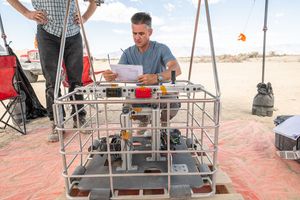
To prepare their spacecraft for Venus, NASA's DAVINCI scientists traveled to the most Venus-like place on Earth.
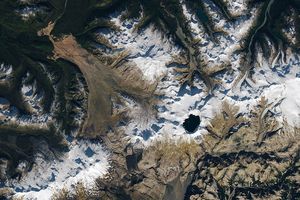
Apollo astronauts previewed their roles as lunar field geologists in Alaska’s Valley of Ten Thousand Smokes.

A massive, old caldera and more recently formed craters shape the landscape in the eastern Sierra Nevada.

Lake Unter-See in Antarctica, sealed beneath thick ice, has unusual water chemistry and cone-shaped microbial structures resembling some of Earth’s oldest fossils.

The hill-shaped features are a sign of explosive volcanic activity—a rarity on the Red Planet.

These scientists welcomed the new year from a ship at the tip of the Antarctic Peninsula. Their goal? Collect water samples comparable to oceans beyond Earth.