














Description
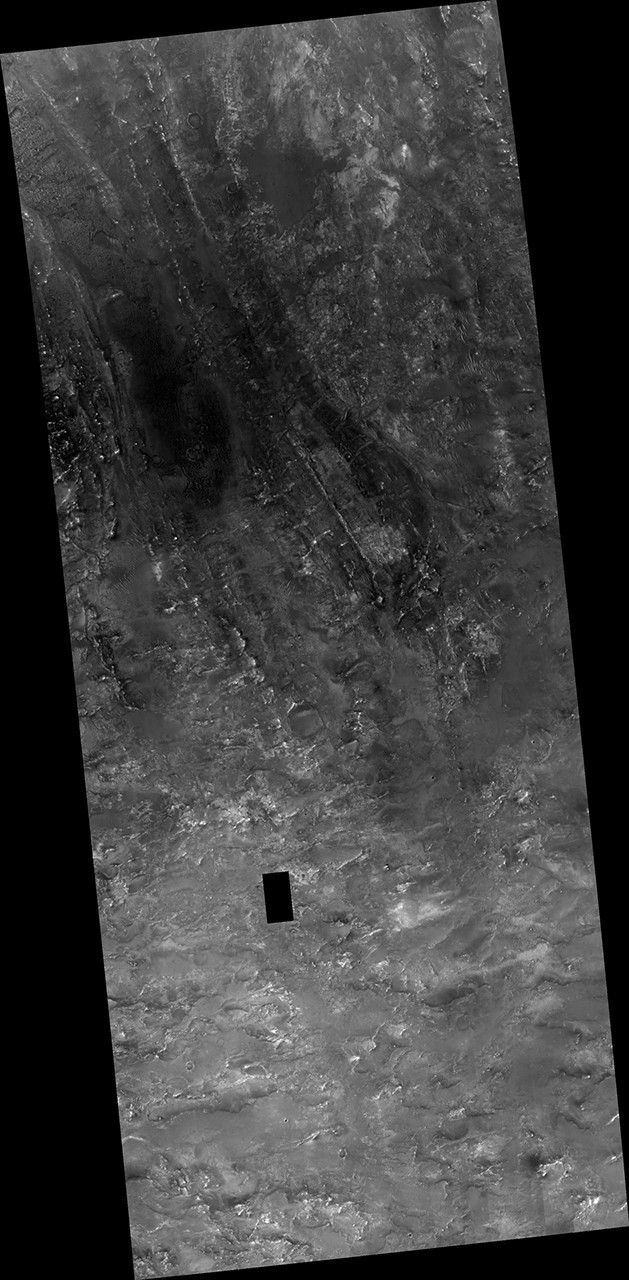
Map Projected Browse Image
Click on the image for larger version
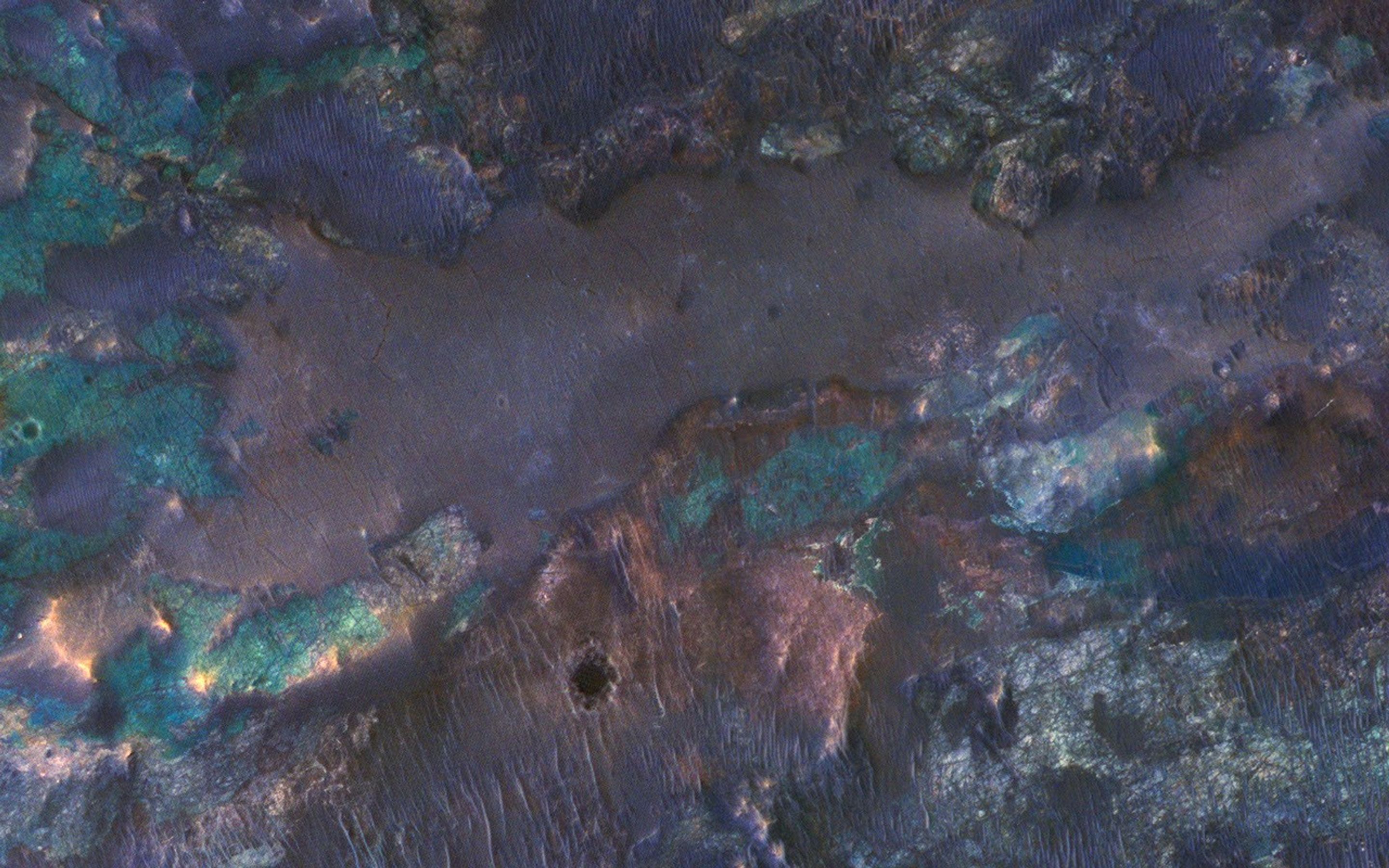
The collision that created Hargraves Crater impacted into diverse bedrock lithologies of ancient Mars. As a result, the impact ejecta is a rich mix of rock types with different colors and textures, as seen by NASA's Mars Reconnaissance Orbiter (MRO).
The crater is named after Robert Hargraves who discovered and studied meteorite impacts on the Earth.
This is a stereo pair with ESP_049963_2005.
The map is projected here at a scale of 50 centimeters (19.7 inches) per pixel. [The original image scale is 59.2 centimeters (22.4 inches) per pixel (with 2 x 2 binning); objects on the order of 178 centimeters (33.8 inches) across are resolved.] North is up.
The University of Arizona, Tucson, operates HiRISE, which was built by Ball Aerospace & Technologies Corp., Boulder, Colo. NASA's Jet Propulsion Laboratory, a division of Caltech in Pasadena, California, manages the Mars Reconnaissance Orbiter Project for NASA's Science Mission Directorate, Washington.