
















Suggested Searches

This content has been archived.

CYGNSS (Cyclone Global Navigation Satellite System)

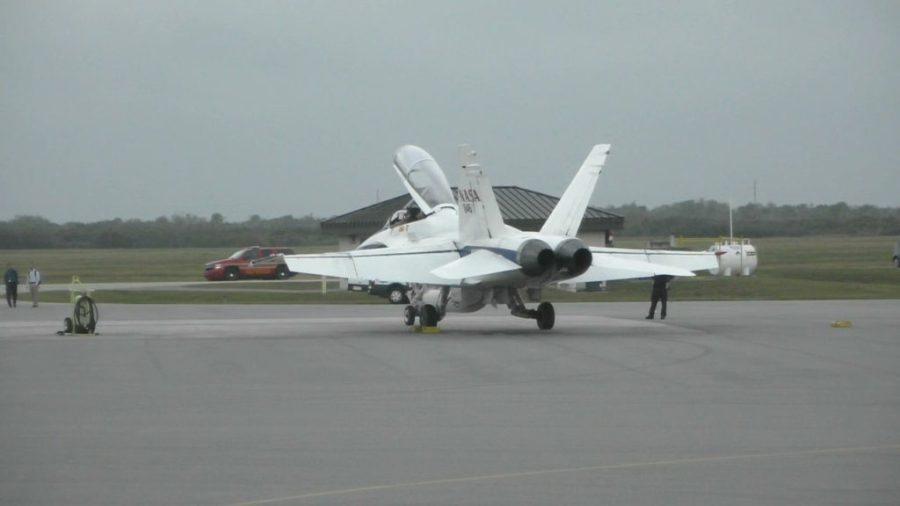
    Chase Plane Moving to Runway

    The NASA F-18 clase plane that will provide visual contact and video of the L-1011 and Pegasus XL rocket once they're airborne is taxiing into position for takeoff from the Skid Strip runway at Cape Canaveral Air Force Station in Florida.

    Read Full Post

    Stargazer on the Move

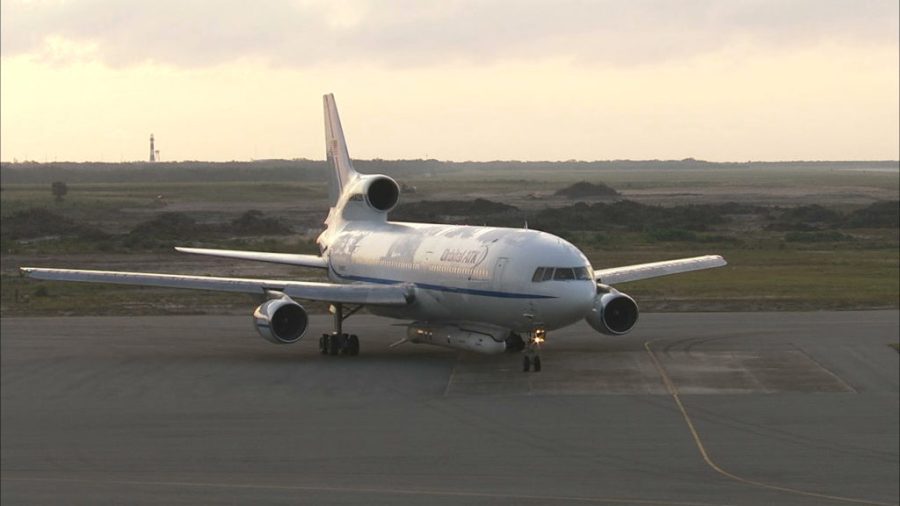
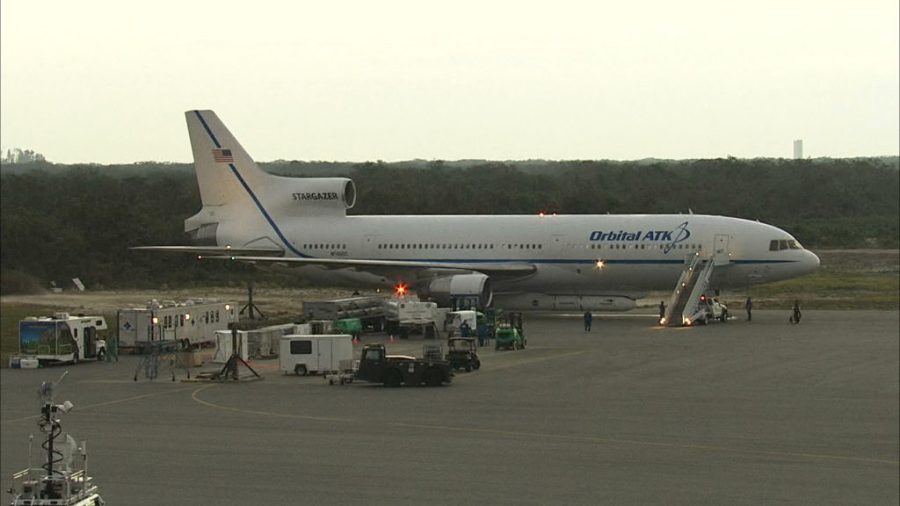
    Stargazer taxiing to runway.

    The Orbital ATK Stargazer L-1011 aircraft is taxiing to the end of the runway at the Skid Strip in preparation for takeoff. The F-18 chase plane should follow shortly.

    Read Full Post

    Air-Launched Pegasus XL a Unique Launch System

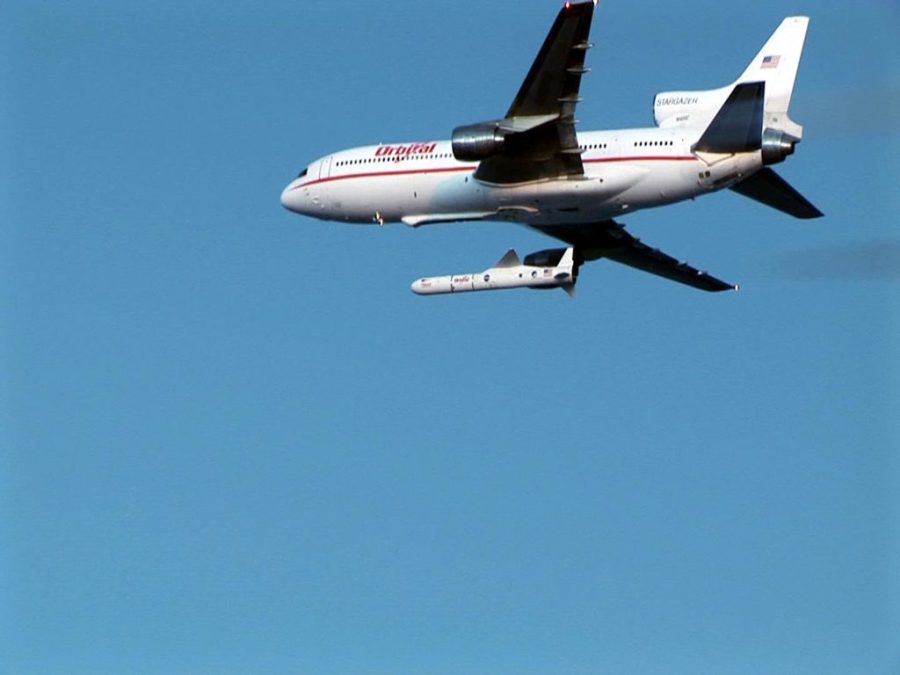
    Launch of a Pegasus XL rocket

    The three-stage, all-solid-fueled Orbital ATK Pegasus XL rocket is the only airborne, commercially developed launch vehicle. At 55 feet long, if stood on its end it would be about half the height of the Statue of Liberty. Its 39,000-foot deployment altitude is 10,000 feet higher than Mount Everest, the highest point on Earth – and …

    Read Full Post

    CYGNSS Microsats to Team Up with GPS for Cyclone Observation

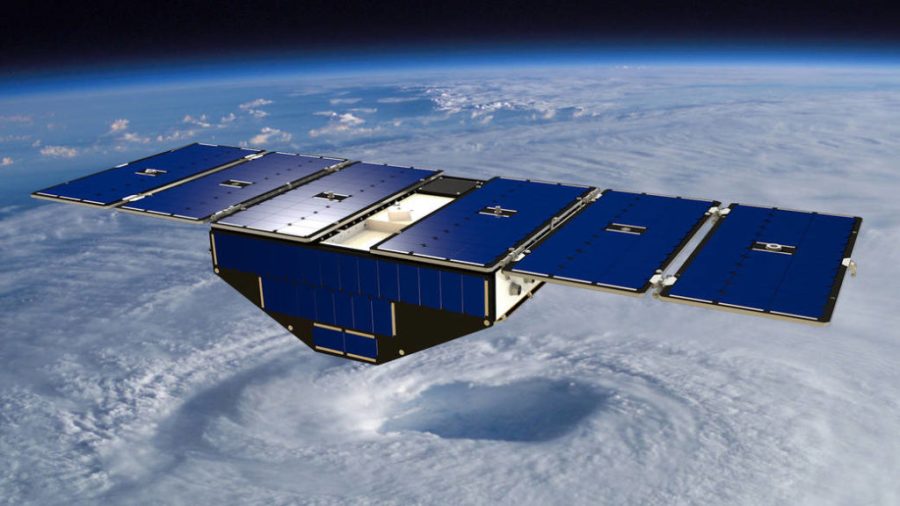
    Artist concept of a CYGNSS observatory in orbit.

    CYGNSS will utilize a constellation of eight microsatellite observatories that will be placed in a circular orbit more than 316 miles above the Earth's surface. With an orbital inclination of 35 degrees, the small spacecraft will concentrate on the region nearest the equator — the tropics — where these cyclones form. The mission will measure …

    Read Full Post

    On Track for Launch at 8:35 a.m. EST; Coverage Starts Now

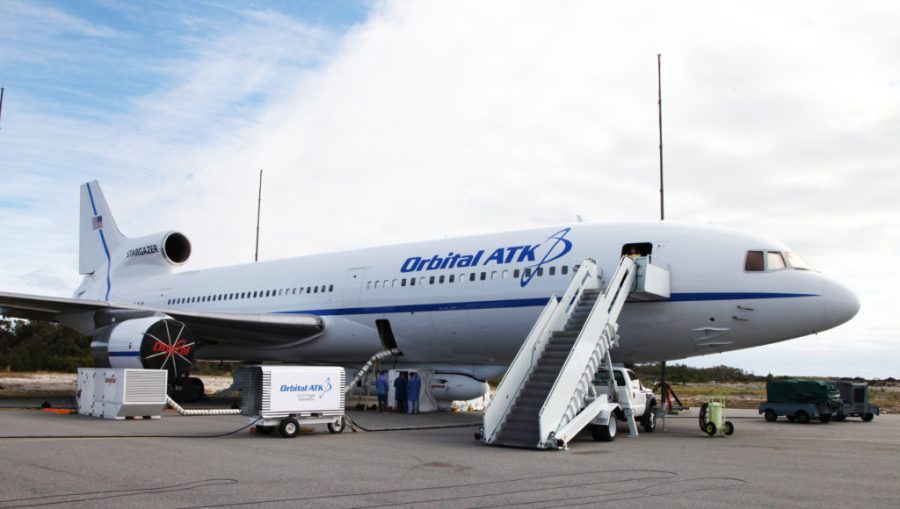
    The Orbital ATK Stargazer aircraft prepares for takeoff.

    NASA's Cyclone Global Navigation Satellite System mission, or CYGNSS, is scheduled to begin this morning with launch aboard an Orbital ATK Pegasus XL rocket at 8:35 a.m. EST. The one-hour launch window extends until 9:21 a.m. Forecasters with the U.S. Air Force 45th Weather Squadron predict a 90 percent chance of favorable conditions at launch …

    Read Full Post

    Launch Time Now 8:35 a.m. EST; Weather Now 90 Percent ‘Go’

    Today's launch of NASA's CYGNSS spacecraft aboard an Orbital ATK Pegasus XL rocket now is scheduled for 8:35 a.m. EST. The launch window extends to 9:21 a.m. The weather outlook has improved to a 90 percent chance of favorable conditions at launch time, with cumulus clouds the primary concern. Weather currently is "green" on all Eastern Range …

    Read Full Post

    CYGNSS Given a GO for Thursday Launch

    At Cape Canaveral Air Force Station's Skid Strip the Orbital ATK L-1011 Stargazer aircraft is being prepared to launch NASA's Cyclone Global Navigation Satellite System, or CYGNSS, spacecraft. The eight micro satellites are aboard an Orbital ATK Pegasus XL rocket strapped to the underside of the Stargazer. CYGNSS is scheduled for its airborne launch aboard the Pegasus XL rocket from the Skid Strip on Dec. 12. CYGNSS will make frequent and accurate measurements of ocean surface winds throughout the life cycle of tropical storms and hurricanes. The data that CYGNSS provides will enable scientists to probe key air-sea interaction processes that take place near the core of storms, which are rapidly changing and play a critical role in the beginning and intensification of hurricanes.

    NASA managers have given a GO for the next attempt to launch of the agency's Cyclone Global Navigation Satellite System (CYGNSS) mission now scheduled for Thursday at 8:26 a.m. EST. Mission personnel uploaded new flight parameter data to the CYGNSS spacecraft this morning, correcting an issue discovered during routine testing on Tuesday. There is no …

    Read Full Post