













Suggested Searches

Earth Matters

Viewing Posts from August 2013

View All Posts

    Subtleties of Color (Part 5 of 6)

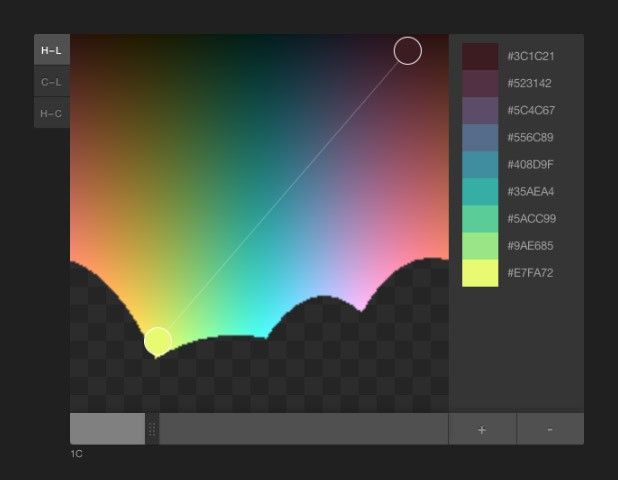
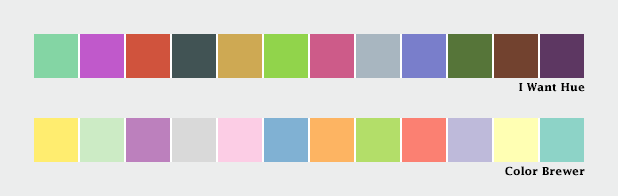
    Tools & Techniques: the Nuts and Bolts of Designing a Color Palette Knowing what makes a good palette for visualization, how to find and apply good examples, or create one from scratch? In my mind the best place to start is Color Brewer. Cynthia Brewer’s tool is popular for a reason: it explains the theory […]

    Read Full Post

    August Puzzler Answer

    A special congratulations to Cyndy Hunting for being our first reader to work out that the August puzzler showed Garden and Hog islands in northern Lake Michigan. After 19 puzzlers, this was the first time the correct answer came in as a comment on our Facebook page. Just a few hours after Cyndy nailed the […]

    Read Full Post

    August Puzzler

    Each month, Earth Observatory offers up a puzzling satellite image here on Earth Matters. The nineteenth puzzler is above. Your challenge is to use the comments section to tell us what part of the world we are looking at, when the image was acquired, and why the scene is interesting. How to answer. Your answer […]

    Read Full Post

    Subtleties of Color (Part 4 of 6)

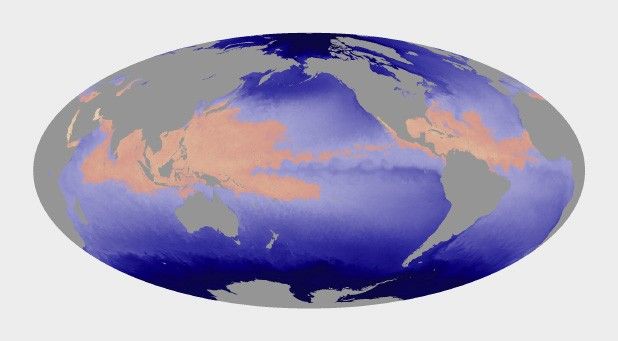
    Connecting Color to Meaning Pretty much any dataset can be categorized as one of three types—sequential, divergent, and qualitative—each suited to a different color scheme. Sequential data is best displayed with a palette that varies uniformly in lightness and saturation, preferably with a simultaneous shift in hue. Divergent data is suited to bifurcated palettes with […]

    Read Full Post

    Subtleties of Color (Part 3 of 6)

    Different Data, Different Colors There are several types of data, each suited to different types of display. Continuously varying data, called sequential data, is the most familiar. In addition to sequential, Cynthia Brewer defines two additional types of data: divergent and qualitative. Divergent data has a “break point” in the center, often signifying a difference. […]

    Read Full Post

    Ocean Revealed or Hidden?

    Yesterday’s Image of the Day — Ocean Revealed — elicited an interesting response from Norman Kuring, a NASA oceanographer who frequently contributes to the Earth Observatory. He notes: “There have indeed been a number of studies that exploit sunglint for ocean research since Paul Scully-Power made his statement. However, I disagree with the follow-on sentence that, “his […]

    Read Full Post

    Blazing Hangout

    Wildfires follow a simple but dangerous equation: Hotter, dryer conditions + more people in the world = a greater likelihood of ferocious wildfires threatening lives and property. Fires in the western United States are burning earlier, longer and with more intensity, as shown by a decades-long record from ground surveys and NASA satellites. How much of […]

    Read Full Post

    Subtleties of Color (Part 2 of 6)

    The “Perfect” Palette Despite the near-ubiquity of the rainbow palette—which distorts patterns in the underlying data—the basics of using color to represent numerical data are well-established. This 1823 map by W. C. Woodbridge is an early example of the use of colors to represent numbers—in this case more qualitative than quantitative. The rainbow palette is […]

    Read Full Post

    Subtleties of Color (Part 1 of 6)

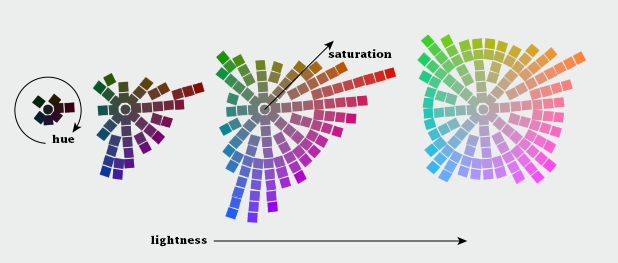
    Introduction The use of color to display data is a solved problem, right? Just pick a palette from a drop-down menu (probably either a grayscale ramp or a rainbow), set start and end points, press “apply,” and you’re done. Although we all know it’s not that simple, that’s often how colors are chosen in the […]

    Read Full Post

    Sun, Moon, and Two Planets Rising Over Earth’s Limb

    NASA astronaut Karen Nyberg took this photograph of moonrise and sunrise over Earth’s limb on August 4, 2013. In a tweet, Nyberg noted that she also saw Jupiter and Mercury as she looked out from the International Space Station, but the glare of the Sun’s light hid them in her photo. When astronomer and Slate blogger Phil Plait […]

    Read Full Post