






















NASA’s Europa Clipper Observes Comet 3I/ATLAS
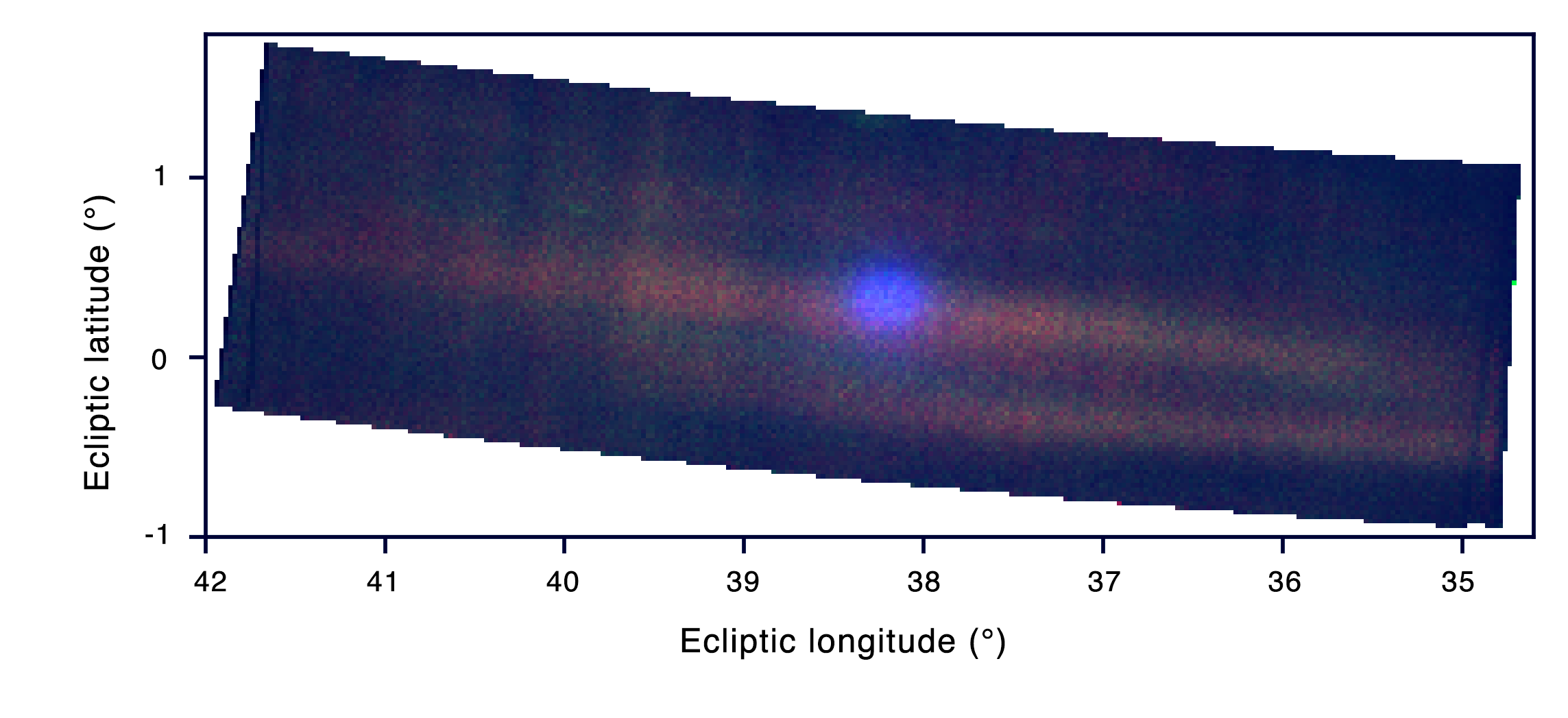
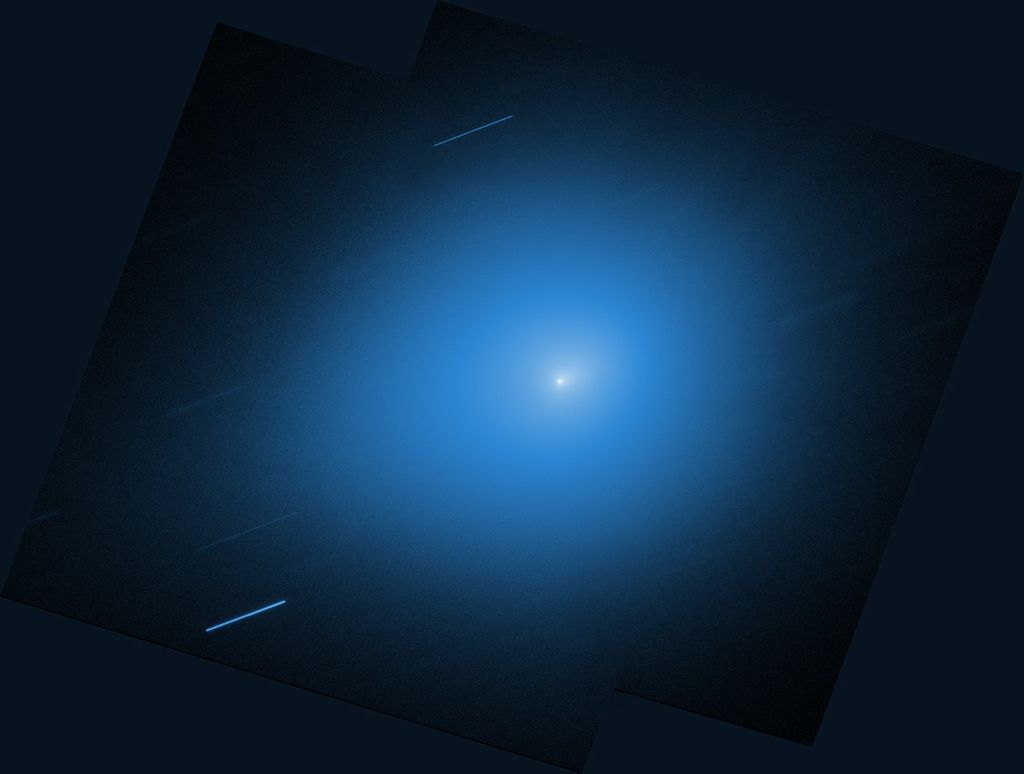
NASA’s Europa Clipper mission observed the interstellar comet 3I/ATLAS on Nov. 6 from a distance of about 102 million miles (164 million kilometers). Captured over a period of seven hours, the data gathered by the spacecraft’s Europa Ultraviolet Spectrograph (Europa-UVS) instrument will help scientists determine the composition and distribution of elements in the comet’s coma — the cloud of gas and dust that surrounds its central core of ice and rock.
The Europa-UVS instrument scans a section of the sky, collecting ultraviolet light and separating it into its constituent wavelengths to understand the chemical makeup of the objects in view. By stacking multiple observations together and shifting the results into wavelengths human eyes can discern, the instrument team can produce a visible image, as it did with the comet.
Like the mission’s eight other science instruments, Europa-UVS was designed and calibrated with its primary science target in mind: Jupiter’s moon Europa. But, as with several other NASA robotic missions, Europa Clipper’s team has been able to creatively repurpose custom instrumentation on the spacecraft to take advantage of a unique opportunity to examine 3I/ATLAS as it moves swiftly through the solar system, never to return.
Launched in October 2024, Europa Clipper will arrive at the Jupiter system in April 2030, where the mission will investigate Europa, an ice-encased moon with an enormous subsurface ocean that may have conditions to support life. The science team will use the Europa-UVS instrument to study the moon’s atmosphere and surface and to search for signs of plumes being emitted from its surface.