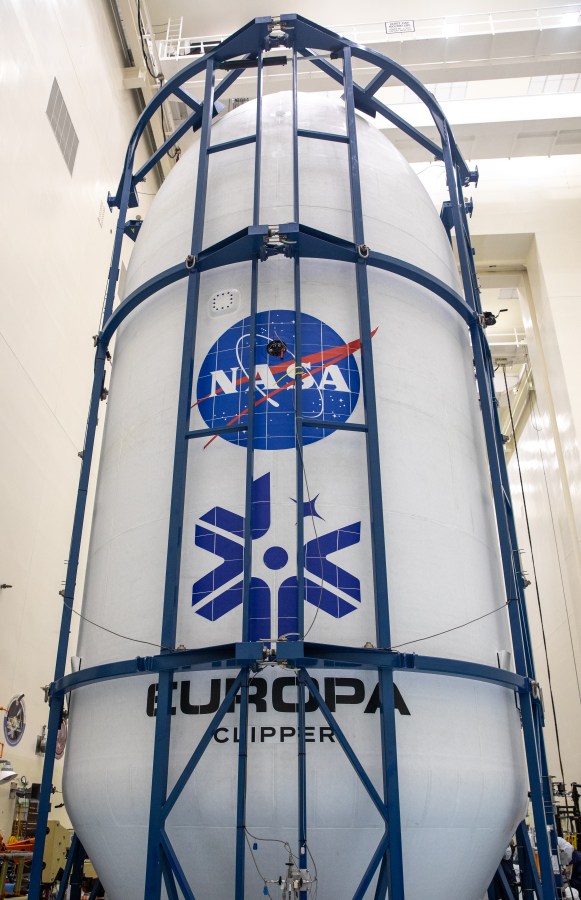








NASA’s Europa Clipper mission passed a mission planning milestone, known as Key Decision Point E, on Monday. It now is approved to continue to proceed toward launch, with a launch period that opens Thursday, Oct. 10.
NASA’s Europa Clipper mission remains on track, with a launch period opening on Thursday, Oct. 10. The next major milestone for Clipper is Key Decision Point E on Monday, Sept. 9, in which the agency will decide whether the project is ready to proceed to launch and mission operations. NASA will provide more information at …
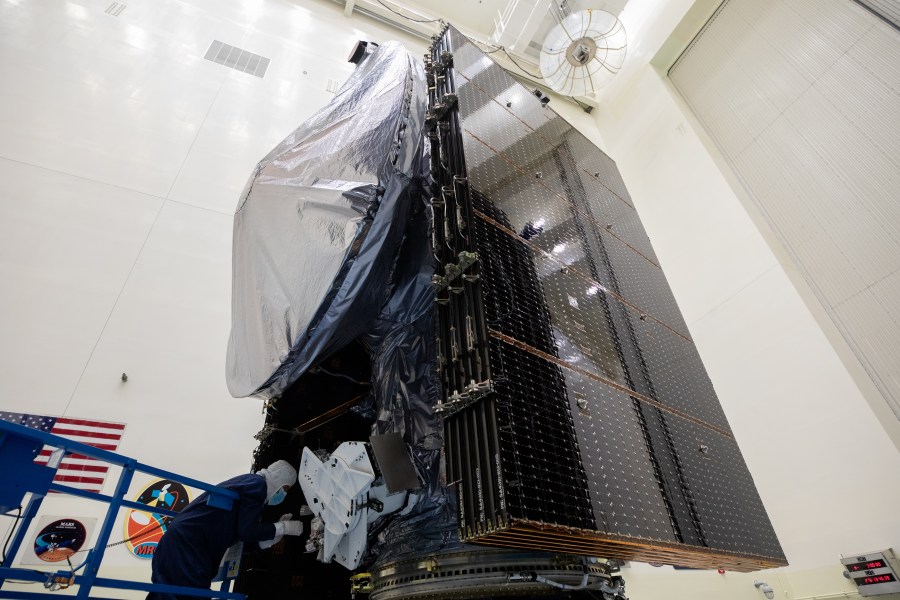
Launch preparations are progressing with NASA’s Europa Clipper mission. The spacecraft arrived at the agency’s Kennedy Space Center in Florida in May, where the team recently attached the high-gain antenna. Engineers with NASA’s Europa Clipper mission continue to conduct extensive testing of transistors that help control the flow of electricity on the spacecraft. NASA’s Jet …

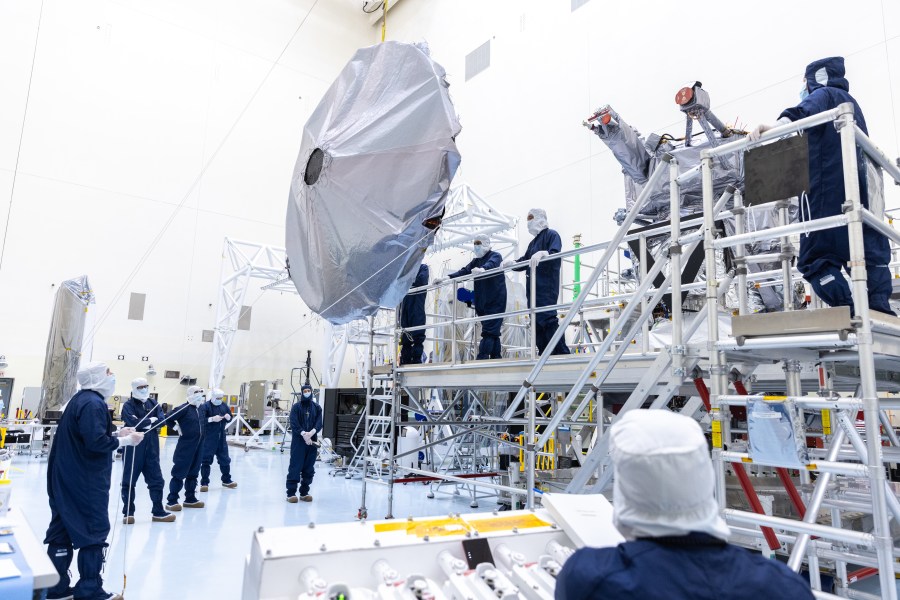
When NASA’s Europa Clipper is in orbit around Jupiter, transmitting science data and receiving commands from Earth across hundreds of millions of miles, it will need a powerful antenna. Technicians installed the spacecraft’s high-gain antenna inside the Payload Hazardous Servicing Facility at NASA’s Kennedy Space Center in Florida on June 17. Scheduled to launch later …
As NASA’s Europa Clipper continues preparations in advance of its launch period — opening Oct. 10 — the mission team is assessing whether transistors on the spacecraft can withstand the intense radiation the probe will encounter at Jupiter. These transistors are used as electrical switches in many digital electronics. The particular versions used by Europa …

NASA’s Europa Clipper, a spacecraft designed to investigate Jupiter’s icy moon Europa and its potential to support life, arrived in Florida on May 23. The spacecraft, assembled at NASA’s Jet Propulsion Laboratory (JPL) in Southern California, landed aboard a United States Air Force C-17 Globemaster III aircraft at the Launch and Landing Facility at NASA’s …

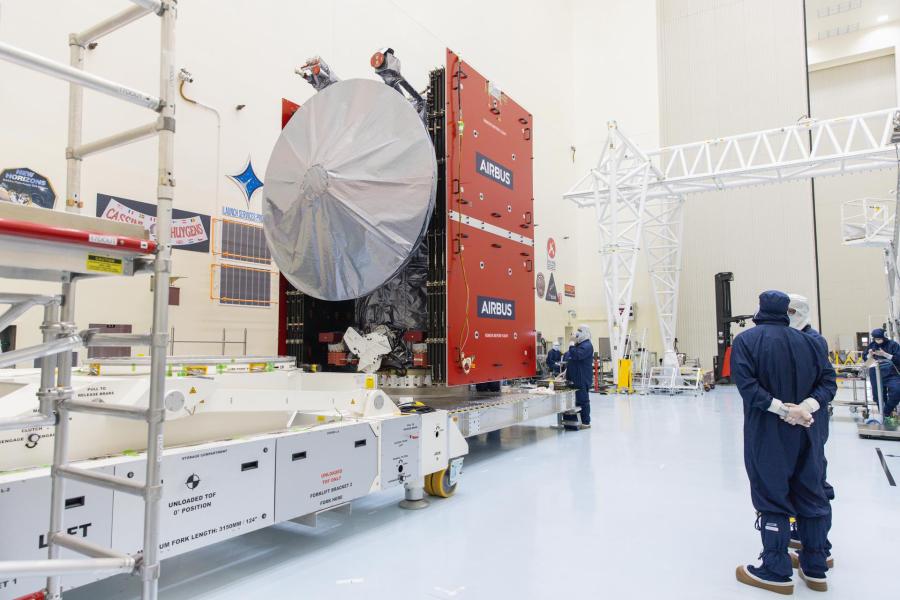
Processing of the large solar arrays built for NASA's Europa Clipper is now underway inside the Payload Hazardous Servicing Facility at the agency's Kennedy Space Center in Florida. Planned to arrive at Jupiter in April 2030, the spacecraft will study Jupiter's moon Europa, which shows strong evidence beneath its icy crust of a global ocean …

NASA's mission to study Jupiter's icy moon Europa completed another milestone as power supply hardware for the Europa Clipper spacecraft arrived on Wednesday, Feb. 21, at the agency's Kennedy Space Center in Florida. Workers unloaded the five-panel solar arrays at the Payload Hazardous Servicing Facility. The solar arrays will attach to the spacecraft to power …