











Suggested Searches

New Horizons

    A Picture of Pluto is Worth a Thousand Words
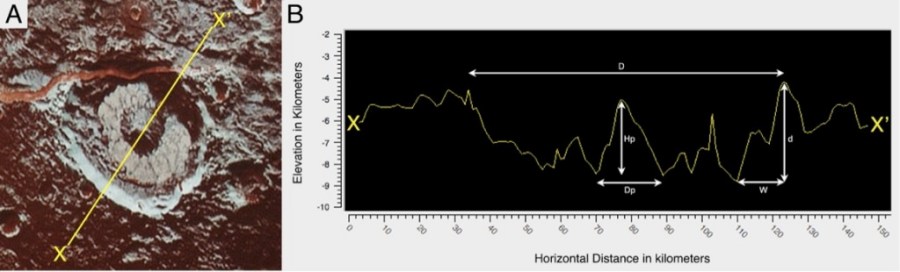
    Topographic profile, taken from a preliminary digital terrain model, with crater dimension marked

    Today's blog is from Veronica Bray, a planetary scientist at the Lunar and Planetary Laboratory in Tucson. She specializes in comparing the surfaces of planetary bodies across the solar system, especially through the study of impact craters. A spacecraft flies to Pluto, amazing images of this alien disk are sent back to Earth for us …

    Read Full Post

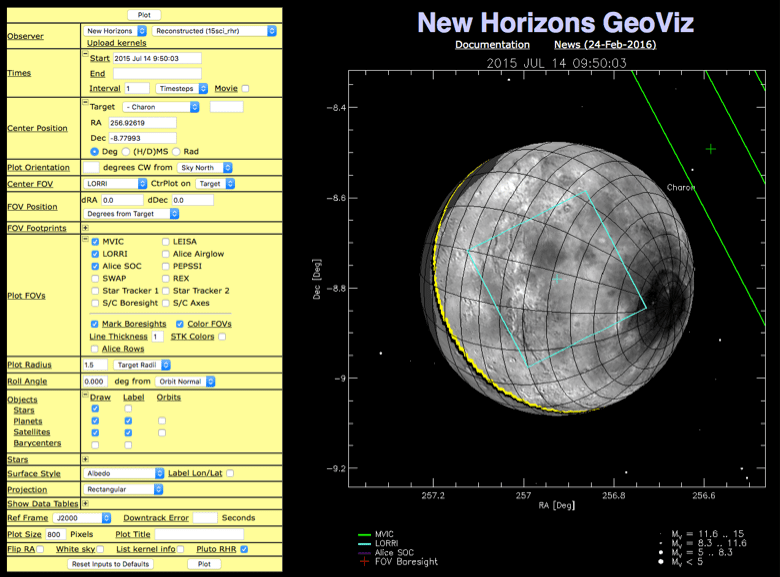
    Planning for Pluto with GeoViz

    New Horizons GeoViz

    Today's blog is from Dr. Henry Throop, a planetary scientist with the Planetary Science Institute in Mumbai, India. He received his PhD in 2000 from the University of Colorado, Boulder. His areas of research include the outer solar system, the rings of Jupiter and Saturn, and planet formation in the Orion Nebula. He has been …

    Read Full Post

    Pluto Flyby: The Story of a Lifetime

    Image of People Surrounding a computer

    "You can report on history, or you can be part of it." This quote – from a colleague here at NASA – sums up what inspired me to take a giant leap from a digital newsroom to the mission operations center for the July 2015 New Horizons Pluto flyby. I'm Laurie Cantillo, and as media …

    Read Full Post

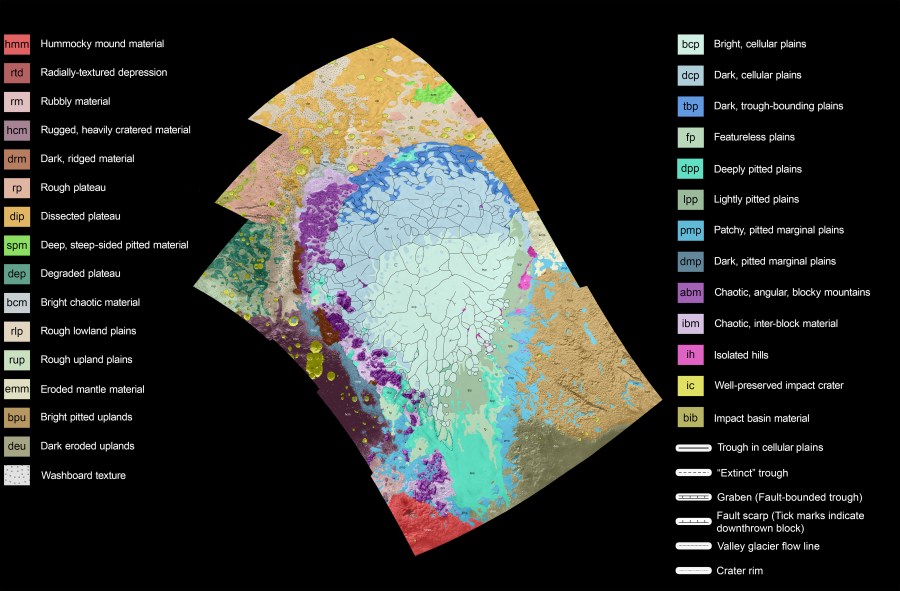
    Mapping to Make Sense of Pluto

    Pluto Geologic Map

    Today's blog post is from Oliver White, a postdoctoral researcher in planetary science at NASA Ames Research Center in Mountain View, California. He studies the geomorphology and surface processes of planetary bodies in the outer solar system. Looking at the surface of a planet or moon for the first time can be bewildering, particularly when …

    Read Full Post

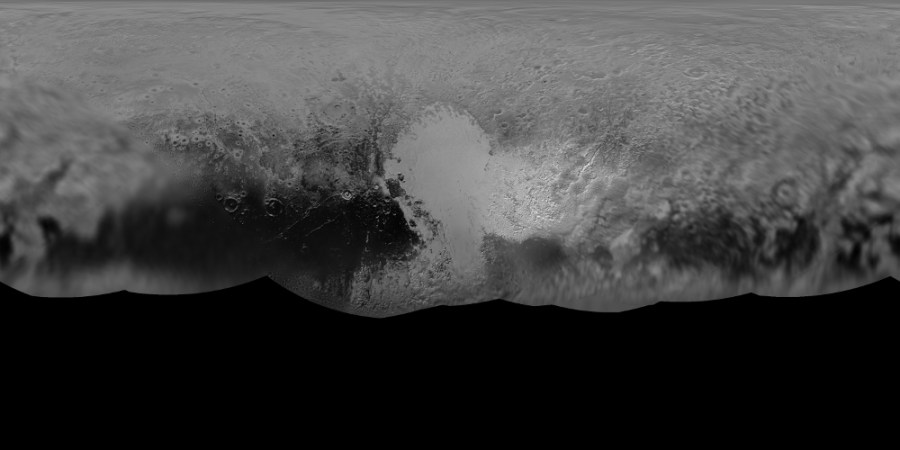
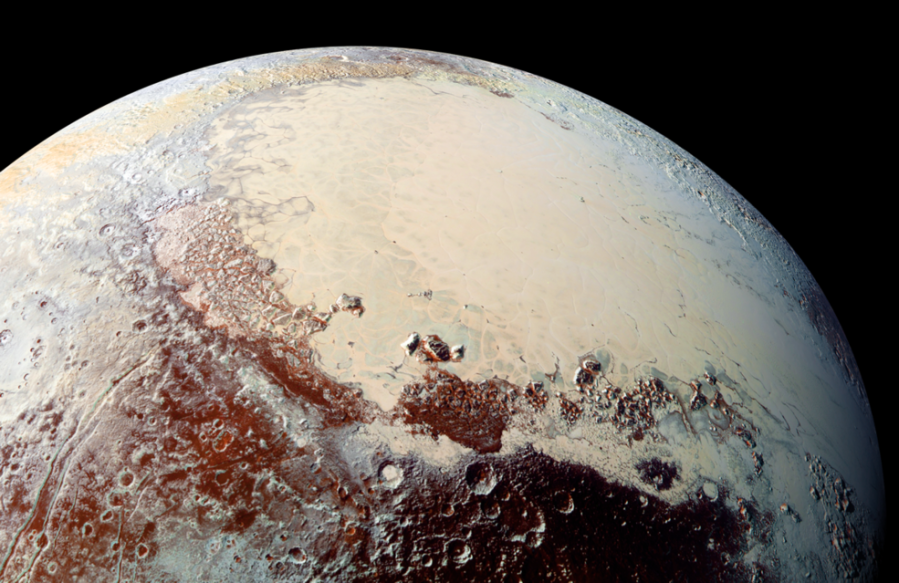
    Mapping Pluto

    Pluto

    Today's blog post is from Ross Beyer, a planetary scientist with the Carl Sagan Center at the SETI Institute and NASA Ames Research Center in Mountain View, California. He studies surface geomorphology, surface processes, remote sensing and photogrammetry of the solid bodies in our solar system. I've always loved maps, and I've always loved planets …

    Read Full Post

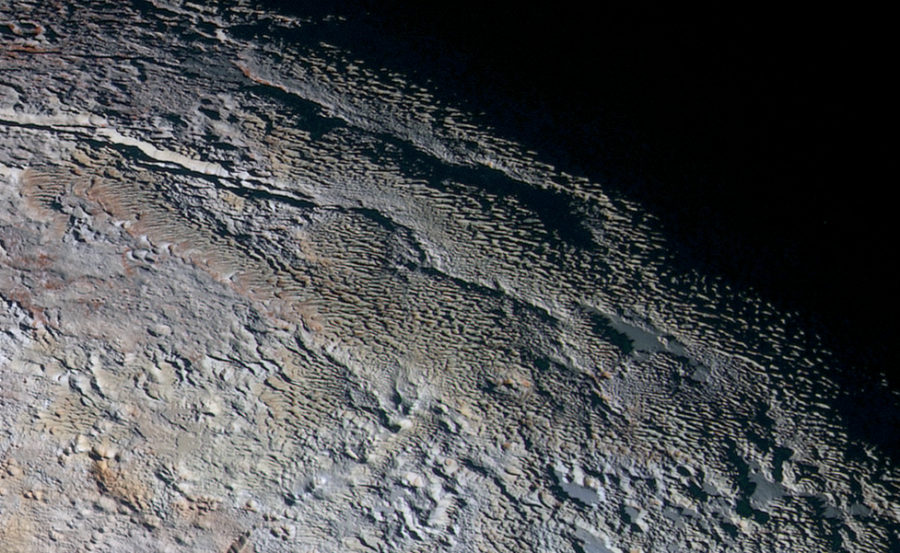
    Pluto’s ‘Snakeskin’ Terrain: Cradle of the Solar System?

    The Bladed Terrain of Tartarus Dorsa

    Today's blog post is from Orkan Umurhan, a mathematical physicist currently working as a senior post-doc at NASA Ames Research Center. He has been on the New Horizons Science Team for over two years. He specializes in astrophysical and geophysical fluid dynamics, and now works on a variety of geophysical problems, including landform evolution modeling …

    Read Full Post

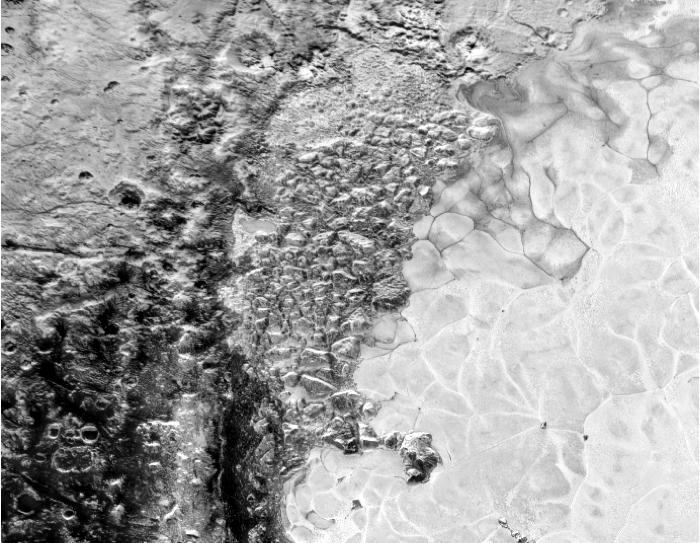
    The Polygons of Pluto

    Pluto's Al-Idrisi Montes

    Today's blog is from Katie Knight, an undergraduate student at Carson-Newman University in Jefferson City, Tennessee. She works with the New Horizons team to help map some of the unusual terrain on Pluto, seeking patterns and estimating sizes and shapes of some of its unusual features. Hello! My name is Katie Knight, and I'm here …

    Read Full Post

    Where’s My Data? Keeping Track of New Horizons’ Treasure of Information

    Pluto

    Last summer's historic flyby of Pluto and its moons generated a wealth of science data, capturing this new world which had never before been explored. Thousands of high resolution images, spectra and particle data were recorded on the spacecraft's two solid state recorders as the spacecraft flew by its targets. It was a fast flyby, …

    Read Full Post

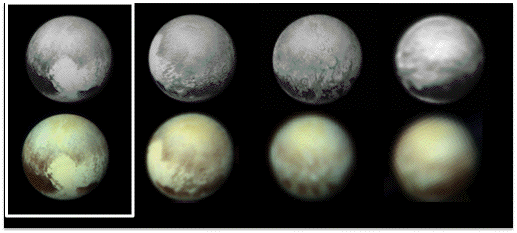
    The Many Faces of Pluto and Charon

    Four Faces of Pluto

    Today's blog post is from Kimberly Ennico, a member of the New Horizons' Composition Theme Team and one of the deputy project scientists. She works at NASA's Ames Research Center in Moffett Field, California, and has been on detail to the Southwest Research Institute in Boulder, Colorado. No one can doubt the beauty of Pluto …

    Read Full Post