

The GEO-CAPE ROIC In-Flight Performance Experiment, or GRIFEX, has successfully separated from the Delta II. GRIFEX is a technology validation mission consisting of three CubeSat units.
GRIFEX Released
Read Full Post









The GEO-CAPE ROIC In-Flight Performance Experiment, or GRIFEX, has successfully separated from the Delta II. GRIFEX is a technology validation mission consisting of three CubeSat units.
The FIREBIRD-II (A and B) payload has been deployed! This is a two-Cubesat space weather project that will study electron microbursts in the Van Allen radiation belts.
SECO-3. The second-stage engine performed a brief burn in preparation for release of the P-PODs.
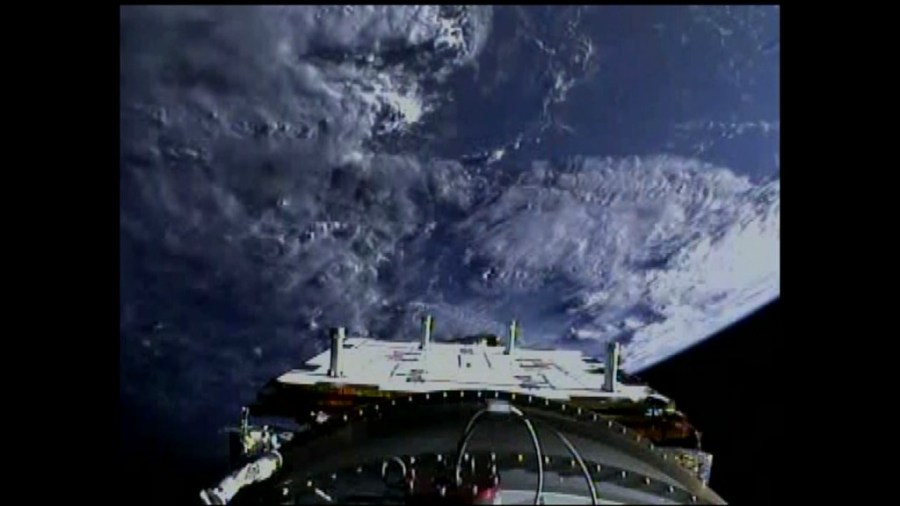
A camera on the second stage of the Delta II rocket captured this footage as the SMAP spacecraft pushed itself away from the rocket to complete the delivery of the Earth-observing spacecraft to its proper orbit.
NASA Launch Manager Tim Dunn reports all is well with the SMAP spacecraft following a successful countdown and flawless launch this morning from Vandenberg Air Force Base in California. "We're in contact with SMAP and everything looks good right now," Dunn said. "Deployment of the solar arrays is underway. We just couldn't be happier." He …
 Read Full Post
"And there go the arrays," NASA TV Commentator George Diller said as SMAP's three-panel solar array began to open. The spacecraft is power-positive. Deployment of the first CubeSat P-POD, FIREBIRD, is expected in about 45 minutes.
NASA's SMAP spacecraft is flying solo following a successful separation from the Delta II rocket. This is a 411-by-425-mile injection orbit. During the next few weeks, the spacecraft will make adjustments until it reaches its operational orbit of 426 miles. Once operational, the observatory will sweep above Earth in a near-polar orbit at an altitude …
SMAP will be released in two minutes.