







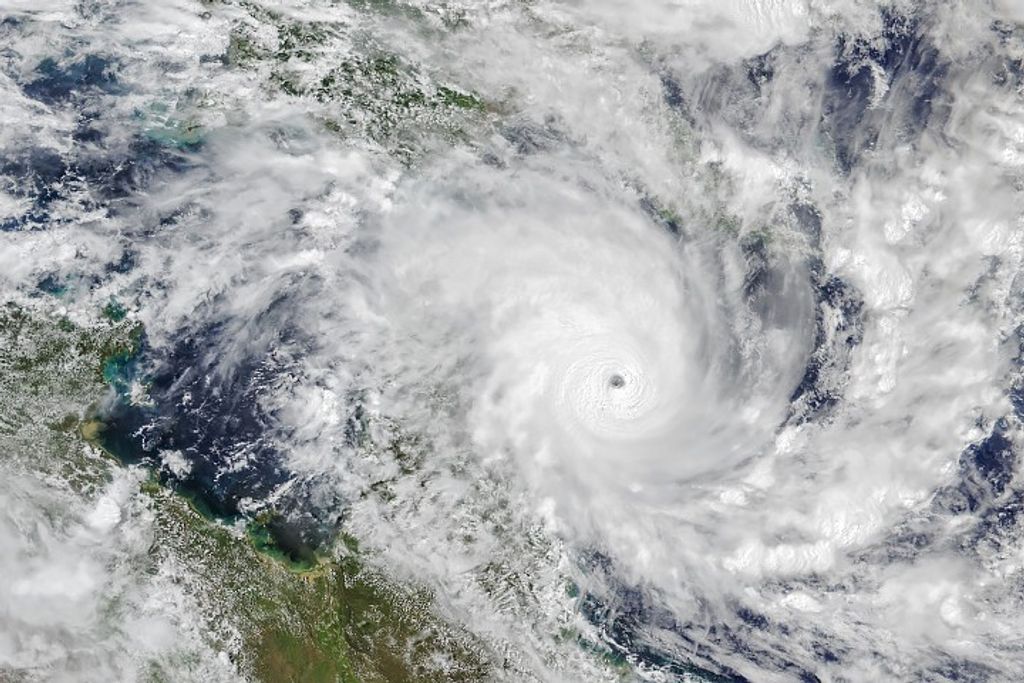






Over the past week or two, there has been severe flooding in Australia, Brazil, Sri Lanka, and the Phillipines, but all we’ve shown on the Earth Observatory is the flooding in Australia. Why?

Editor’s Note: A rare snowstorm isn’t the only interesting thing that happened across the South this past week. On the night of Tuesday, Jan. 11, an extremely bright fireball meteor streaked over Jackson, Miss., and was visible across several southern states. NASA astronomer Bill Cooke of the Meteoroid Environment Office at Marshall Space Flight Center …

The 2010 solstice lunar eclipse is one for the books, but check out these images from two cameras in the Canadian all-sky meteor camera network.These cameras are similar to the ones used for observation at NASA’s Marshall Space Flight Center: all-sky, black-and-white, and detecting bright meteors, or fireballs. Below are two stacked images of the eclipse:Stacked …

Cloudy skies over much of the U.S. might make for challenging viewing tonight for the solstice lunar eclipse. This screenshot shows a view of the skies over Marshall Space Flight Center inHuntsville, Ala., at approximately 6:45 p.m. on Dec. 20. (See Current View) To help work around the mercurial weather, here’s a list of web …

The first total lunar eclipse in two years will grace the sky the night of Monday, Dec. 20, and we want you to be there. Sure, it’s a school night, but with winter solstice and a new year upon us, what better time to gather your family and friends to see the moon in a …

Things are getting a little stranger in the asteroid belt these days! Objects in this zone of the solar system are known to be rocky bodies, though in the past few years several of these bodies have had cometary features detected. One such body is 596 Scheila, which has always been confidently called a main-belt …

Baby, it’s cold outside — but you can still enjoy the best meteor shower of the year. The 2010 Geminid meteor shower promises to be lively, with realistic viewing rates of 50-80 meteors per hour and potential peaks reaching 120 meteors per hour. Anytime between Dec. 12-16 is a valid window for Geminid-watching, but the …

Last night the NASA All-sky Meteor cameras detected their first Geminid fireball of 2010! The fireball, detected from cameras positioned in both Huntsville, Ala., and Chickamauga, Ga., was first spotted over southern Tennessee at a height of 58.7 miles above the ground. It streaked across the sky over northern Alabama at a speed of 76,300 …
The animation below shows the motion of Comet Ikeya-Murakami on Nov. 13, 2010, captured with a New Mexico-based telescope operated remotely by NASA’s Marshall Space Flight Center. The images were taken near dawn and show the comet’s movement over a period of 45 minutes. Each exposure was three minutes in length, and the faint angled streak …