















Suggested Searches

Blogs

    NASA Astronaut Frank Rubio and Crewmates Returning to Earth Live on NASA TV

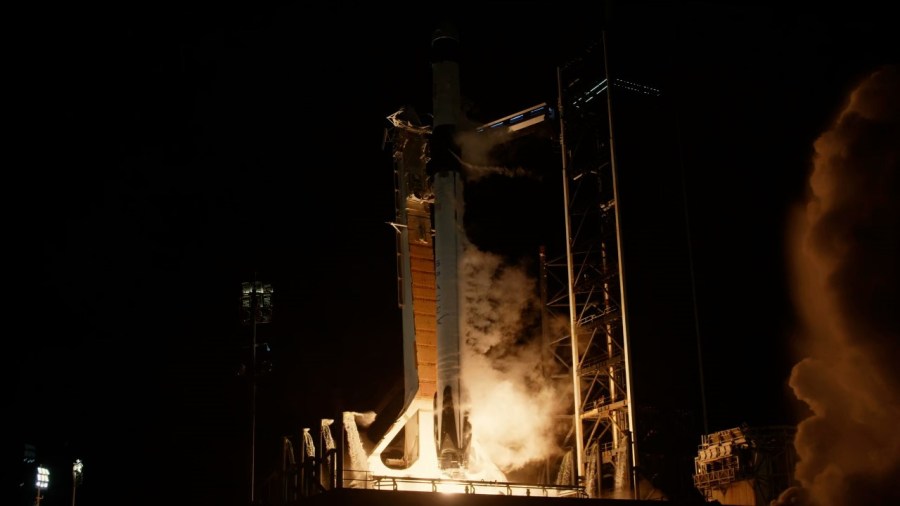
    NASA Television coverage of NASA astronaut Frank Rubio and two Roscosmos cosmonauts’ return to Earth is underway. Rubio, along with Sergey Prokopyev and Dmitri Petelin, began the journey back to Earth in the early morning hours when the Soyuz MS-23 spacecraft undocked from the International Space Station’s Prichal module at 3:54 a.m. EDT. The trio …

    Read Full Post

    Soyuz Undocks, Crew Headed Back to Earth

    At 3:54 a.m. EDT NASA astronaut Frank Rubio, along with Roscosmos cosmonauts Sergey Prokopyev and Dmitri Petelin, undocked from the International Space Station in the Soyuz MS-23 spacecraft to begin the journey back to Earth. The Soyuz is heading for a parachute-assisted landing Wednesday, Sept. 27, on the steppe of Kazakhstan, southeast of the remote …

    Read Full Post

    Crewed Soyuz Spacecraft Undocking Live on NASA TV

    NASA Television coverage of NASA astronaut Frank Rubio and two Roscosmos cosmonauts’ departure from the International Space Station is underway. Rubio, along with Sergey Prokopyev and Dmitri Petelin, closed the hatch to the Roscosmos Soyuz MS-23 spacecraft about 12:41 a.m. EDT. The Soyuz spacecraft will undock at 3:54 a.m. from the Prichal module, heading for …

    Read Full Post

    Soyuz Hatch Closed, Crew Awaits Undock

    At 12:41 a.m. EDT, the hatch closed between the Soyuz MS-23 spacecraft and the International Space Station in preparation for undocking. NASA astronaut Frank Rubio and cosmonauts Sergey Prokopyev and Dmitri Petelin of Roscosmos are scheduled to undock their Soyuz spacecraft at 3:54 a.m. to begin their journey back home. Mission coverage will continue live on …

    Read Full Post

    NASA TV Live With Crew Farewell and Hatch Closure

    NASA Television coverage of NASA astronaut Frank Rubio and two Roscosmos cosmonauts’ end of mission aboard the International Space Station is underway. Rubio, along with Sergey Prokopyev and Dmitri Petelin, will close the hatch to the Roscosmos Soyuz MS-23 spacecraft at 12:40 a.m. EDT Wednesday, Sept. 27, to begin the journey back to Earth. The Soyuz …

    Read Full Post

    ISS Daily Summary Report – 9/26/2023

    Change of Command Ceremony: The full crew on-board the ISS participated in a public ceremony to mark the change of command between Roscosmos cosmonaut Sergey Prokopyev and ESA astronaut Andreas Mogensen. The change of command is in preparation for tomorrow’s 69 Soyuz return, carrying NASA astronaut Frank Rubio and Roscosmos cosmonauts Sergey Prokopyev and Dmitry …

    Read Full Post

    The OSIRIS-REx Sample Canister Lid is Removed

    Lockheed Martin Recovery Specialists, Levi Hanish and Michael Kaye remove the lid of the sample return cannister. Credit: NASA/Robert Markowiz

    NASA scientists found dark powder and sand-sized particles on the avionics deck of the OSIRIS-REx science canister when the initial lid was removed today. The canister from the OSIRIS-REx sample return capsule was delivered to NASA's Johnson Space Center in Houston on Sept. 25 after landing in the Utah desert on Sept. 24. Johnson houses …

    Read Full Post

    Earth’s Magnetosphere and Plasmasheet

    The Earth, surrounded by lines shooting out in many directions. They are labeled Interplanetary Magnetic Field Lines, which flow toward Earth. A bend in on of those lines is a Bow Shock. Lines looping out from Earth are labeled magnetosheath, magnetopause, magnetotail. Shaded areas billowing out from Earth are the Plasmasphere, Radiation Belts, and Plasma Sheet.

    A magnetosphere is that area of space, around a planet, that is controlled by the planet's magnetic field. The shape of the Earth's magnetosphere is the direct result of being blasted by solar wind. The solar wind compresses its sunward side to a distance of only 6 to 10 times the radius of the Earth. …

    Read Full Post

    Layers of the Sun

    The Sun, with layers labeled: Core, radiative zone, Convection zone, chromosphere, and corona. Features, including a solar prominent, subsurface flows, sunspots, flare, and a corona hole are labeled.

    The Sun and its atmosphere consist of several zones or layers. From the inside out, the solar interior consists of: The Core – the central region where nuclear reactions consume hydrogen to form helium. These reactions release the energy that ultimately leaves the surface as visible light. The Radiative Zone – extends outward from the …

    Read Full Post