
















Suggested Searches

Blogs

    NASA’s ESCAPADE Launch Shifted by Solar Storms, Now Targeting Nov. 13

    Blue Origin rocket carrying NASA's ESCAPADE is vertical on launch pad.

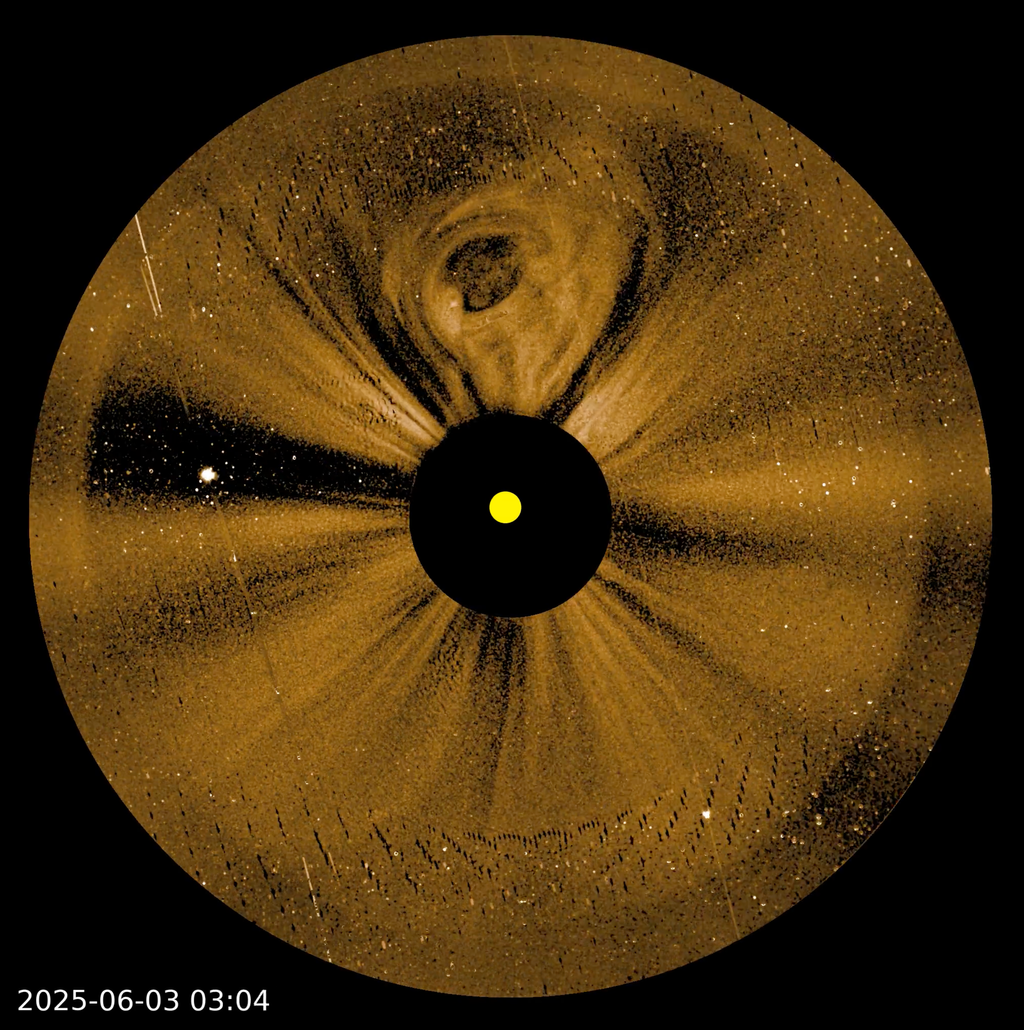
    NASA postponed the launch of its ESCAPADE (Escape and Plasma Acceleration and Dynamics Explorers) mission on Nov. 12 due to highly elevated space weather activity that evolved into the most intense geomagnetic storm of 2025. The next launch attempt is today, beginning with a launch window that opens at 2:57 p.m. EST.  Several eruptions on […]

    Read Full Post

    NASA Draws Closer to Artemis II Rocket Completion with Newest Addition

    NASA integrated the Artemis II Orion stage adapter with the rest of the SLS (Space Launch System) rocket on Wednesday in the Vehicle Assembly Building at the agency’s  Kennedy Space Center in Florida. Built by NASA engineers at the agency’s Marshall Space Flight Center in Huntsville, Alabama, the adapter connects the rocket’s interim cryogenic propulsion […]

    Read Full Post

    Sentinel-6B Satellite Moves into Payload Processing Phase

    The Sentinel-6B spacecraft recently made a crucial transition in its prelaunch journey when technicians transferred the spacecraft from the NASA hangar to the Astrotech Space Operations payload processing facility at Vandenberg Space Force Base in California, on Sept. 24. After the move, technicians removed the satellite from its transport container and began processing activities. At […]

    Read Full Post

    NASA’s SunRISE Set to Launch in 2026

    NASA's SunRISE satellites on the left and artist's concept on the right

    NASA is targeting a summer 2026 launch for its SunRISE (Sun Radio Interferometer Space Experiment) mission. The heliophysics mission will launch as a rideshare aboard a United Launch Alliance Vulcan Centaur rocket, sponsored by the United States Space Force’s Space Systems Command. The SunRISE mission will study solar radio bursts and map the Sun’s magnetic […]

    Read Full Post

    Hammering Out a Way to Find Shelter on the Moon and Mars

    A person holds a sledgehammer while wearing an orange safety vest and standing in an arid landscape while other people look on.

    With several hundred blows of a 10-pound (4.5-kilogram) sledgehammer, researchers tested a method to find subsurface caves that could serve as safe underground habitats and research facilities on the Moon and Mars. The team, which includes NASA scientists, conducted their field experiments near Flagstaff, Arizona, and Tulelake, California, in locations that resemble the landscapes future […]

    Read Full Post