





Scientists gathered in Kenya to discuss how satellite data can best be used to promote farmer and pastoralist resilience to drought.
Cerebral Autoregulation: The crew gathered items and set up in preparation for experiment sessions on Thursday and Friday. As the body’s most important organ, the brain needs a strong and reliable blood supply, so the brain is capable of self-regulating blood flow even when the heart and blood vessels cannot maintain an ideal blood pressure. …

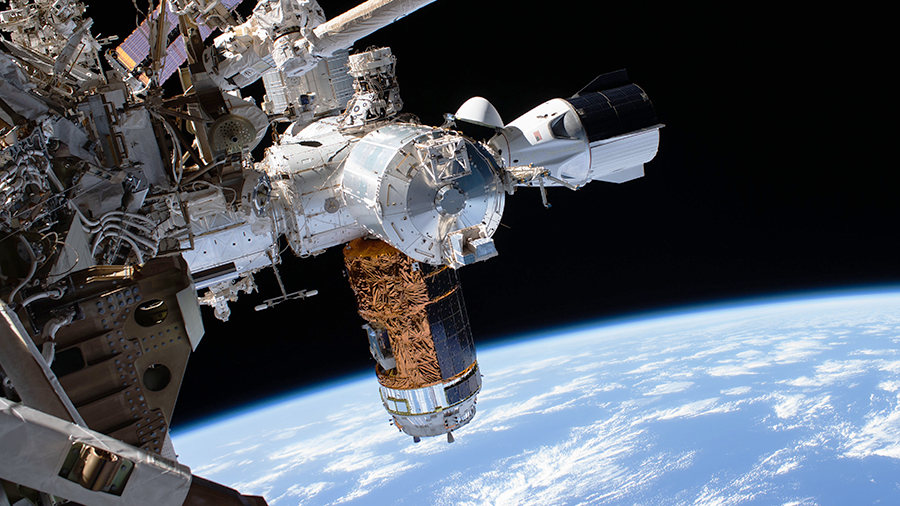
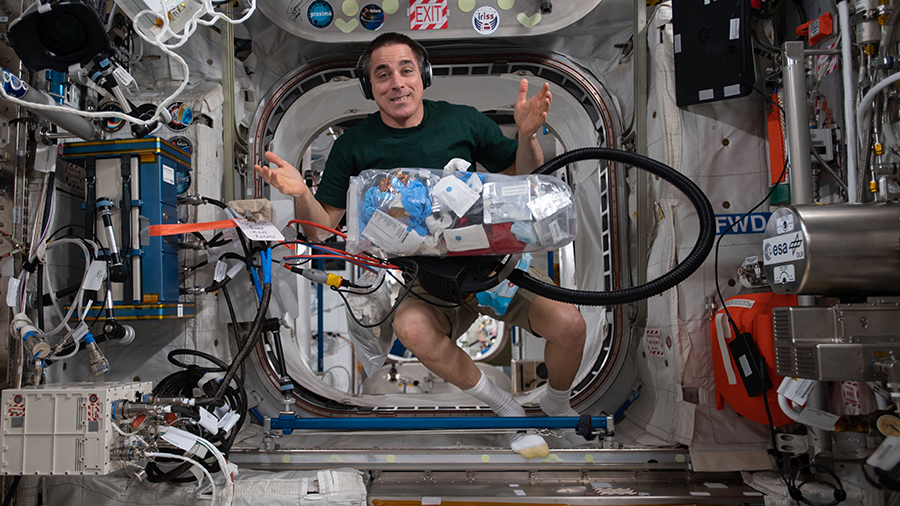
The Expedition 60 crew configured a variety of science hardware today monitoring the brain and radiation exposure. The orbital residents also had a steady day of safety gear checks and lab maintenance on the International Space Station. Astronauts experience blood flow changes caused by living in microgravity that may cause lightheadedness or fainting upon return …
Human Research Facility (HRF) GDS tank photo: The crew took photos of the pressure gauges on the HRF)Gas Delivery System (GDS) gas cylinders which support the Portable Pulmonary Function System (PFS). This is a nominal, periodic requirement to monitor the pressures in the system. The Portable PFS is an autonomous multi-user facility supporting a broad range …

Biomedical research and space agriculture dominated the Expedition 60 crew’s schedule today. The investigations aboard the International Space Station are helping scientists, doctors and engineers plan human missions to the Moon, Mars and beyond. Nick Hague of NASA started Tuesday morning collecting and stowing his blood and urine samples for a pair of life science …
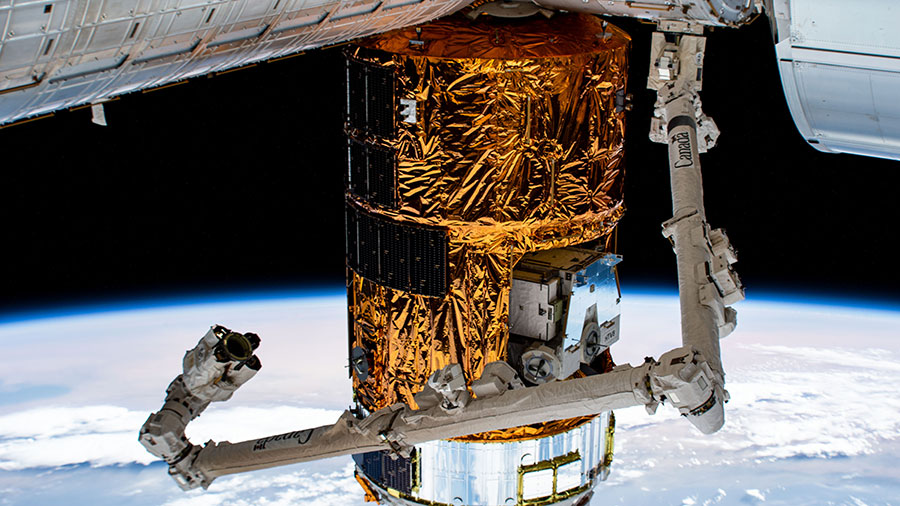
NanoRacks CubeSat Deployer (NRCSD) Hardware Removal: As a closeout activity for NRCSD-16, the crew removed the deployers from the Multipurpose Experiment Platform(MPEP) on the JEM airlock slide table, and stowed them. NRCSD-16 successfully depolyed all 7 of its satellites last week. The NRCSD is a self-contained CubeSat deployer system for small satellites staged from the …

Three Expedition 60 crewmembers are orbiting Earth supporting a variety of biology research and spacesuit servicing today. A trio of soon-to-be International Space Station residents are in Kazakhstan awaiting a launch to their new home in space in less than two weeks. NASA astronauts Christina Koch and Nick Hague collected their blood samples Monday morning …
Fluids Integrated Rack (FIR)/Light Microscopy Module (LMM): The crew replaced the confocal camera which stopped responding on June 22. The confocal system allows observation of very narrow depths-of-field in 3 dimensional samples, essentially allowing many different layers of the sample to be observed and later reconstructed as a 3 dimensional image. Recovery of this system …

The Expedition 60 crew explored space biology and radiation exposure aboard the International Space Station today. The orbital residents also filmed a virtual reality experience and oversaw the deployment of a set microsatellites. NASA astronaut Christina Koch tended plants and stored microalgae samples for a pair of biology studies investigating ways to support long-term missions …

By Miles Hatfield NASA's Goddard Space Flight Center On Friday, June 28, NASA's Solar Dynamics Observatory observed a solar prominence erupting off the limb, or edge, of the Sun. Solar prominences are loops of comparatively cold, dense solar material that become suspended in the Sun's super-hot outer atmosphere. Because they are colder and denser than …