
















SAGE III/ISS Science Team Assembled
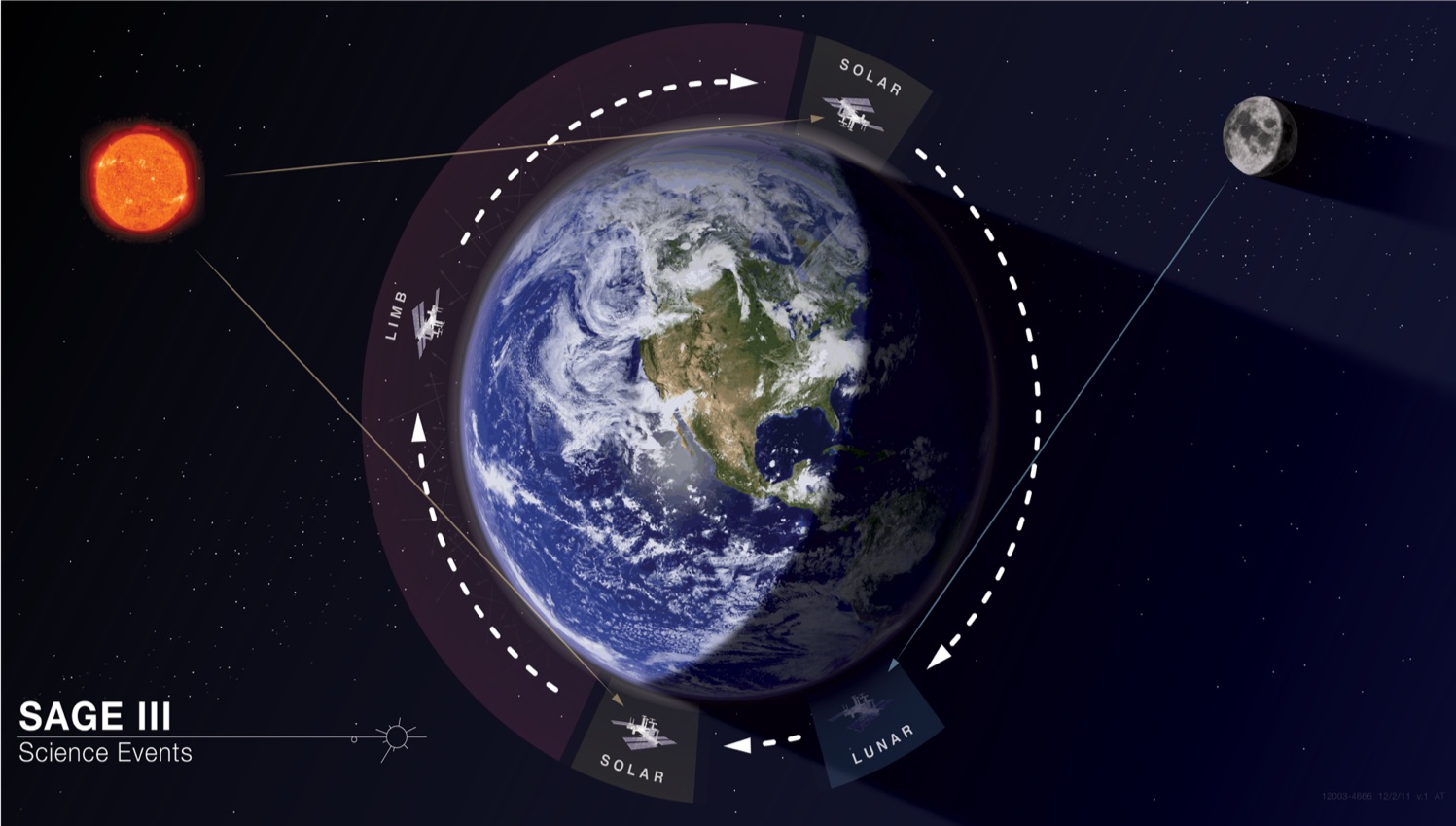
The SAGE III/ISS mission has assembled its science team members! The individuals on this team from a variety of diverse institutions will conduct studies using the data from the SAGE III instrument to help us better understand the composition of Earth’s atmosphere and how it’s changing. These ten individuals, selected by competitive solicitation, will provide data analysis and validation, limb scatter algorithm development, assessments of atmospheric composition, studies of clouds and aerosols, contributions to modeling efforts, and multi-sensor data products. You can find descriptions of each member’s proposed work here.
SAGE III/ISS Science Team Members:
Glen Jaross, NASA Goddard Space Flight Center
Eric Jensen, NASA Ames Research Center
Lars Kalnajs, University of Colorado, Boulder
Luis Millan Valle, Jet Propulsion Laboratory
William Randel, University Corporation for Atmospheric Research
Karen Rosenlof, Office of Oceanic and Atmospheric Research, Boulder
Stanley Sander, Jet Propulsion Laboratory
Ghassan Taha, Universities Space Research Association, Columbia
Jean-Paul Vernier, National Institute of Aerospace Associates
Hsiang-Jui (Ray) Wang, Georgia Tech Research Corporation