















Suggested Searches

The Latest in NASA Science News

The latest news briefs from NASA science.

Viewing Posts from February 2026

View All Posts

    NASA Satellites Show Where Outdoor Lights Worsen Allergy Season
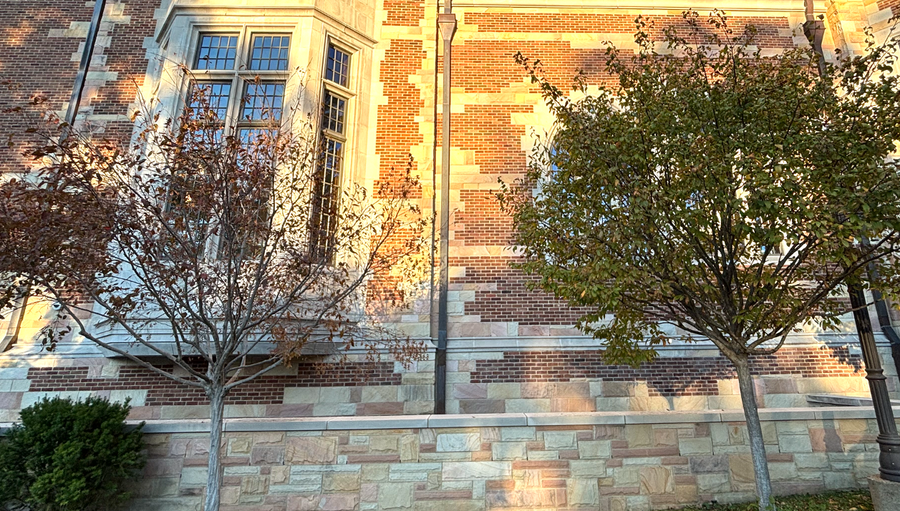
    Two trees at night and during the day. The one on the left has few leaves on it's branches, while the one on the right has lots of healthy, green leaves.

    Plants exposed to artificial lighting burst into bloom earlier and flower longer than plants exposed exclusively to natural sunlight. A recent study that relies on NASA satellite data found that this effect raises pollen counts throughout much of the year, extending and intensifying allergy seasons in brightly lit communities. In a study in PNAS Nexus, […]

    Read Full Post

    NASA’s PACE Satellite Provides New Pollution Measuring Product

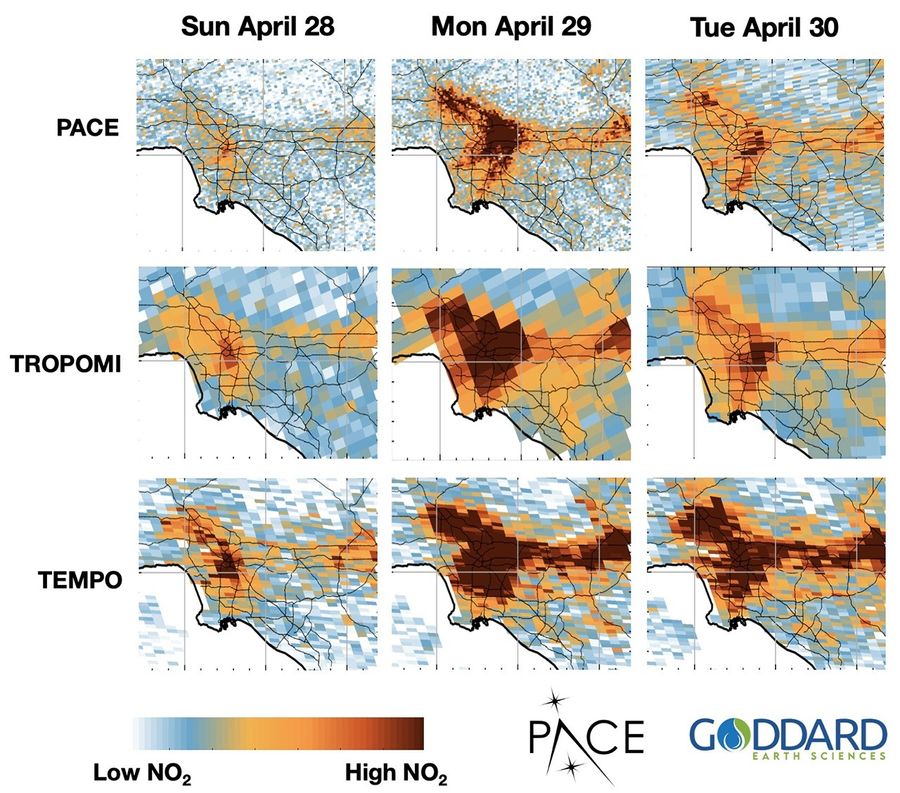
    A 3x3 grid shows images all of the Los Angeles area with data overlayed on each map. The top row of three images (labeled PACE) shows data red, yellow, and blue dots, in very fine detail. The middle row (labeled TROPOMI) shows the same colors, but in in grainier detail. The bottom row (labeled TEMPO) shows the same colors, in a level of detail between TROPOMI and PACE. Blue meaning low NO2, red meaning high NO2.

    NASA’s Plankton, Aerosol, Cloud, ocean Ecosystem (PACE) satellite, known for measuring tiny organisms in the ocean and particles in the atmosphere, has a new capability: it can track nitrogen dioxide pollution. Nitrogen dioxide is a harmful air pollutant produced from burning fossil fuels and wood. The trace gas can also react with sunlight and oxygen […]

    Read Full Post

    Archival Data From NASA’s NEOWISE Tracks Star Turning Into Black Hole

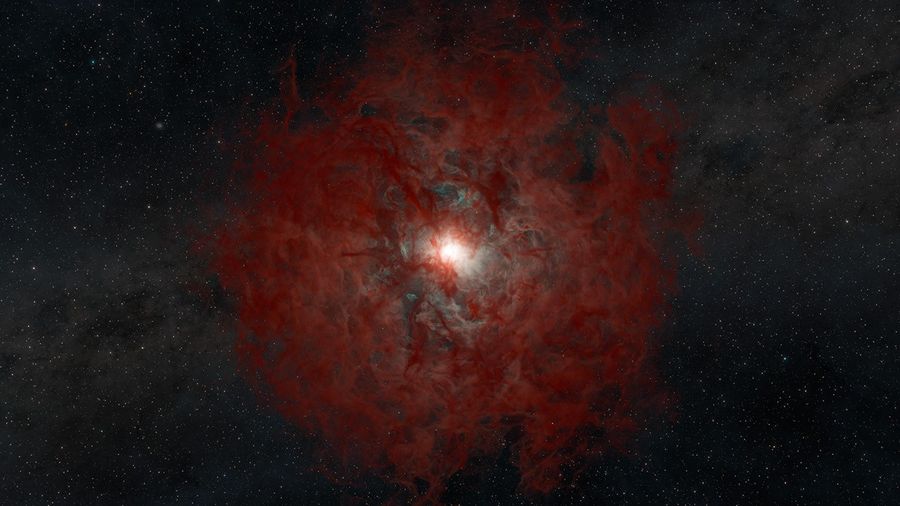
    This artist’s concept shows a thick shell of gas and dust that has been expelled from a massive star’s outer layers as its core collapses after running out of fuel. At the center, a hot, dense ball of gas continues to fall inward, feeding the newly formed black hole.

    Massive stars are often known to go out with a bang: The core collapses, and a wave of subatomic particles called neutrinos erupt outward, causing the star to explode as a supernova that can outshine an entire galaxy. But 2.5 million light-years away from Earth, in the Andromeda galaxy, a dying star named M31-2014-DS1 did […]

    Read Full Post

    Terra Adjusts Instrument Operations to Extend Mission Life

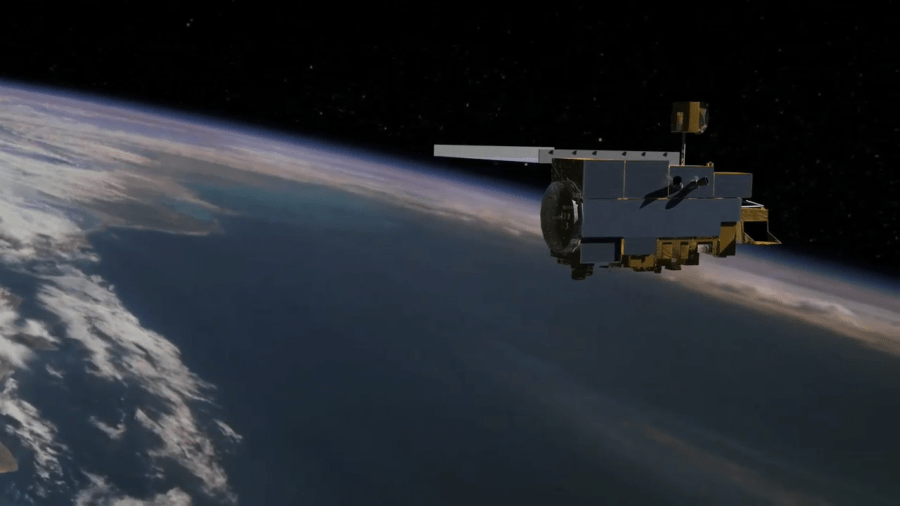
    artist concept of Terra satellite in space with limb of Earth in background

    The thermal infrared capabilities of an imager on NASA’s Terra satellite have been shut off and will no longer collect data, more than 25 years after the instrument captured its first image of Earth from space. This is the latest effort to prioritize power on Terra for its remaining instruments. Terra, which had a design […]

    Read Full Post

    NASA Study: Non-biologic Processes Don’t Fully Explain Mars Organics

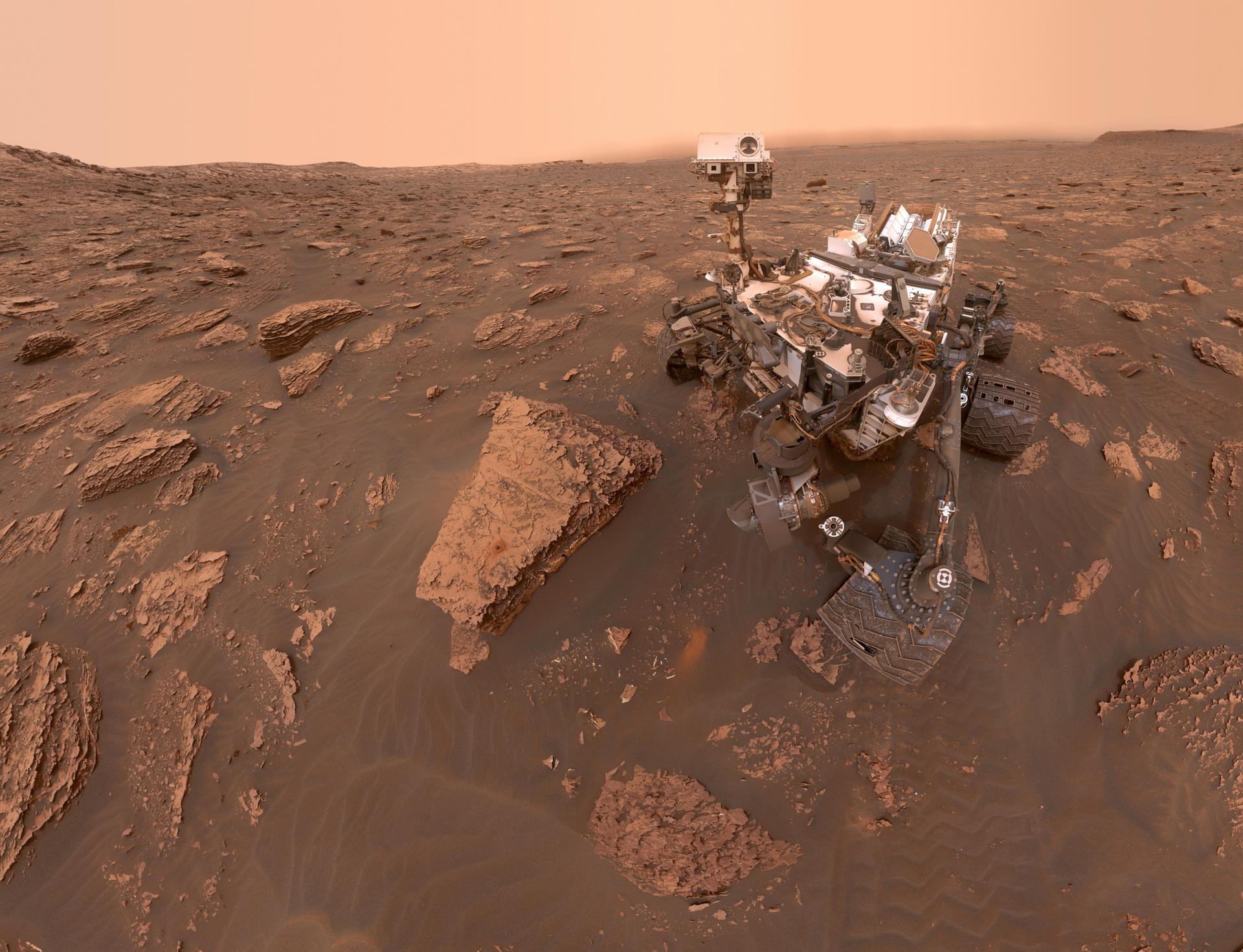
    A self-portrait of NASA's Curiosity rover taken on Sol 2082 (June 15, 2018). A Martian dust storm has reduced sunlight and visibility at the rover's location in Gale Crater.

    In a new study, researchers say that non-biological sources they considered could not fully account for the abundance of organic compounds in a sample collected on Mars by NASA’s Curiosity rover. In March 2025, scientists reported identifying small amounts of decane, undecane, and dodecane in a rock sample analyzed in the chemistry lab aboard Curiosity. […]

    Read Full Post

    NASA’s Juno Mission Redefines Size, Shape of Jupiter

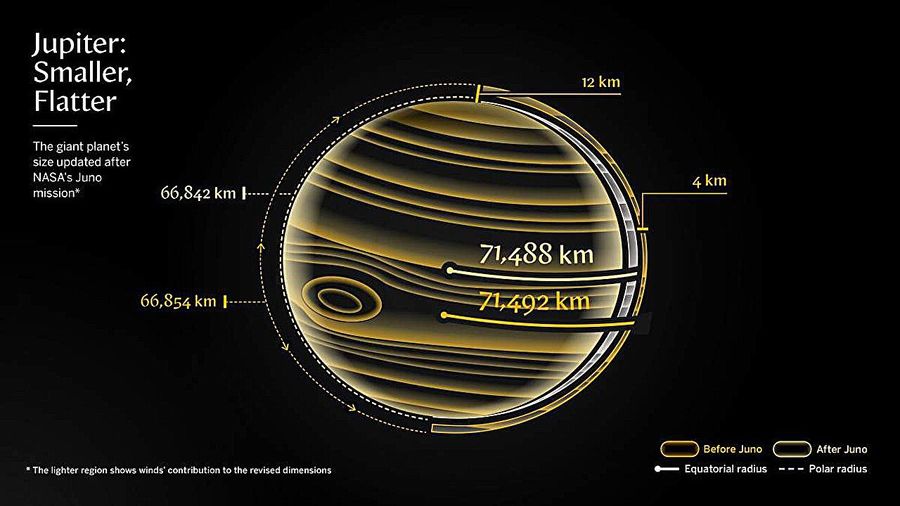
    An infographic titled “Jupiter: Smaller, Flatter” shows a line drawing of the planet, colored shades of gold against a black background. The text reads, “The giant planet’s size updated after NASA’s Juno mission,” and the illustration shows Jupiter’s equatorial radius as 71,492 kilometers “before Juno,” and 71,488 kilometers “after Juno.”

    Data from NASA’s Juno mission has revealed that the solar system’s largest planet is slightly smaller and more “squashed” than previously believed.  By analyzing radio occultation data from 13 flybys of Jupiter and incorporating the effects of zonal winds, mission scientists have determined that Jupiter is about 5 miles (8 kilometers) narrower at the equator and 15 miles (24 […]

    Read Full Post