














Suggested Searches

Solar Cycle 25

Viewing Posts from October 2021

View All Posts
  • Active October Sun Releases X-Class Flare
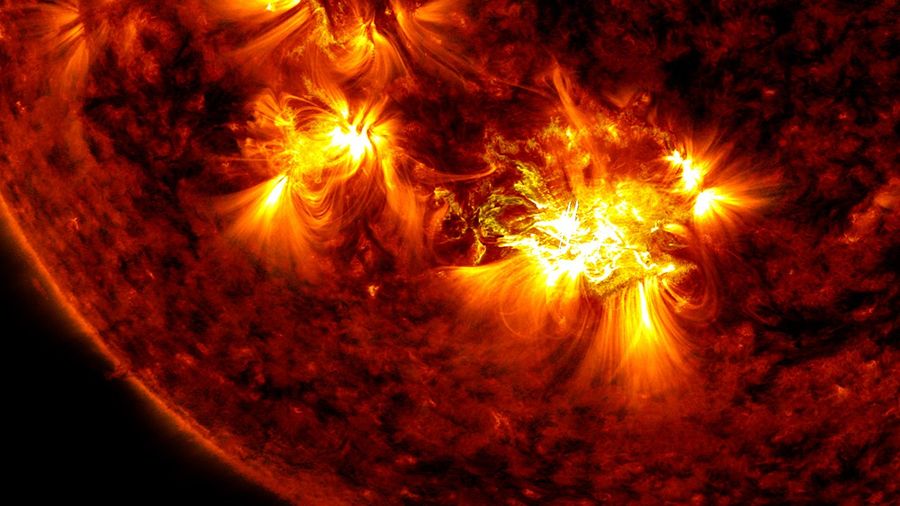
    Brighter than a shimmering ghost, faster than the flick of a black cat’s tail, the Sun cast a spell in our direction, just in time for Halloween. This imagery captured by NASA’s Solar Dynamics Observatory covers a busy few days of activity between Oct. 25-28 that ended with a significant solar flare. From late afternoon Oct. 25 through mid-morning Oct. 26, an active region on the left limb of the Sun flickered with a series of small flares and petal-like eruptions of solar material. Meanwhile, the Sun was sporting more active regions at its lower center, directly facing Earth. On Oct. 28, the biggest of these released a significant flare, which peaked at 11:35 a.m. EDT. Credit: NASA/GSFC/SDOMusic: "Immersion" from Above and Below. Written and produced by Lars LeonhardWatch this video on the NASA Goddard YouTube channel.Complete transcript available.

    Brighter than a shimmering ghost, faster than the flick of a black cat's tail, the Sun cast a spell in our direction, just in time for Halloween. This imagery captured by NASA's Solar Dynamics Observatory covers a busy few days of activity between Oct. 25-28 that ended with a significant solar flare. From late afternoon …

  • Sun Releases Significant Solar Flare

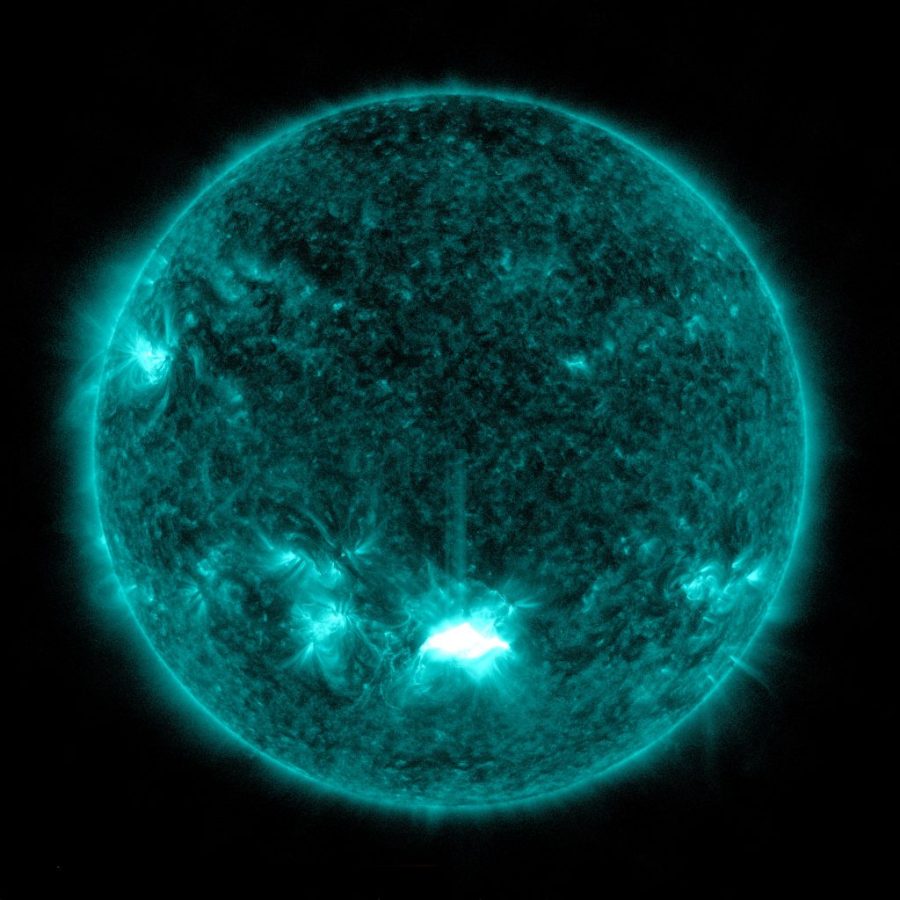
    A satellite image of the Sun, colored in teal, shows a bright flare at the Sun's lower center.

    The Sun emitted a significant solar flare peaking at 11:35 a.m. EDT on Oct. 28, 2021. NASA's Solar Dynamics Observatory, which watches the Sun constantly, captured an image of the event. Solar flares are powerful bursts of radiation. Harmful radiation from a flare cannot pass through Earth's atmosphere to physically affect humans on the ground, …

  • Solar Eruption Arrives at Earth

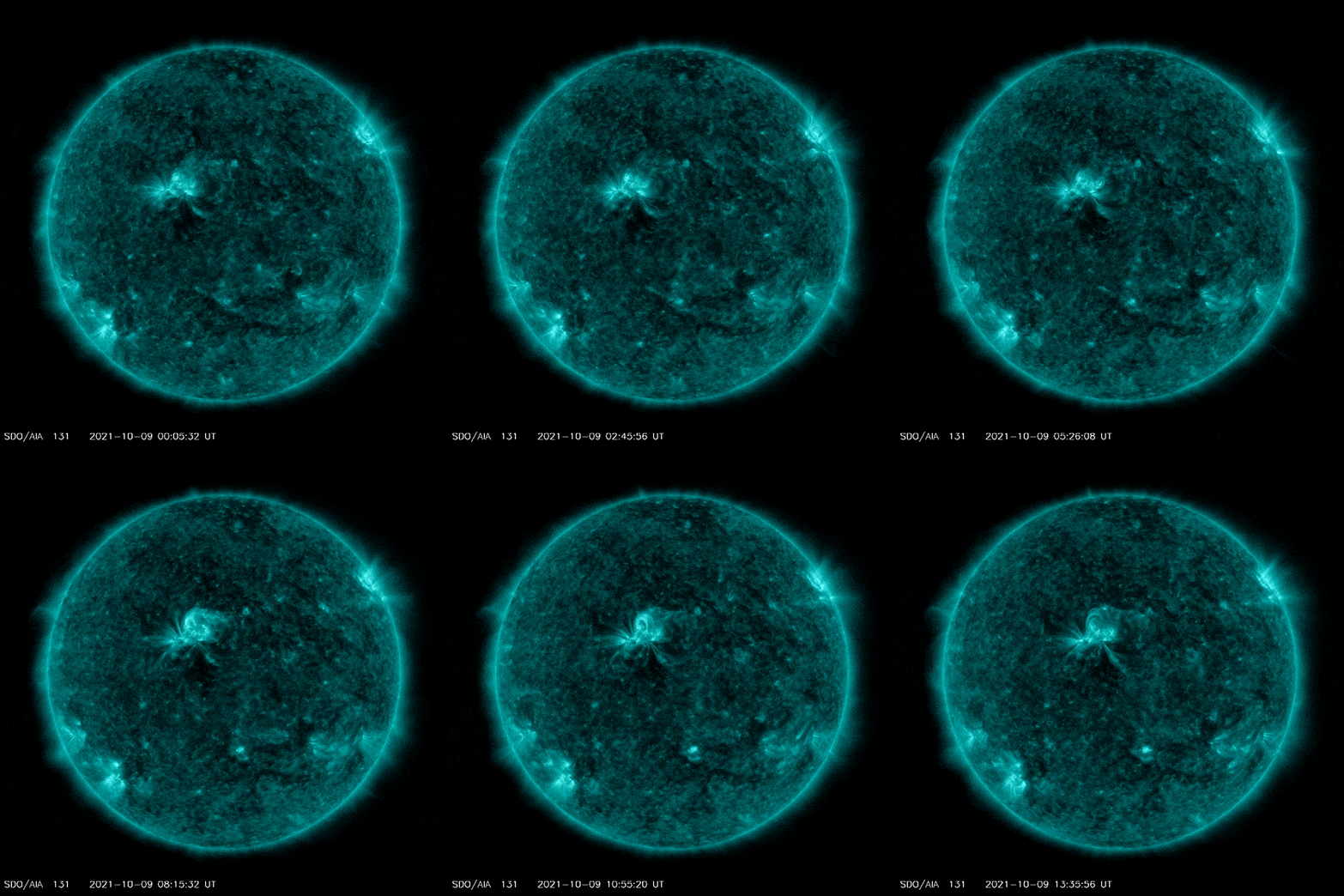
    teal colored sun showing solar flare

    A mass of solar material that erupted from the Sun on Oct. 9, 2021, reached Earth on Oct. 12. The Earth-directed coronal mass ejection, or CME, elevated the Kp index, a measure of disturbance to Earth's magnetic field, to 6 (moderate level). Kp index levels range from 0 (quiet) to 9 (intense). The CME was …