












before
after
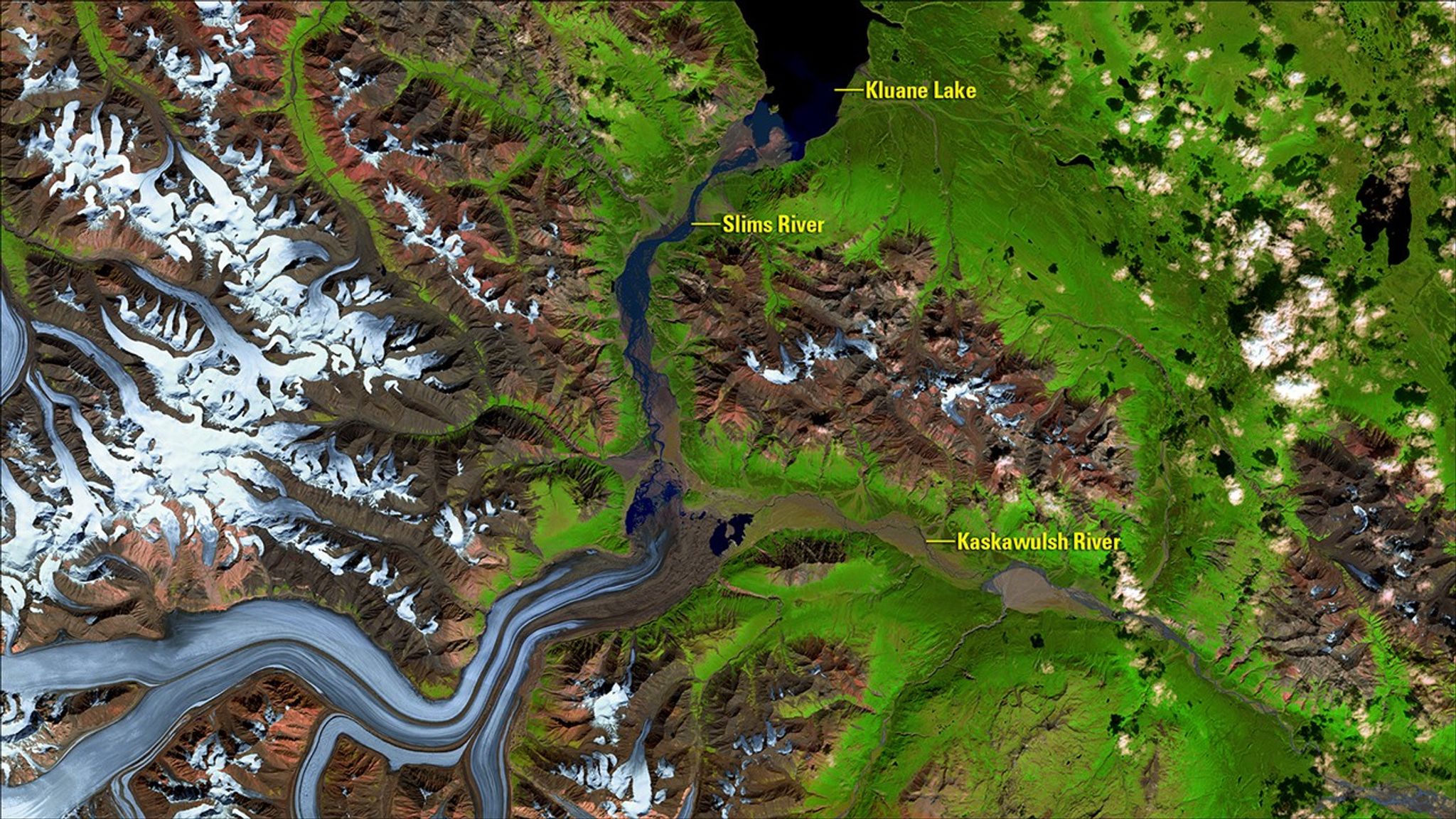
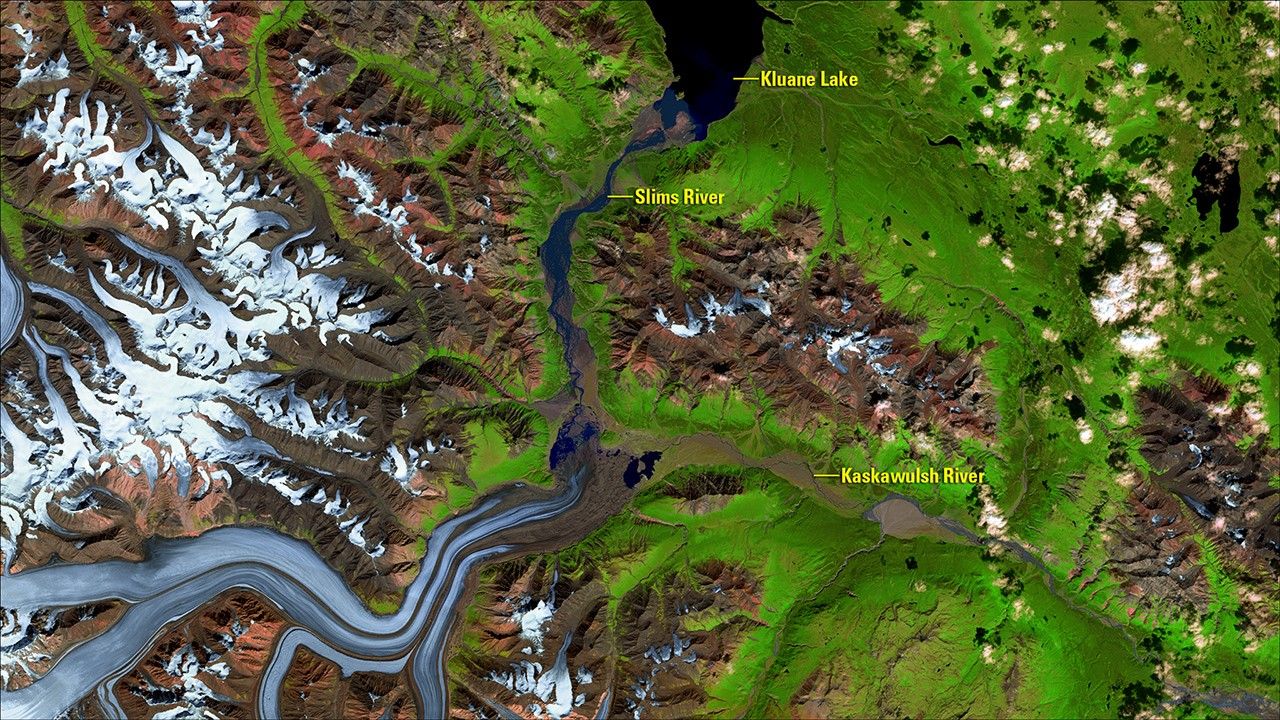
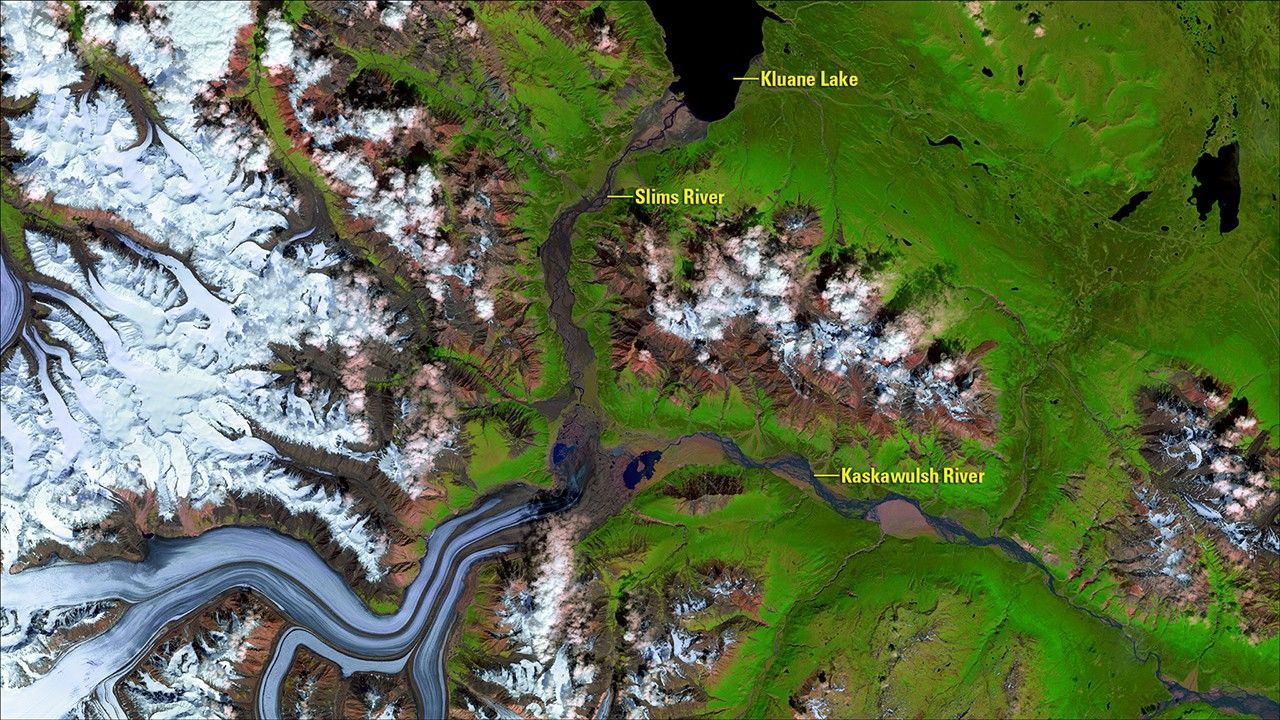
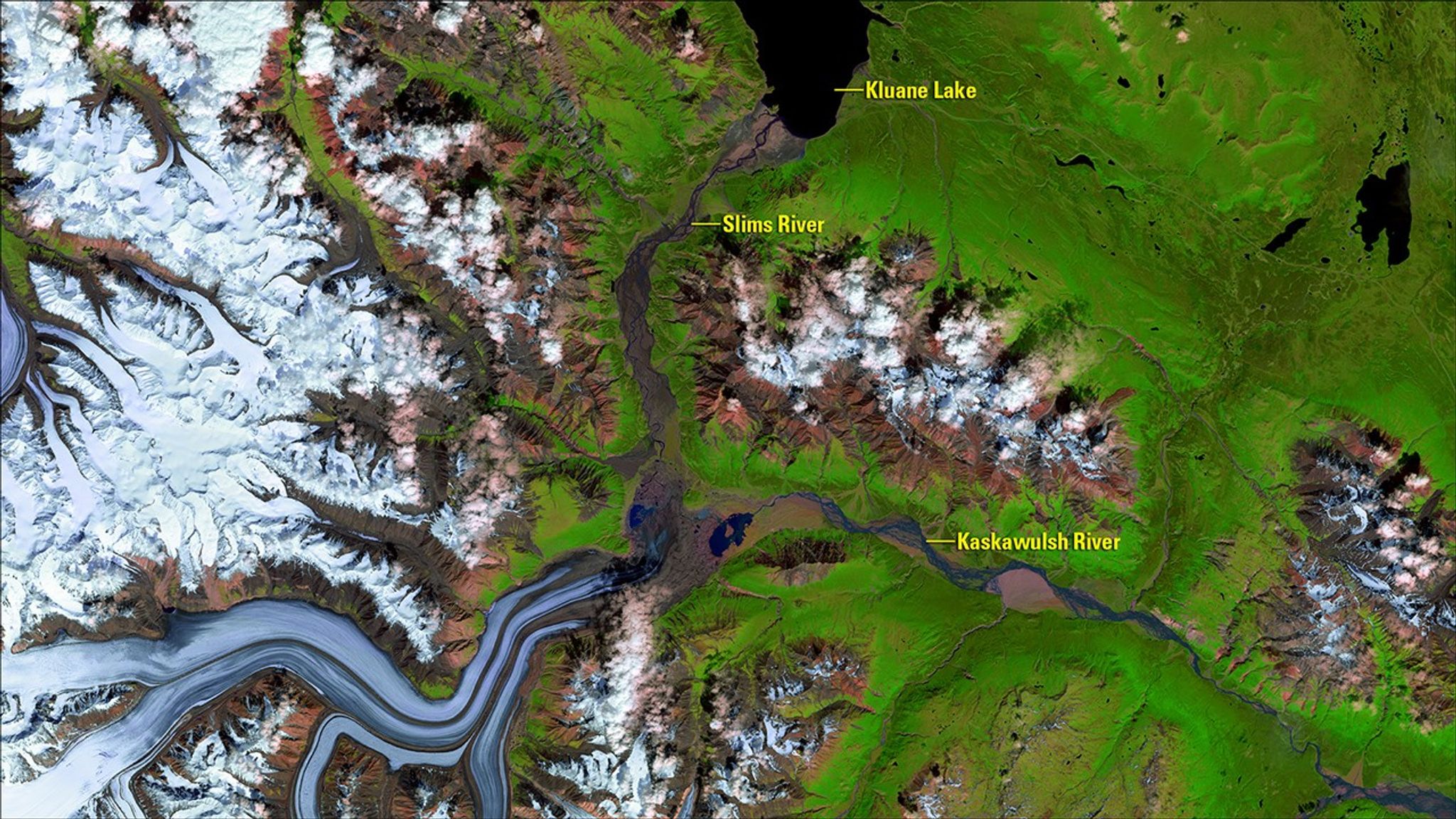
Like most glaciers worldwide, Kaskawulsh Glacier in the Kluane National Park and Reserve of southwestern Yukon Territory, Canada, has receded over the past several decades. A Nature Geoscience article confirms that this receding glacier caused a rare instance of river piracy—the diversion of one stream’s headwaters into another. Instead of flowing north via the Slims River into Kluane Lake, eventually reaching the Yukon River and Bering Sea as it did before spring 2016, most of the meltwater now flows eastward to the Alsek River and Pacific Ocean via the Kaskawulsh River. This diversion brought sediment changes, varied timing of flows from the glacier and water level changes to the channels, possibly permanently altering downstream ecosystems. Images taken by the Landsat 8 satellite. Source: U.S. Geological Survey (USGS) Landsat Missions Gallery: “Kaskawulsh Glacier, Canada”; U.S. Department of the Interior / USGS and NASA.
Like most glaciers worldwide, Kaskawulsh Glacier in the Kluane National Park and Reserve of southwestern Yukon Territory, Canada, has receded over the past several decades. A Nature Geoscience article confirms that this receding glacier caused a rare instance of river piracy—the diversion of one stream’s headwaters into another. Instead of flowing north via the Slims River into Kluane Lake, eventually reaching the Yukon River and Bering Sea as it did before spring 2016, most of the meltwater now flows eastward to the Alsek River and Pacific Ocean via the Kaskawulsh River. This diversion brought sediment changes, varied timing of flows from the glacier and water level changes to the channels, possibly permanently altering downstream ecosystems. Images taken by the Landsat 8 satellite. Source: U.S. Geological Survey (USGS) Landsat Missions Gallery: “Kaskawulsh Glacier, Canada”; U.S. Department of the Interior / USGS and NASA.
Like most glaciers worldwide, Kaskawulsh Glacier in the Kluane National Park and Reserve of southwestern Yukon Territory, Canada, has receded over the past several decades. A Nature Geoscience article confirms that this receding glacier caused a rare instance of river piracy—the diversion of one stream’s headwaters into another. Instead of flowing north via the Slims River into Kluane Lake, eventually reaching the Yukon River and Bering Sea as it did before spring 2016, most of the meltwater now flows eastward to the Alsek River and Pacific Ocean via the Kaskawulsh River. This diversion brought sediment changes, varied timing of flows from the glacier and water level changes to the channels, possibly permanently altering downstream ecosystems. Images taken by the Landsat 8 satellite. Source: U.S. Geological Survey (USGS) Landsat Missions Gallery: “Kaskawulsh Glacier, Canada”; U.S. Department of the Interior / USGS and NASA.
Like most glaciers worldwide, Kaskawulsh Glacier in the Kluane National Park and Reserve of southwestern Yukon Territory, Canada, has receded over the past several decades. A Nature Geoscience article confirms that this receding glacier caused a rare instance of river piracy—the diversion of one stream’s headwaters into another. Instead of flowing north via the Slims River into Kluane Lake, eventually reaching the Yukon River and Bering Sea as it did before spring 2016, most of the meltwater now flows eastward to the Alsek River and Pacific Ocean via the Kaskawulsh River. This diversion brought sediment changes, varied timing of flows from the glacier and water level changes to the channels, possibly permanently altering downstream ecosystems. Images taken by the Landsat 8 satellite. Source: U.S. Geological Survey (USGS) Landsat Missions Gallery: “Kaskawulsh Glacier, Canada”; U.S. Department of the Interior / USGS and NASA.
before
after
Before and After
Kaskawulsh Glacier meltwater alters downstream ecosystems
August 3, 2015 - July 4, 2016
Like most glaciers worldwide, Kaskawulsh Glacier in the Kluane National Park and Reserve of southwestern Yukon Territory, Canada, has receded over the past several decades. A Nature Geoscience article confirms that this receding glacier caused a rare instance of river piracy—the diversion of one stream’s headwaters into another. Instead of flowing north via the Slims River into Kluane Lake, eventually reaching the Yukon River and Bering Sea as it did before spring 2016, most of the meltwater now flows eastward to the Alsek River and Pacific Ocean via the Kaskawulsh River. This diversion brought sediment changes, varied timing of flows from the glacier and water level changes to the channels, possibly permanently altering downstream ecosystems. Images taken by the Landsat 8 satellite. Source: U.S. Geological Survey (USGS) Landsat Missions Gallery: “Kaskawulsh Glacier, Canada”; U.S. Department of the Interior / USGS and NASA.