















before
after

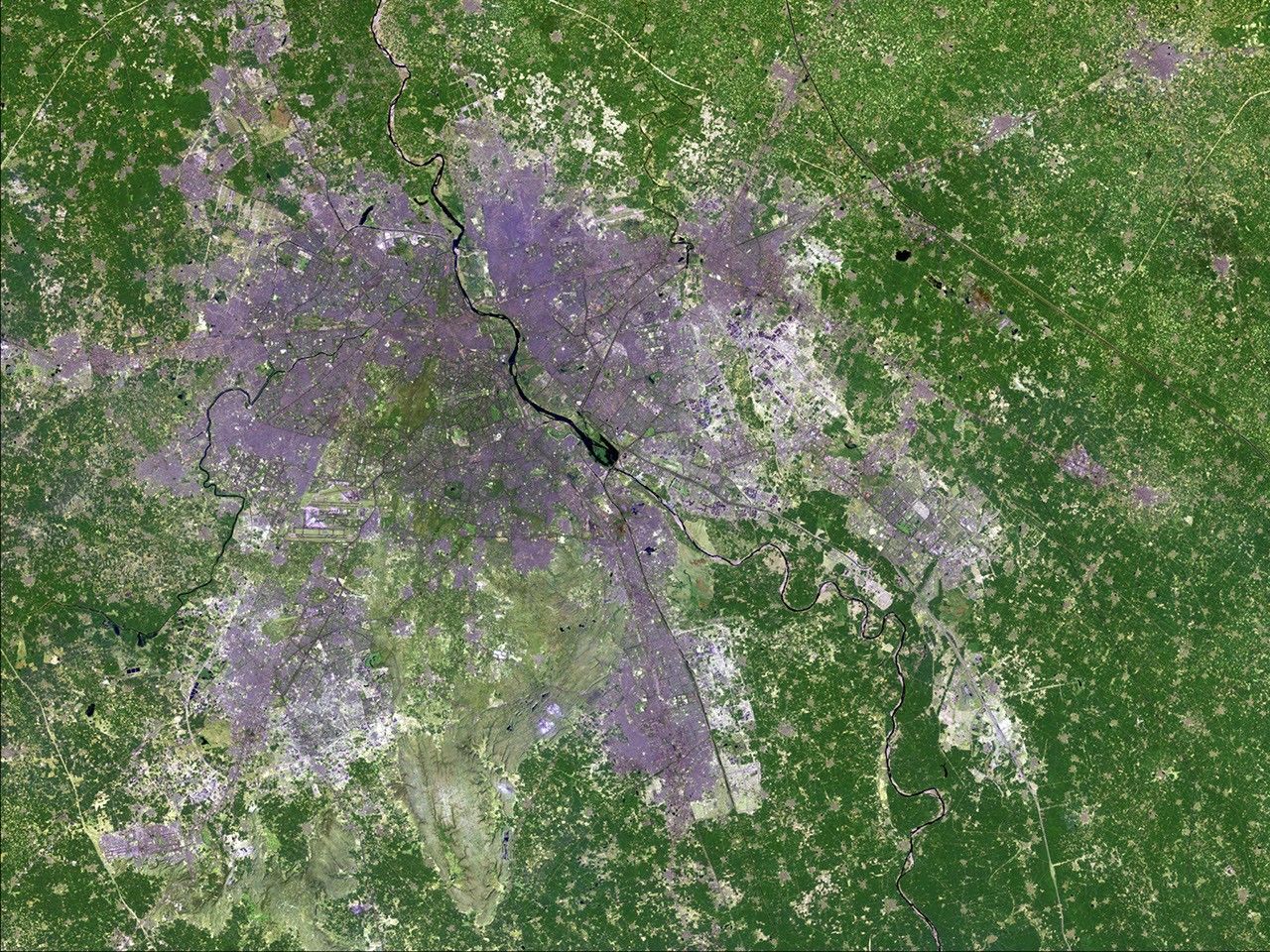
Between the times these two images were taken, the population of India’s capital and its suburbs (known collectively as “Delhi”) ballooned from 9.4 million to 25 million. It is now second in population only to Tokyo, which has 38 million people. The United Nations Report on World Urbanization projects that Delhi will have 37 million residents by 2030. Images taken by the Thematic Mapper on board Landsat 5 and the Operational Land Imager onboard Landsat 8. Source: U.S. Geological Survey (USGS) Landsat Missions Gallery; “New Delhi Among Fastest Growing Urban Areas in the World;” U.S. Department of the Interior / USGS and NASA.

Between the times these two images were taken, the population of India’s capital and its suburbs (known collectively as “Delhi”) ballooned from 9.4 million to 25 million. It is now second in population only to Tokyo, which has 38 million people. The United Nations Report on World Urbanization projects that Delhi will have 37 million residents by 2030. Images taken by the Thematic Mapper on board Landsat 5 and the Operational Land Imager onboard Landsat 8. Source: U.S. Geological Survey (USGS) Landsat Missions Gallery; “New Delhi Among Fastest Growing Urban Areas in the World;” U.S. Department of the Interior / USGS and NASA.
Between the times these two images were taken, the population of India’s capital and its suburbs (known collectively as “Delhi”) ballooned from 9.4 million to 25 million. It is now second in population only to Tokyo, which has 38 million people. The United Nations Report on World Urbanization projects that Delhi will have 37 million residents by 2030. Images taken by the Thematic Mapper on board Landsat 5 and the Operational Land Imager onboard Landsat 8. Source: U.S. Geological Survey (USGS) Landsat Missions Gallery; “New Delhi Among Fastest Growing Urban Areas in the World;” U.S. Department of the Interior / USGS and NASA.
Between the times these two images were taken, the population of India’s capital and its suburbs (known collectively as “Delhi”) ballooned from 9.4 million to 25 million. It is now second in population only to Tokyo, which has 38 million people. The United Nations Report on World Urbanization projects that Delhi will have 37 million residents by 2030. Images taken by the Thematic Mapper on board Landsat 5 and the Operational Land Imager onboard Landsat 8. Source: U.S. Geological Survey (USGS) Landsat Missions Gallery; “New Delhi Among Fastest Growing Urban Areas in the World;” U.S. Department of the Interior / USGS and NASA.
before
after
Before and After
Urban expansion in New Delhi, India
March 14, 1991 - March 2, 2016
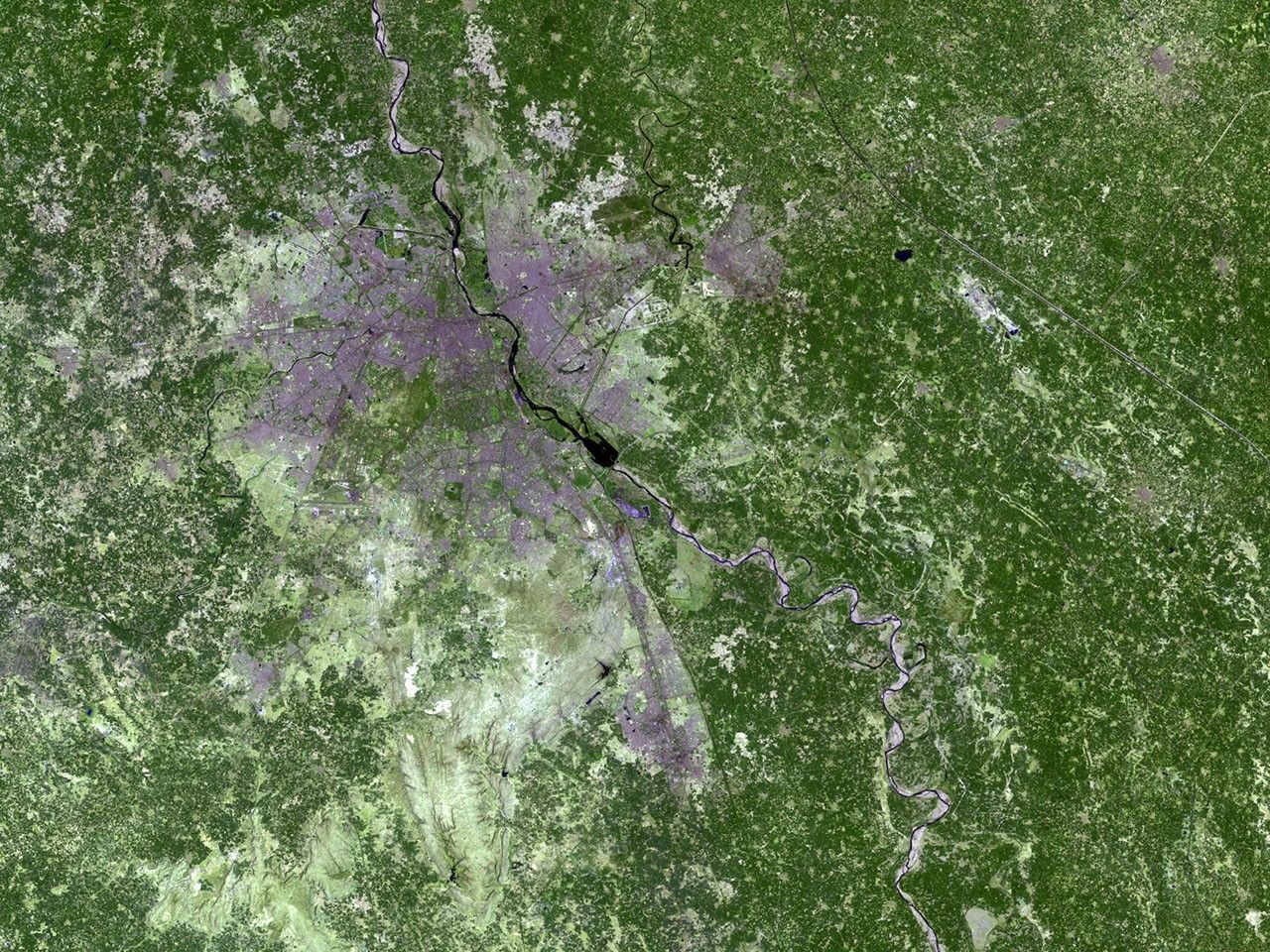
Between the times these two images were taken, the population of India’s capital and its suburbs (known collectively as “Delhi”) ballooned from 9.4 million to 25 million. It is now second in population only to Tokyo, which has 38 million people. The United Nations Report on World Urbanization projects that Delhi will have 37 million residents by 2030. Images taken by the Thematic Mapper on board Landsat 5 and the Operational Land Imager onboard Landsat 8. Source: U.S. Geological Survey (USGS) Landsat Missions Gallery; “New Delhi Among Fastest Growing Urban Areas in the World;” U.S. Department of the Interior / USGS and NASA.