













before
after

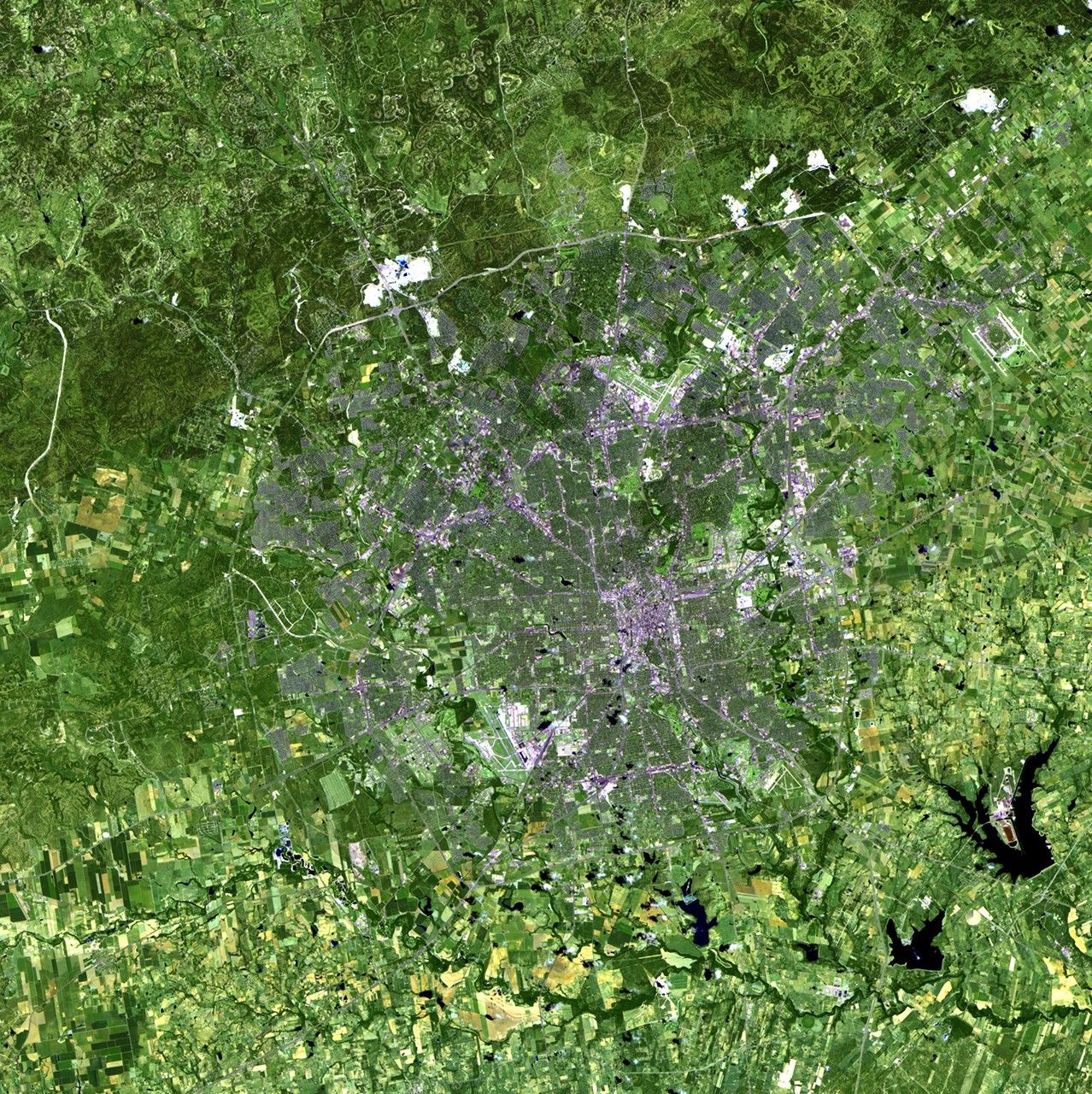
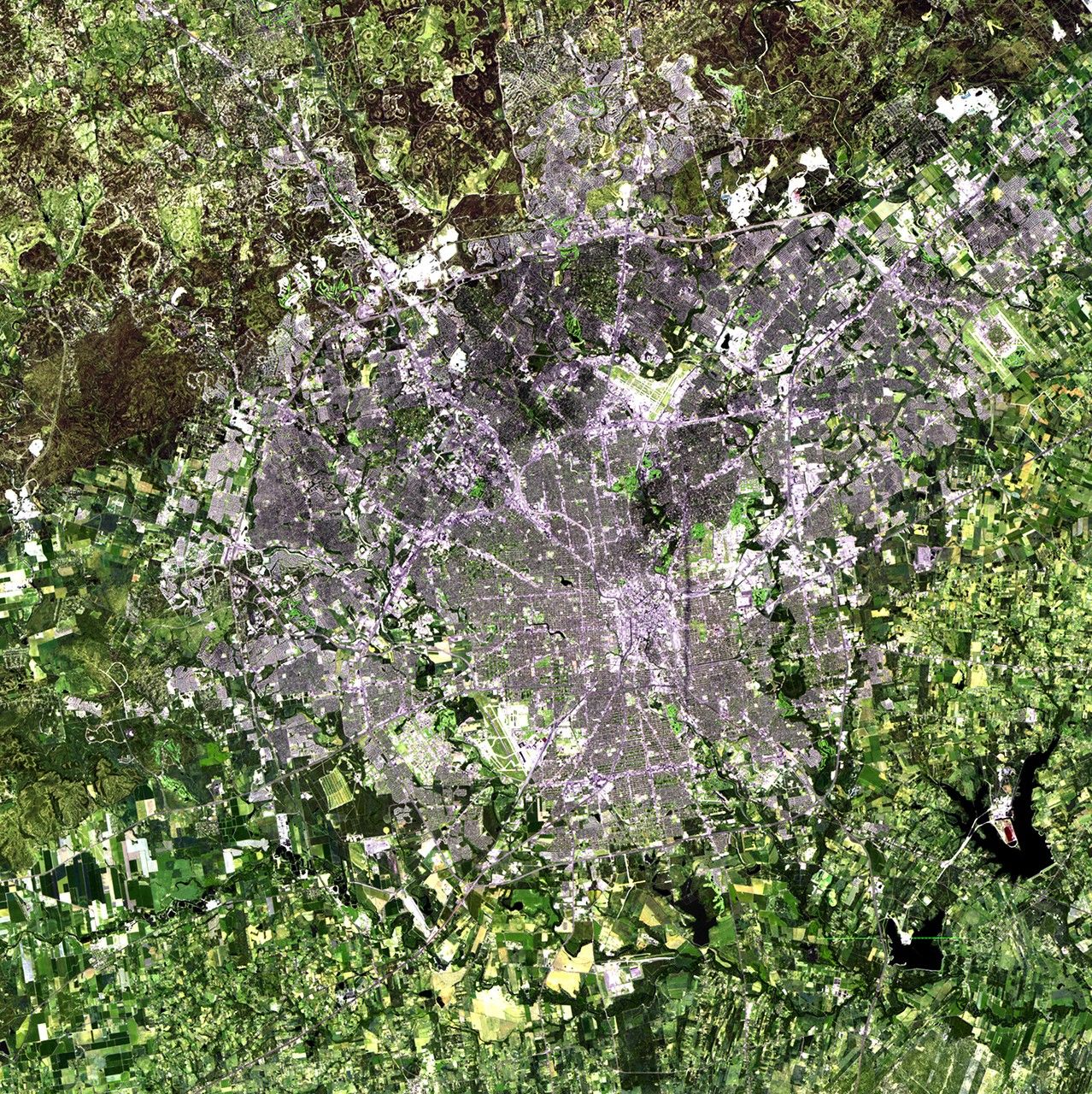
San Antonio has grown faster during the last two decades than all but three other cities in the U.S., nearly doubling from 790,000 people in 1991 to 1.4 million in 2010. Under state law, which allows the city to direct growth and zoning in much of the surrounding unincorporated land, San Antonio has opposed the creation of other nearby municipalities and has preserved agricultural production areas. A series of military bases and airfields, which ring the larger community, have also contributed to the city's growth. Images taken by the Thematic Mapper sensor aboard Landsat 5. Source: USGS Landsat Missions Gallery, "San Antonio, Texas 1991-2010," U.S. Department of the Interior / U.S. Geological Survey.
NASA/USGS

San Antonio has grown faster during the last two decades than all but three other cities in the U.S., nearly doubling from 790,000 people in 1991 to 1.4 million in 2010. Under state law, which allows the city to direct growth and zoning in much of the surrounding unincorporated land, San Antonio has opposed the creation of other nearby municipalities and has preserved agricultural production areas. A series of military bases and airfields, which ring the larger community, have also contributed to the city's growth. Images taken by the Thematic Mapper sensor aboard Landsat 5. Source: USGS Landsat Missions Gallery, "San Antonio, Texas 1991-2010," U.S. Department of the Interior / U.S. Geological Survey.
NASA/USGS
Before and After
Urban growth, San Antonio, Texas
June 16, 1991 - June 4, 2010
San Antonio has grown faster during the last two decades than all but three other cities in the U.S., nearly doubling from 790,000 people in 1991 to 1.4 million in 2010. Under state law, which allows the city to direct growth and zoning in much of the surrounding unincorporated land, San Antonio has opposed the creation of other nearby municipalities and has preserved agricultural production areas. A series of military bases and airfields, which ring the larger community, have also contributed to the city's growth. Images taken by the Thematic Mapper sensor aboard Landsat 5. Source: USGS Landsat Missions Gallery, "San Antonio, Texas 1991-2010"; U.S. Department of the Interior / U.S. Geological Survey.