




























APOD
Astronomy Picture of the Day
Discover the cosmos! Each day a different image or photograph of our fascinating universe is featured, along with a brief explanation written by a professional astronomer.
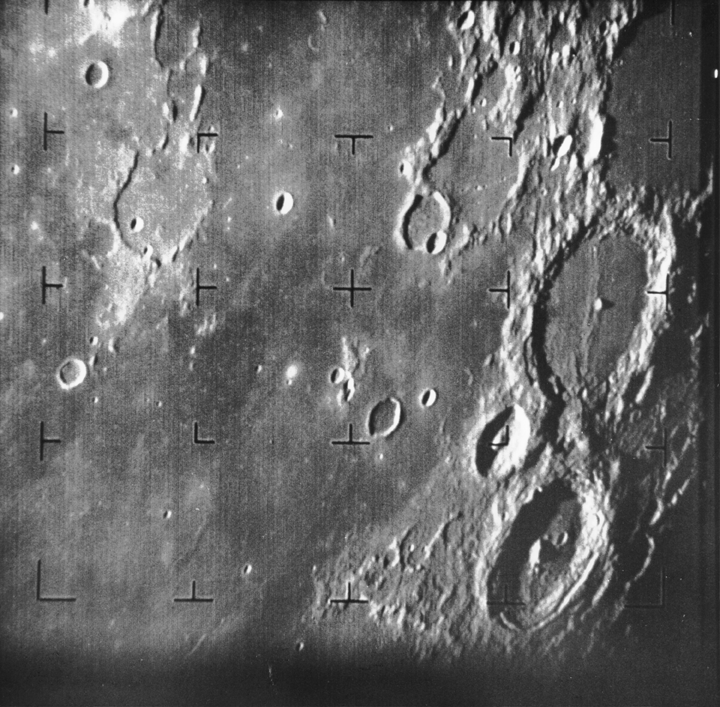
Moon Crashers
Explanation: On July 31, 1964, Ranger 7 crashed into the Moon. Seventeen minutes before impact it snapped this picture - the first image of the Moon ever taken by a U.S. spacecraft. Of course Ranger 7 was intended to crash, transmitting close-up pictures of the lunar surface during its final moments. The Ranger program's goal was to begin high resolution mapping of the lunar surface in preparation for a future lunar landing . This first image covered 360 kilometers from top to bottom and is centered in the Mare Nubium (Sea of Clouds). The large crater at middle right, Alphonsus , is 108 kilometers in diameter.
On July 31, 1999, Lunar Prospector crashed into the Moon. During its successful 1 year mission to map the Moon's global properties from orbit, Lunar Prospector confirmed indications that water-ice could be trapped in permanently shadowed craters near the lunar poles. Its mission complete, controllers intentionally targeted the spacecraft to impact a crater wall, hoping that water could be more directly detected in the resulting debris cloud - although the chances of a successful detection were considered low. Astronomers analyzing the data recently announced that no visible signature of water was found, so the tantalizing case for water on the Moon remains open .
| Date | October 15, 1999 |
|---|---|
| Credit | Credit: NASA |
| Authors & editors: | Robert Nemiroff (MTU) & Jerry Bonnell (UMCP) |
| A service of: |
ASD at NASA / GSFC, NASA Science Activation & Michigan Tech. U. |