


























APOD
Astronomy Picture of the Day
Discover the cosmos! Each day a different image or photograph of our fascinating universe is featured, along with a brief explanation written by a professional astronomer.
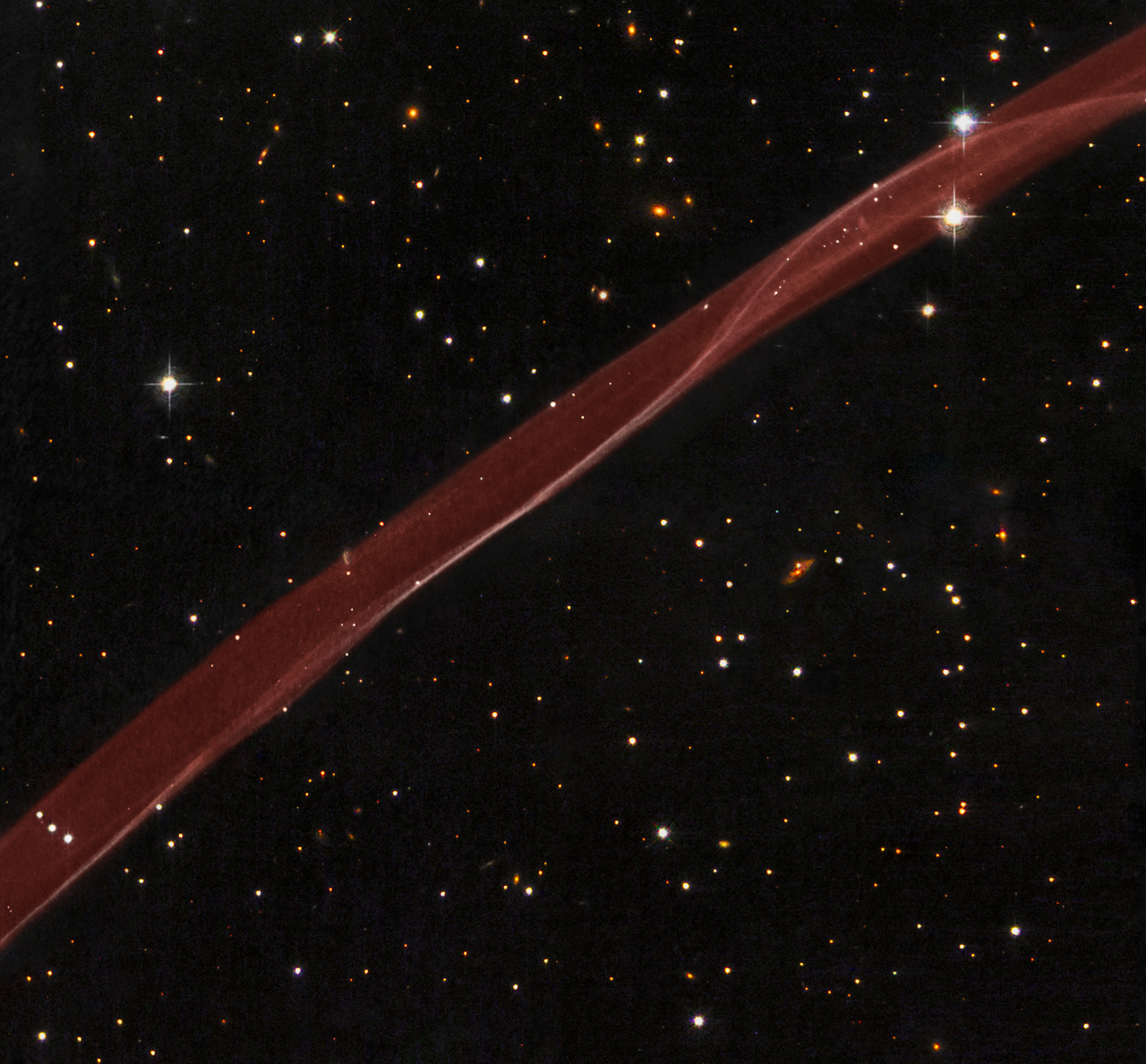
SN 1006: A Supernova Ribbon from Hubble
Explanation: What created this unusual space ribbon? Most assuredly, one of the most violent explosions ever witnessed by ancient humans. Back in the year 1006 AD, light reached Earth from a stellar explosion in the constellation of the Wolf ( Lupus ), creating a “guest star” in the sky that appeared brighter than Venus and lasted for over two years. The supernova, now cataloged at SN 1006 , occurred about 7,000 light years away and has left a large remnant that continues to expand and fade today. Pictured above is a small part of that expanding supernova remnant dominated by a thin and outwardly moving shock front that heats and ionizes surrounding ambient gas. SN 1006 now has a diameter of nearly 60 light years . Within the past year, an even more powerful explosion occurred far across the universe that was visible to modern humans, without any optical aid, for a few seconds.
Note: Free Astronomy Course Taught Online by an APOD Editor
digg_url = 'http://apod.nasa.gov/apod/ap080915.html'; digg_skin ='compact';
| Date | September 15, 2008 |
|---|---|
| Credit | Credit: NASA , ESA , Hubble Heritage ( STScI / AURA ); Acknowledgement: W. Blair et al. ( JHU ) |
| Authors & editors: | Robert Nemiroff (MTU) & Jerry Bonnell (UMCP) |
| A service of: |
ASD at NASA / GSFC, NASA Science Activation & Michigan Tech. U. |