












Cosmic Lens Flare
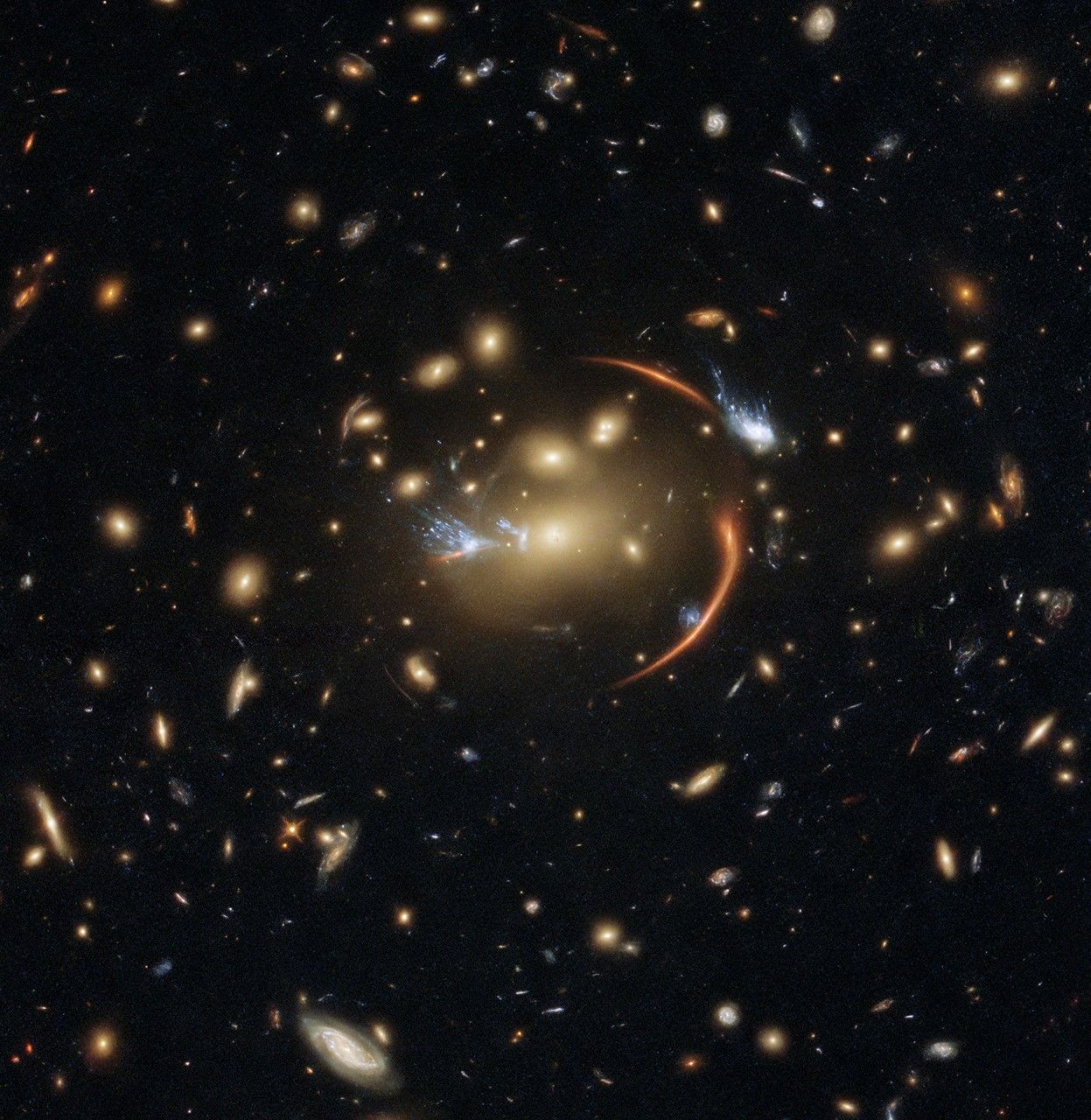
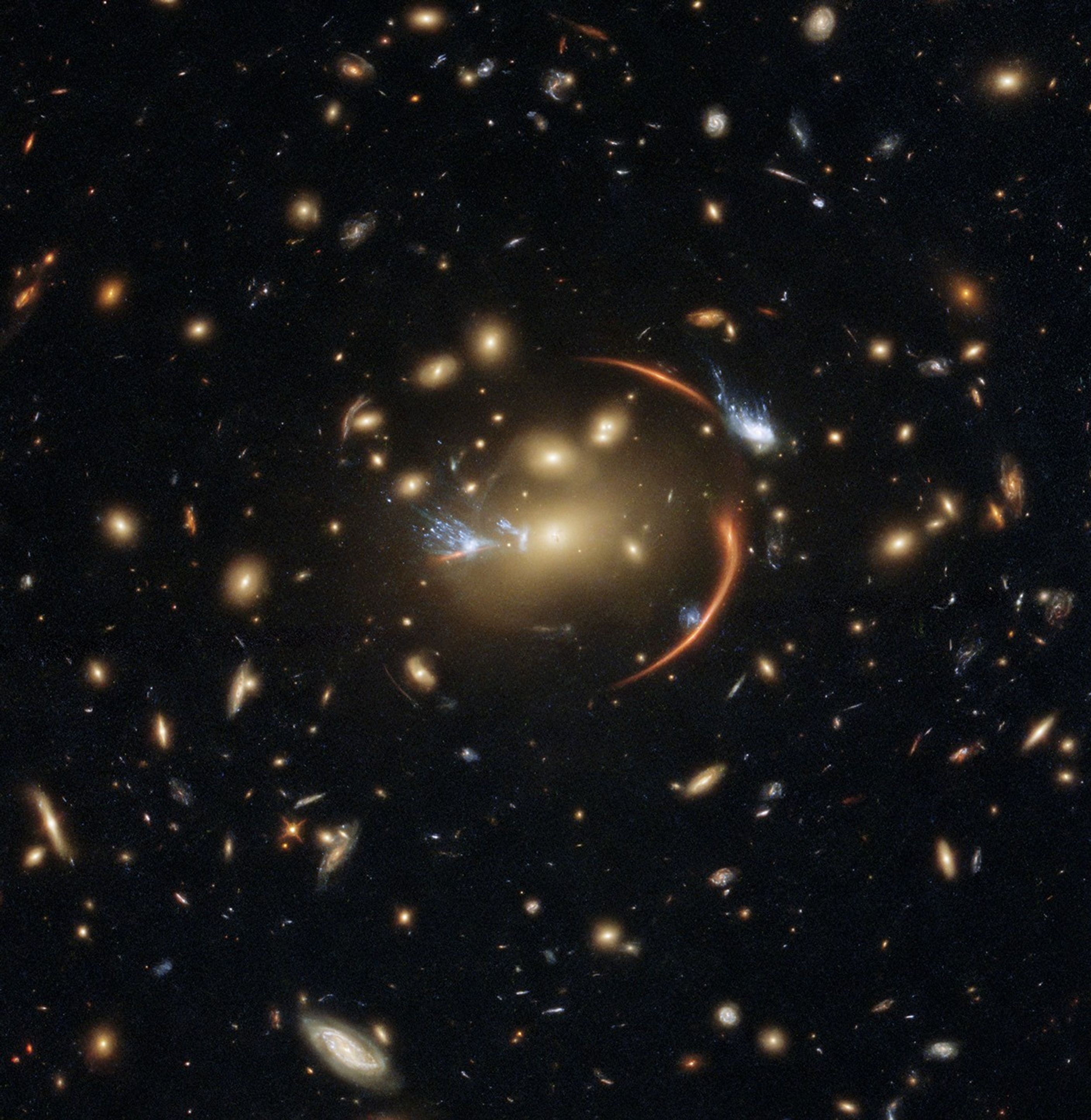
The center of this image from the Hubble Space Telescope is framed by the tell-tale arcs that result from strong gravitational lensing, a striking astronomical phenomenon which can warp, magnify, or even duplicate the appearance of distant galaxies. Gravitational lensing occurs when light from a distant galaxy is distorted by the gravitational pull of an intervening astronomical object. In this case, the relatively nearby galaxy cluster MACSJ0138.0-2155 has lensed a significantly more distant galaxy — a slumbering giant known as MRG-M0138 —that has run out of the gas required to form new stars and is located 10 billion light years away. Astronomers can use gravitational lensing as a natural magnifying glass, allowing them to inspect objects like distant galaxies which would usually be too difficult for even Hubble to resolve.
Image Credit: ESA/Hubble & NASA, A. Newman, M. Akhshik, K. Whitaker
- X
https://science.nasa.gov/image-detail/amf-342d5623-2edf-4cd0-b708-69b20d515800/
Image CreditESA/Hubble & NASA, A. Newman, M. Akhshik, K. Whitaker
Size2817x2891px