



















A Stellar Breakup in NGC 288
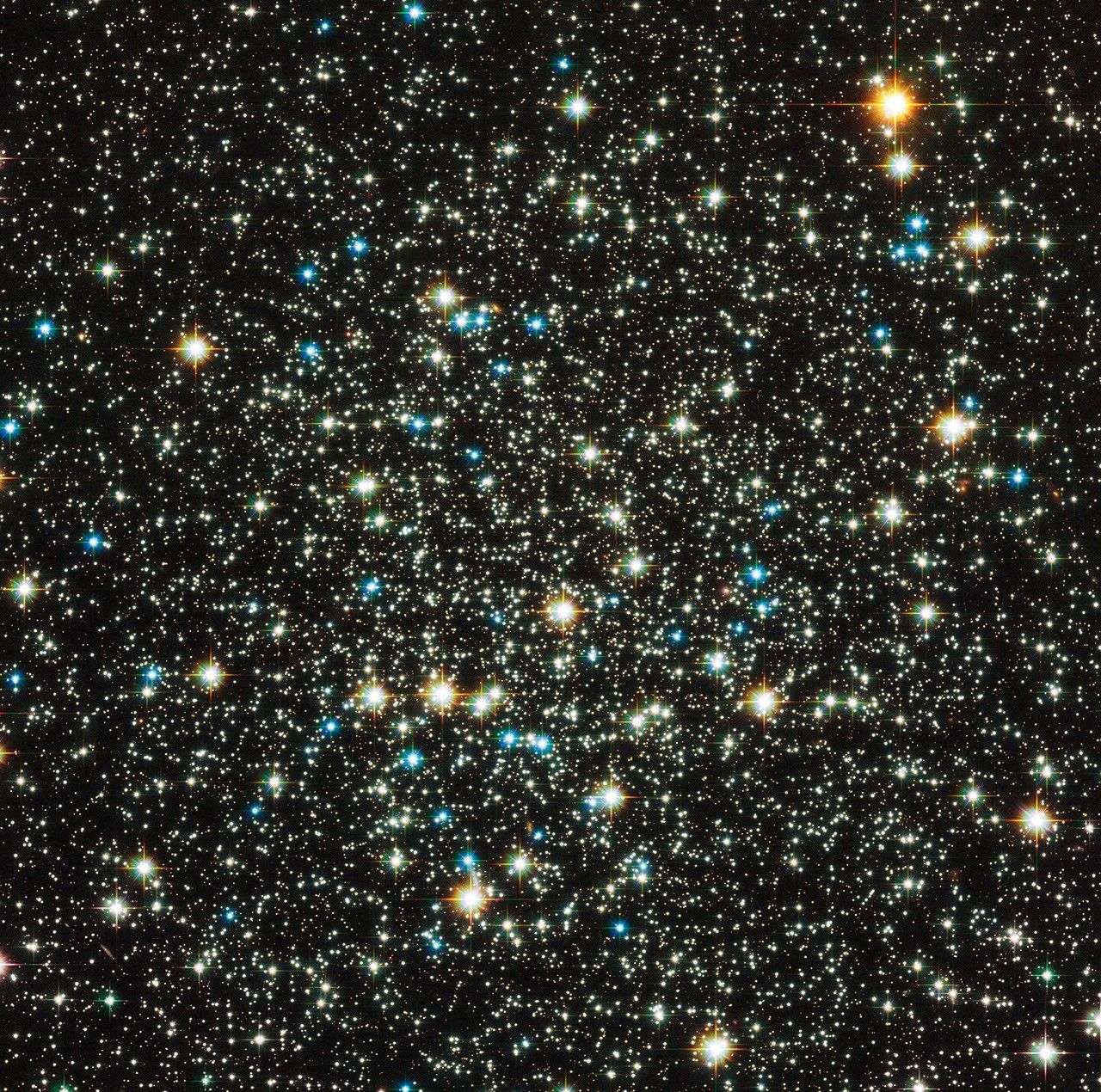
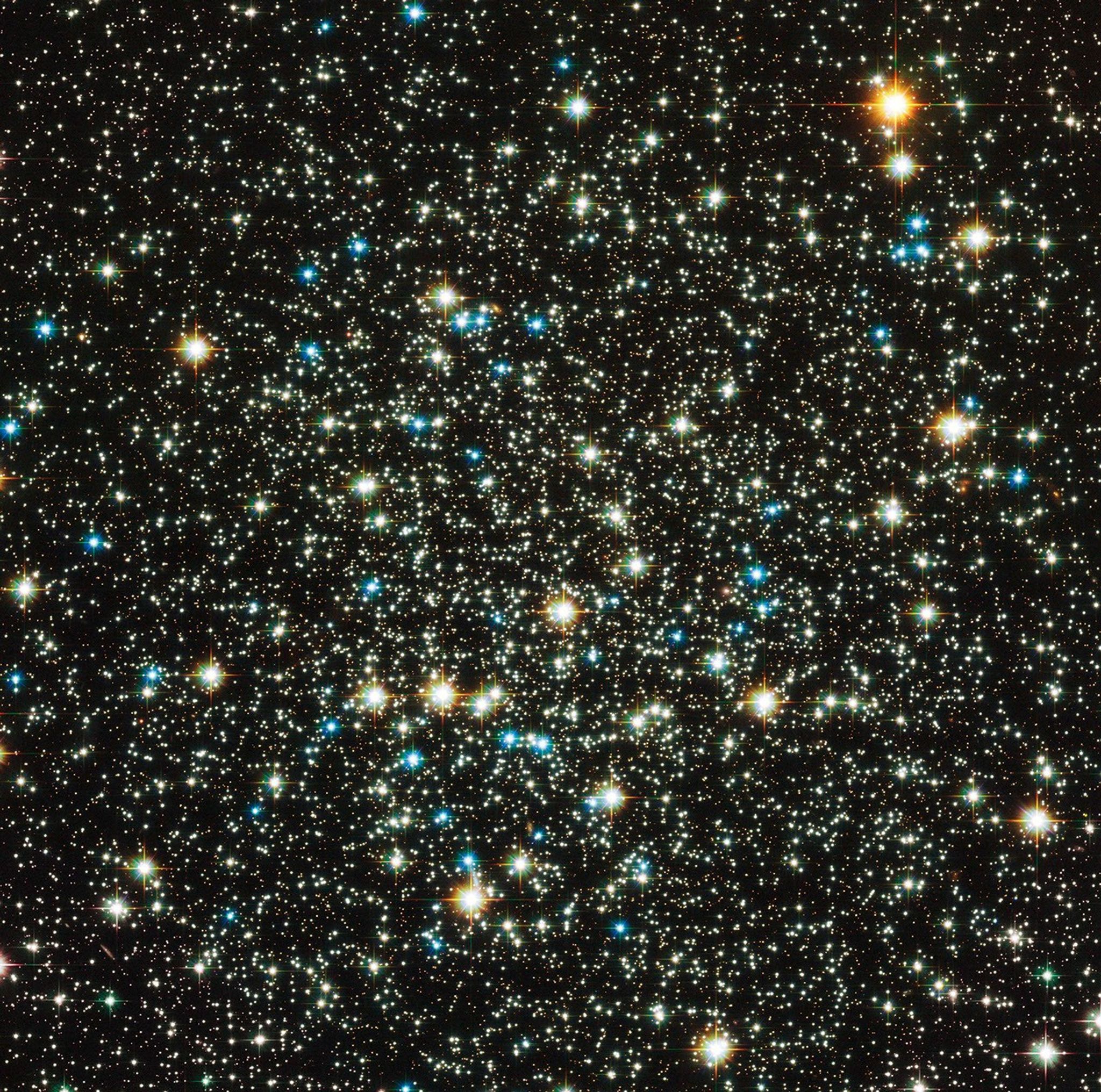
Most of the rich globular star clusters that orbit the Milky Way have cores that are tightly packed with stars, but NGC 288 is one of a minority of low-concentration globulars, with its stars more loosely bound together. The many fainter points of light are normal low-mass stars that are still fusing hydrogen in the same way as the Sun. The brighter stars fall into two classes: the yellow ones are red giant stars that are at a later phase in their careers and are now bigger, cooler, and brighter. The bright blue stars are even more massive stars that have left the red giant phase and are being powered by helium fusion in their cores. The many fainter points of light are normal low-mass stars that are still fusing hydrogen in the same way as the Sun. The brighter stars fall into two classes: the yellow ones are red giant stars that are at a later phase in their careers and are now bigger, cooler, and brighter. The bright blue stars are even more massive stars that have left the red giant phase and are being powered by helium fusion in their cores.
Image Credit: ESA/Hubble & NASA
- X
https://science.nasa.gov/image-detail/amf-81da4bc5-b0fa-4c49-86ba-06543b89514c/
Image CreditESA/Hubble & NASA
Size2048x2033px