











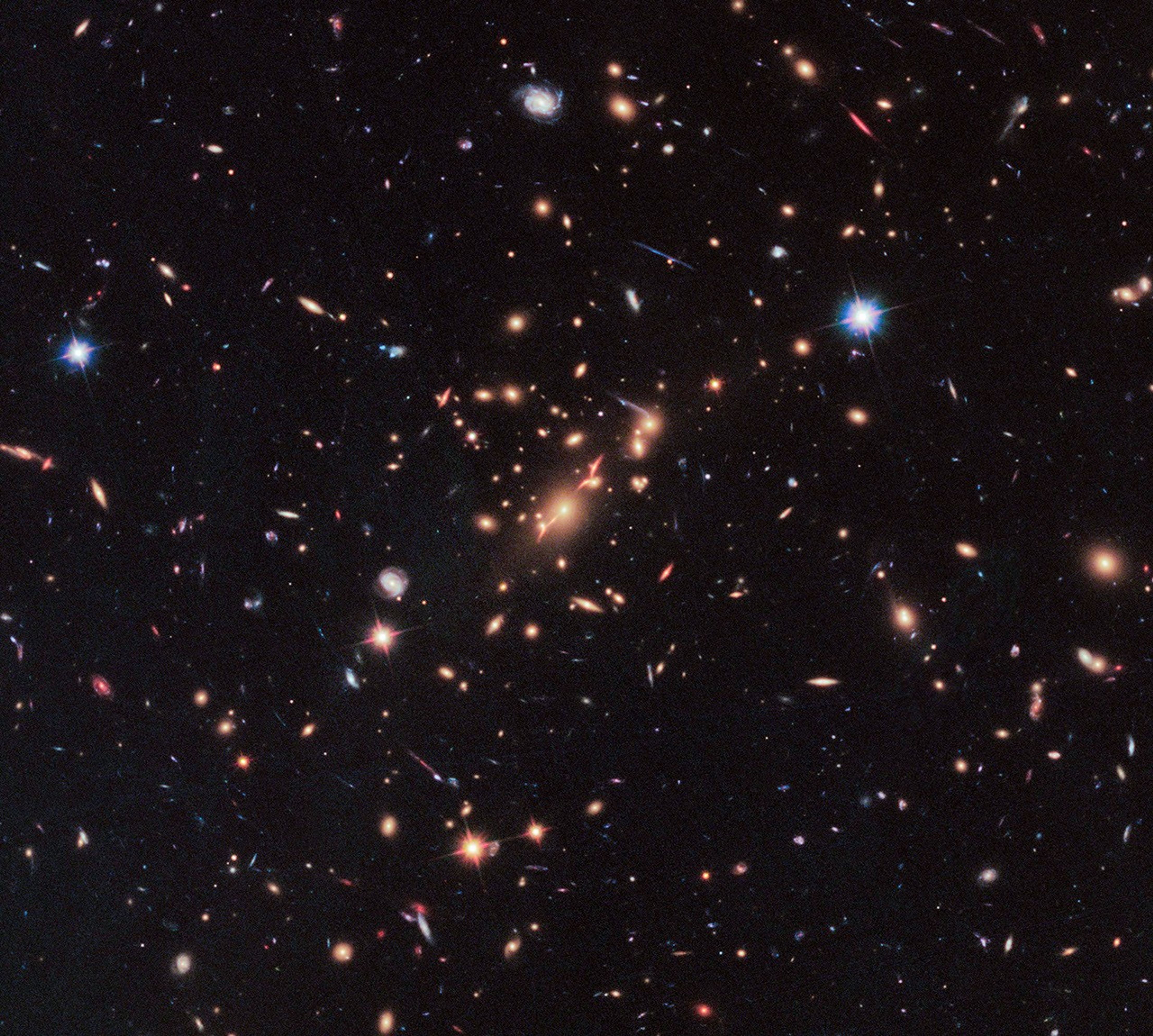
Galaxy Cluster MACS J2129-0741
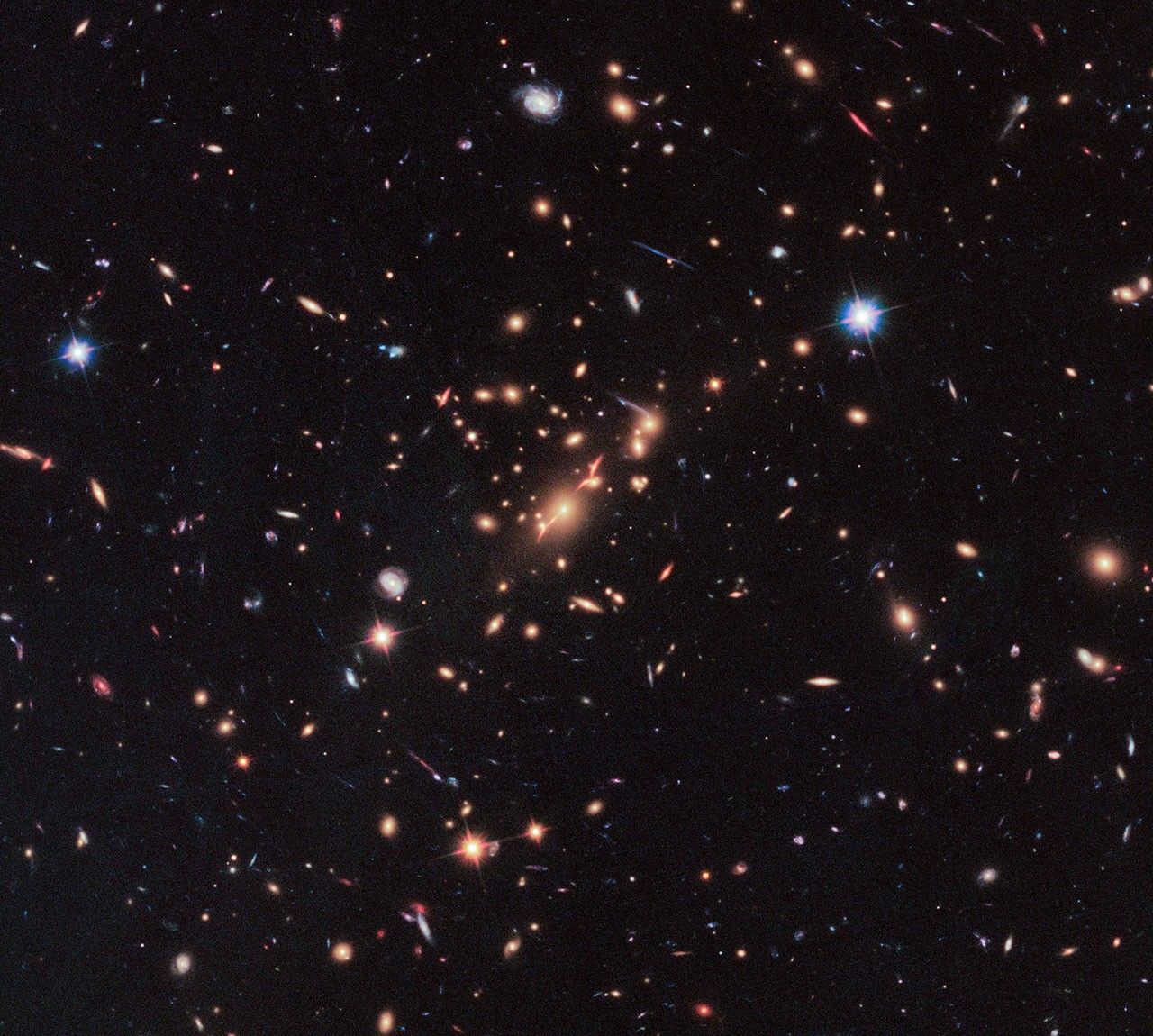
The gravity of this massive galaxy cluster, MACS J2129-0741, magnifies, brightens, and distorts the images of remote background galaxies, making them visible to our telescopes. The streaks and arcs visible in this image are distant galaxies whose light is distorted by the gravity of the cluster. By combining the power of a “natural lens” in space with the capability of the Hubble Space Telescope, astronomers made a surprising discovery — the first example of very compact yet massive disk-shaped and rotating galaxy that stopped making stars only a few billion years after the Big Bang. Finding a galaxy that is pancake-shaped — much like our own Milky Way — so early in the history of the universe challenges the current understanding of how massive galaxies form and evolve.
Image Credit: NASA, ESA, M. Postman (STScI), and the CLASH team
- X
https://science.nasa.gov/image-detail/amf-98b7b775-1f4c-4eeb-b51d-1d1a9088f7ec/
Image CreditNASA, ESA, M. Postman (STScI), and the CLASH team
Size4425x3977px