





















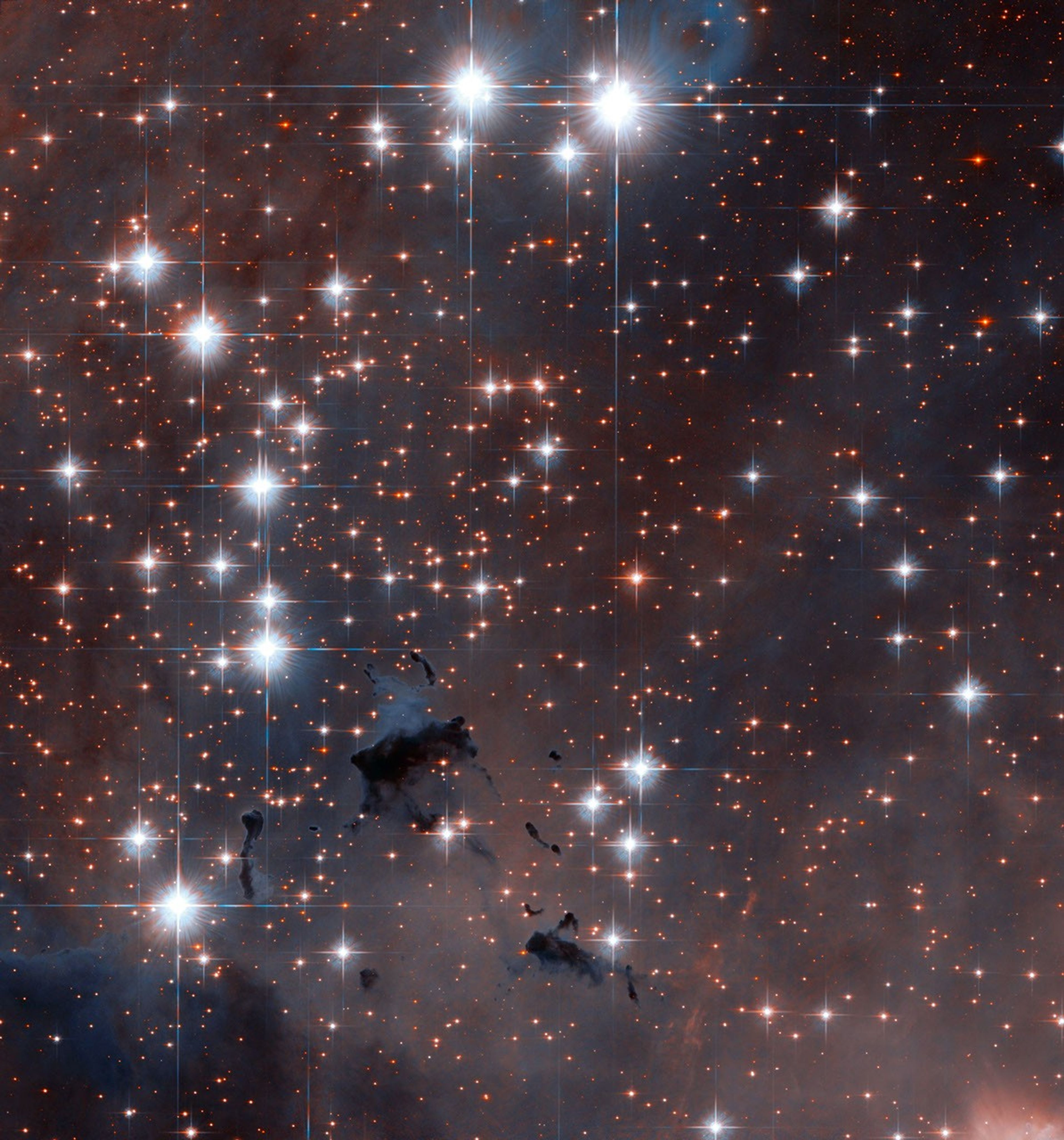
NGC 6611: Stellar Powerhouses in the Eagle Nebula
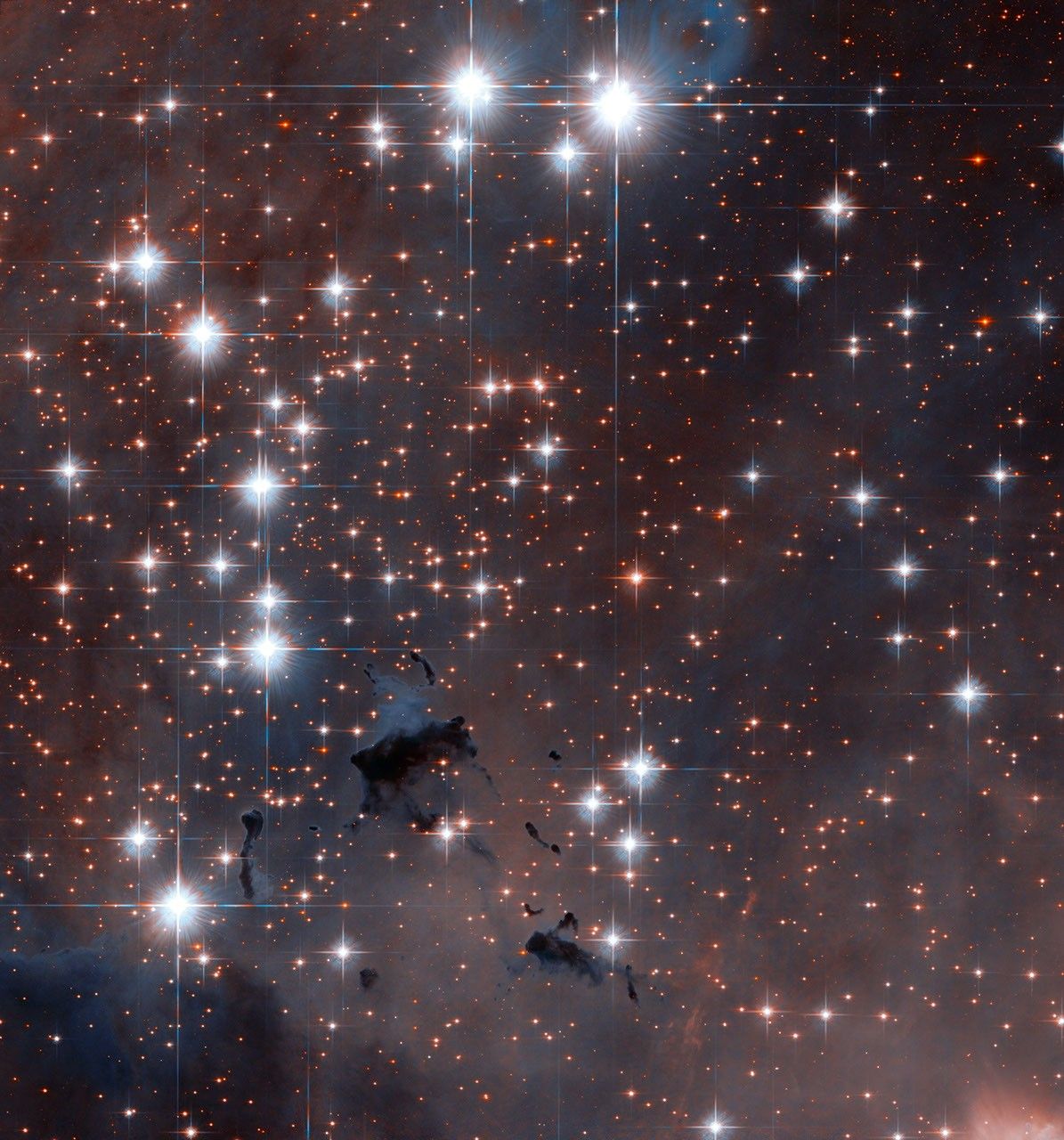
This collection of dazzling stars is called NGC 6611, an open star cluster that formed about 5.5 million years ago in the well-known Eagle Nebula (or Messier 16). It is a very young cluster, containing many hot, blue stars, whose fierce ultraviolet glow make the surrounding Eagle Nebula glow brightly. Astronomers refer to areas like the Eagle Nebula as HII regions. This is the scientific notation for ionized hydrogen from which the region is largely made. Extrapolating far into the future, this HII region will eventually disperse, helped along by shockwaves from supernova explosions as the more massive young stars end their brief but brilliant lives. In this image, dark patches can also be spotted, punctuating the stellar landscape. These areas of apparent nothingness are actually very dense regions of gas and dust, which obstruct light from passing through. Many of these may be hiding the sites of the early stages of star formation, before the fledgling stars clear away their surroundings and burst into view.
Image Credit: ESA/Hubble & NASA
- X
https://science.nasa.gov/image-detail/amf-a179e774-d856-46e3-b386-5a69a0794fff/
Image CreditESA/Hubble & NASA
Size3825x4096px