

















Double Cluster NGC 1850
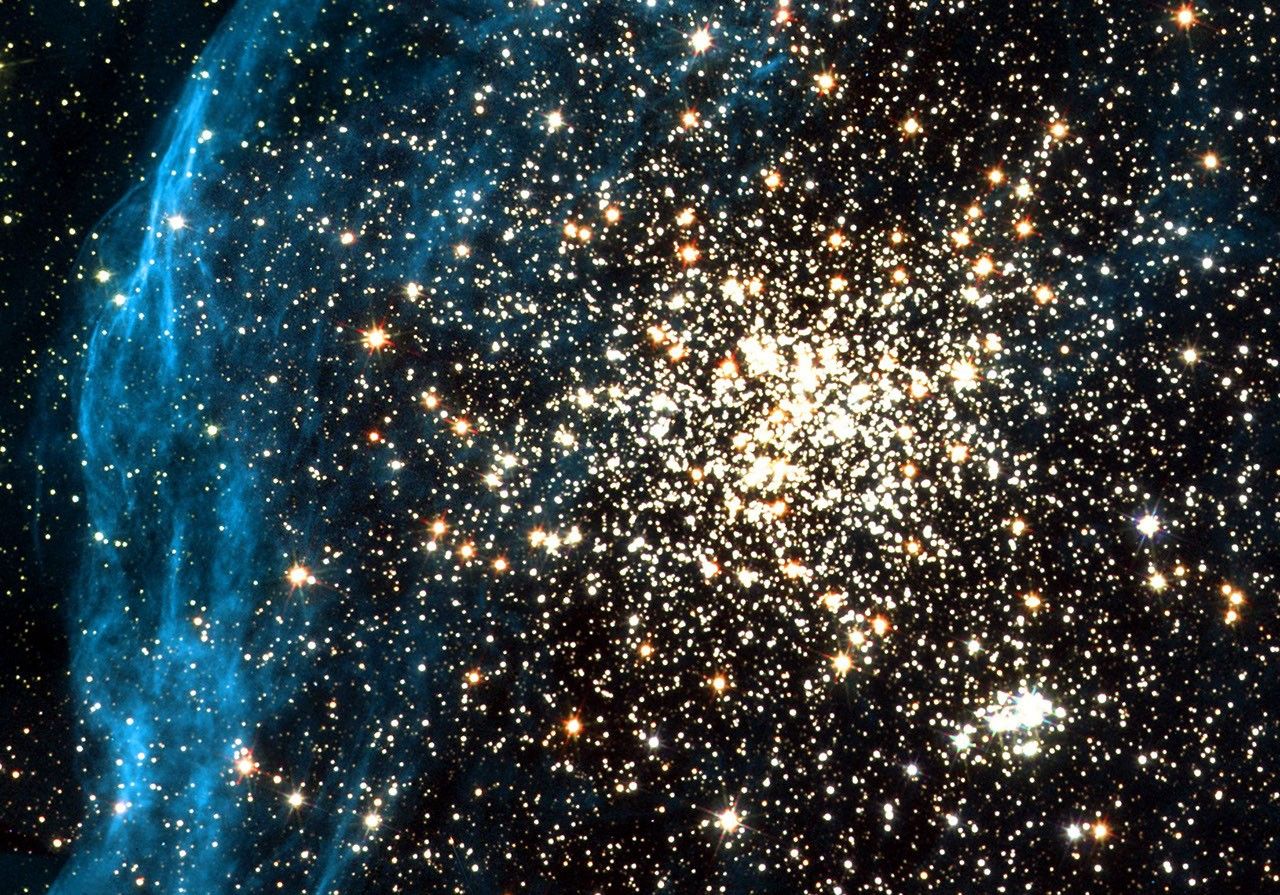
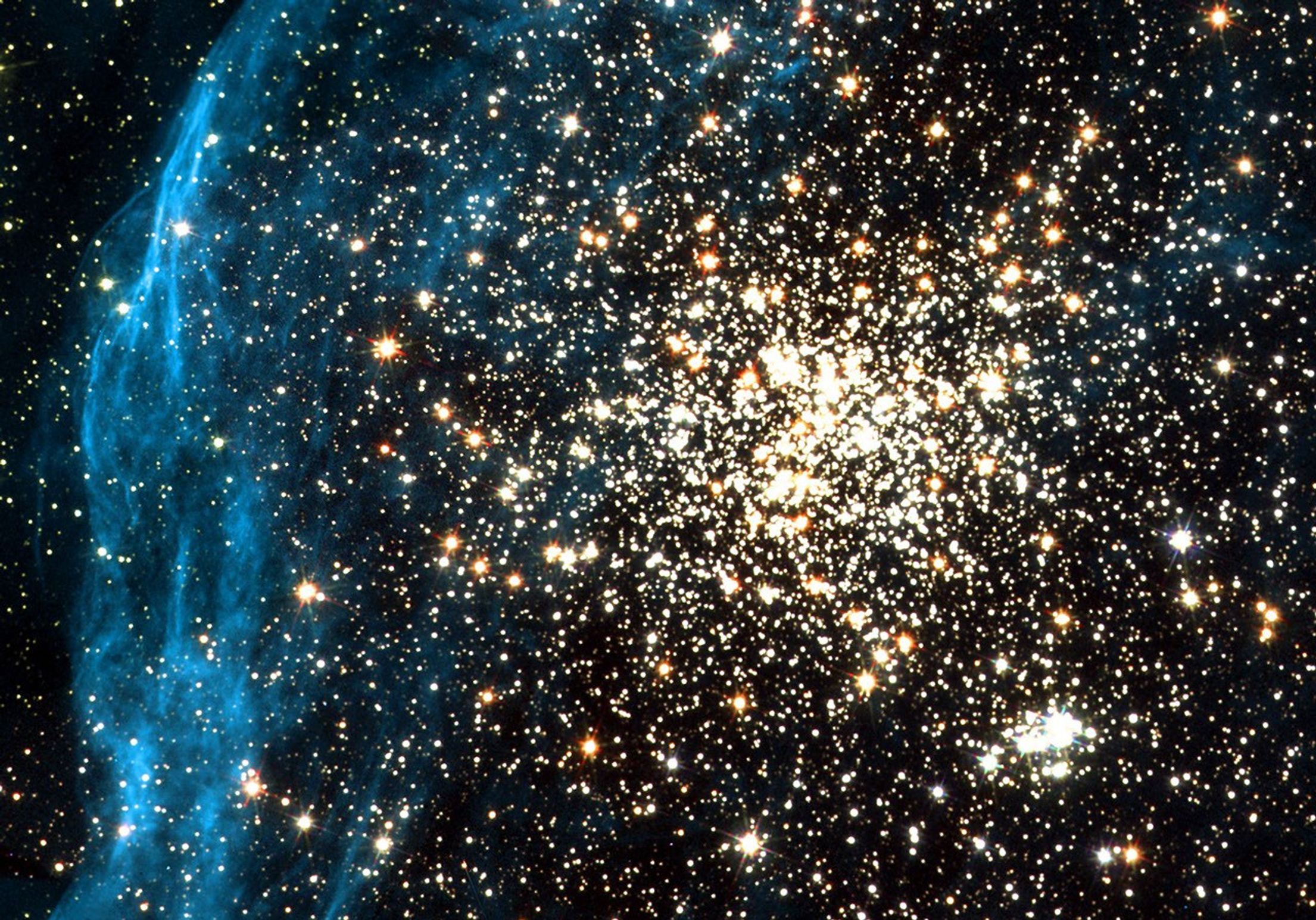
NGC 1850, imaged here with the Hubble Space Telescope, is an unusual double cluster that lies in the bar of the Large Magellanic Cloud, a satellite galaxy of our own Milky Way. After the 30 Doradus complex, NGC 1850 is the brightest star cluster in the Large Magellanic Cloud. It is representative of a special class of objects — young, globular-like star clusters — that have no counterpart in our galaxy. The two components of the cluster are both relatively young and consist of a main, globular-like cluster in the center and an even younger, smaller cluster, seen below and to the right, composed of extremely hot, blue stars and fainter, red stars. The main cluster is about 50 million years old; the smaller cluster is only 4 million years old. This Hubble image is a good example of the interaction between gas, dust, and stars. Millions of years ago massive stars in the main cluster exploded as supernovae, forming the spectacular filigree pattern of diffuse gas visible in the image. It is believed that the birth of new stars can be triggered by the enormous forces in the shock fronts where the supernova blast waves hit and compress the gas. The nebulous gas is part of the N103 super bubble and looks similar to the well-known Cygnus Loop supernova remnant in our own Milky Way.
Image Credit: NASA, ESA, and Martino Romaniello (European Southern Observatory, Germany); Acknowledgments: Martino Romaniello, Richard Hook, Bob Fosbury, and the Hubble European Space Agency Information Center
- X
https://science.nasa.gov/image-detail/amf-ba6591f4-220e-4949-89f0-f83d3448621e/
Image CreditNASA, ESA, and Martino Romaniello (European Southern Observatory, Germany); Acknowledgments: Martino Romaniello, Richard Hook, Bob Fosbury, and the Hubble European Space Agency Information Center
Size2210x1546px