

























Planetary Nebula NGC 2899
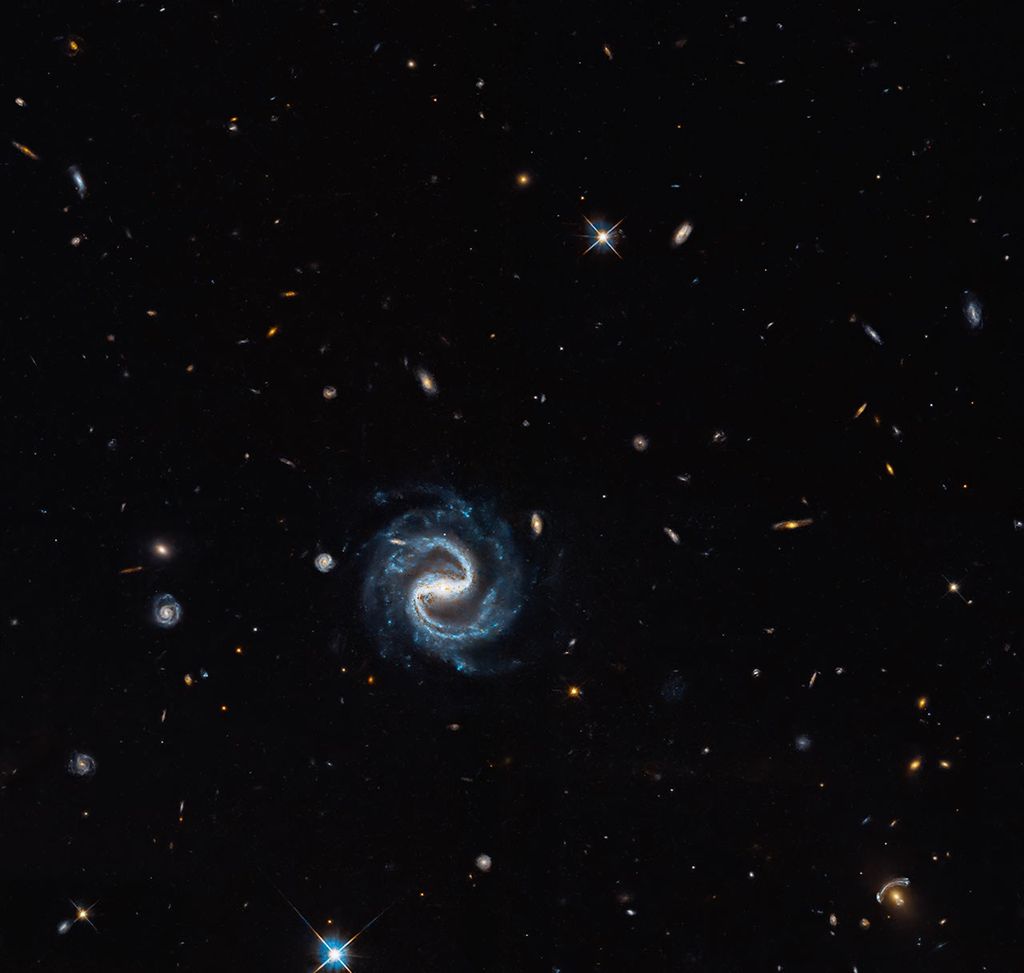
This Hubble Space Telescope image captures the beauty of the moth-like planetary nebula NGC 2899. This object has a diagonal, bipolar, cylindrical outflow of gas. This is propelled by radiation and stellar winds from a nearly 40,000-degree-Fahrenheit white dwarf at the center. In fact, there may be two companion stars that are interacting and sculpting the nebula, which is pinched in the middle by a fragmented ring or torus – looking like a half-eaten donut. It has a forest of gaseous “pillars” that point back to the source of radiation and stellar winds. The colors are from glowing hydrogen and oxygen. The nebula lies approximately 4,500 light-years away in the southern constellation Vela.
Image Credit: NASA, ESA, STScI; Image Processing: Joseph DePasquale (STScI)
- X
https://science.nasa.gov/image-detail/amf-d4394b23-dc54-4aaa-aa3c-ece11f4938a5/
Image CreditNASA, ESA, STScI; Image Processing: Joseph DePasquale (STScI)
Size3900x3894px
