

















Hot Blue Stars Near the Core of Galaxy M32
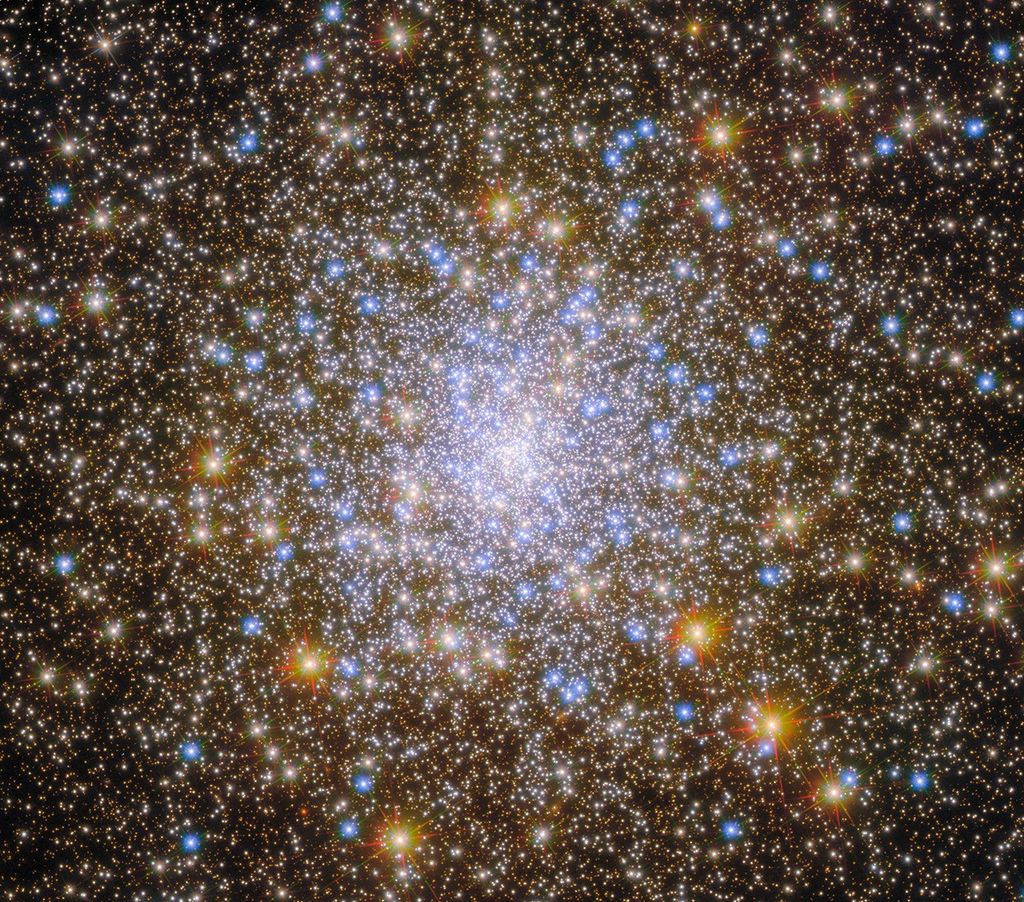
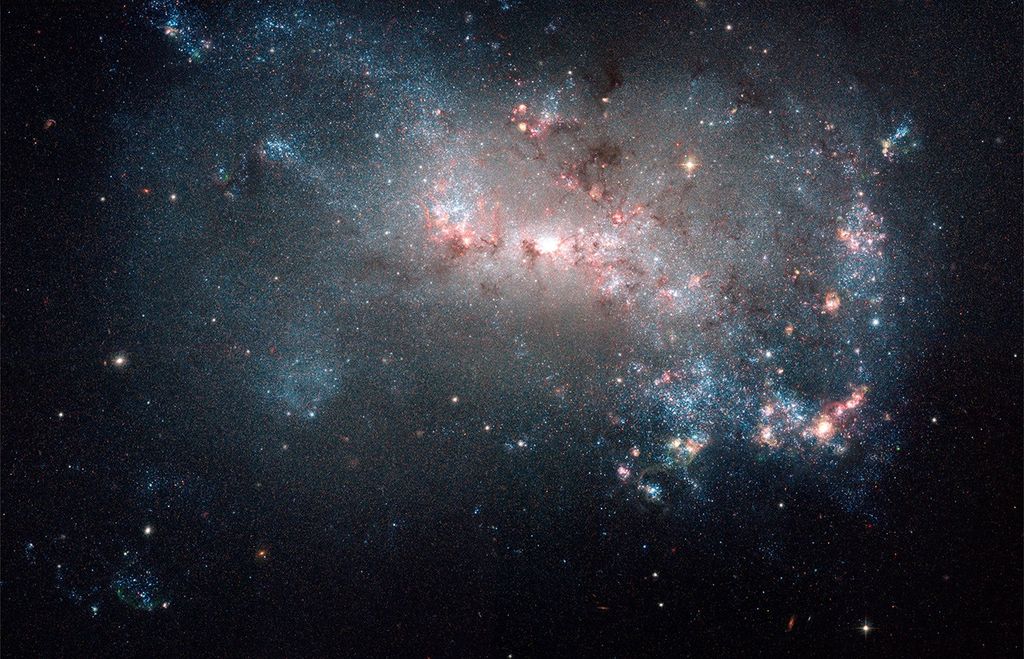
A swarm of nearly 8,000 blue stars resembles a blizzard of snowflakes near the core (lower right) of galaxy Messier 32 (M32), located 2.5 million light-years away in the constellation Andromeda. M32 is a companion galaxy to the much larger spiral galaxy M31 (the Andromeda Galaxy). Thirty years ago, the first ultraviolet observations of elliptical galaxies showed that they were surprisingly bright when viewed in ultraviolet light. Before those pioneering observations, old groups of stars were assumed to be relatively cool and thus extremely faint in the ultraviolet. This Hubble image confirms that the ultraviolet light comes from a population of extremely hot helium-burning stars at a late stage in their lives. Unlike the Sun, which burns hydrogen into helium, these old stars exhausted their central hydrogen long ago and now burn helium into heavier elements.
Image Credit: NASA and Thomas M. Brown, Charles W. Bowers, Randy A. Kimble, Allen V. Sweigart (NASA Goddard Space Flight Center) and Henry C. Ferguson (Space Telescope Science Institute)
- X
https://science.nasa.gov/image-detail/m32-2/
Image CreditNASA and Thomas M. Brown, Charles W. Bowers, Randy A. Kimble, Allen V. Sweigart (NASA Goddard Space Flight Center) and Henry C. Ferguson (Space Telescope Science Institute)
Size2225x2266px