













Suggested Searches

Explorer 1 Stories

50 Years Ago, NASA’s Copernicus Set the Bar for Space Astronomy
7 min read

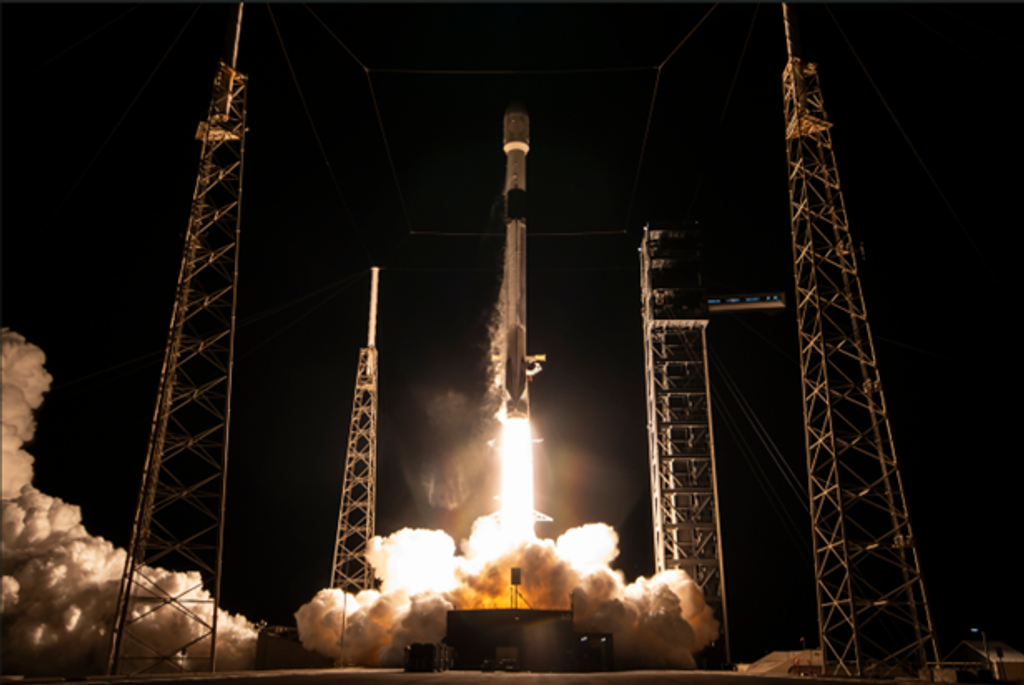
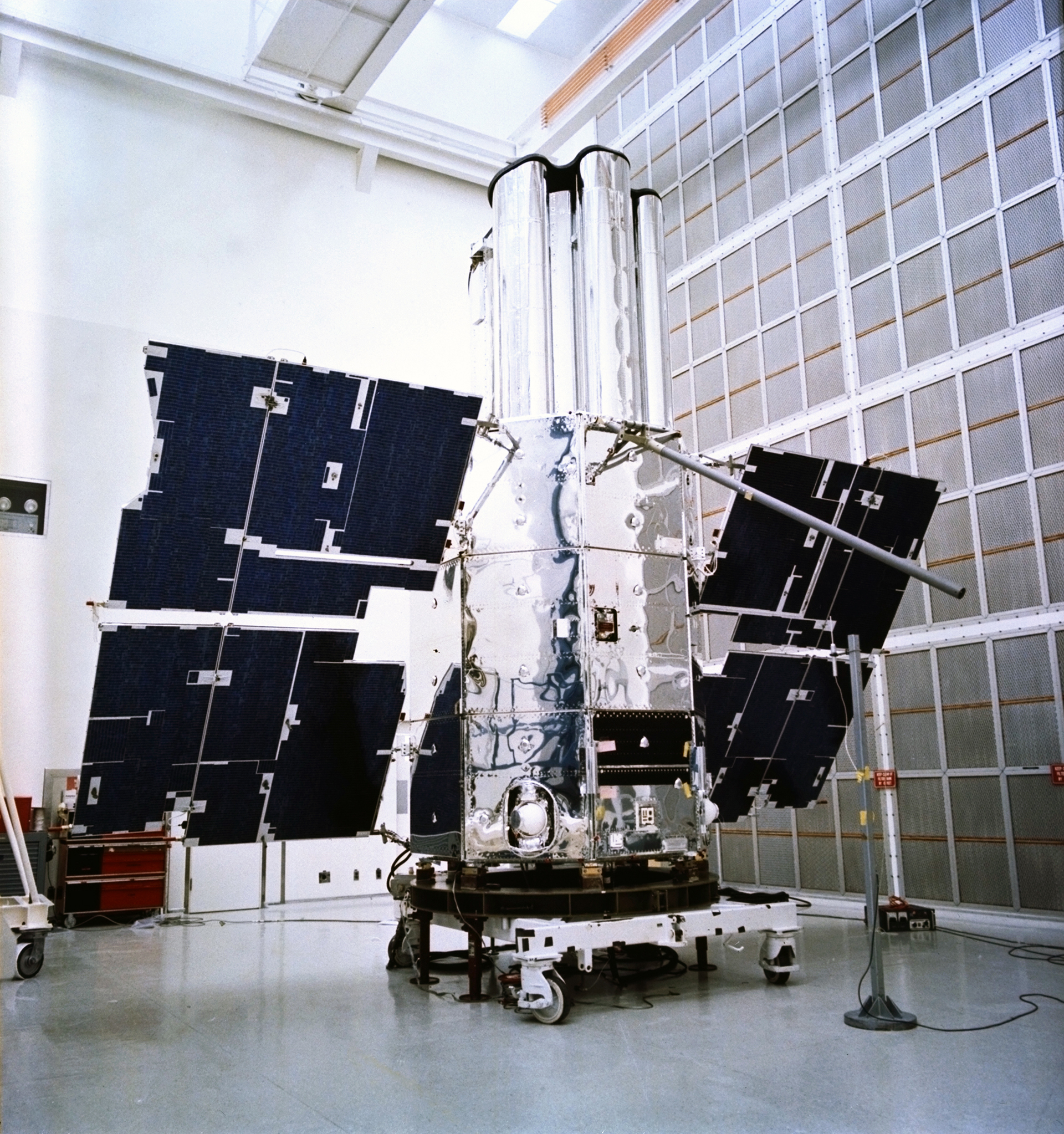
At 6:28 a.m. EDT on Aug. 21, 1972, NASA’s Copernicus satellite, the heaviest and most complex space telescope of its time, lit up the sky as it ascended into orbit from Launch Complex 36B at what is now Cape Canaveral…
Article
Launch of TIROS 1, World’s 1st Weather Satellite — This Week in Goddard History: March 31–April 6
2 min read

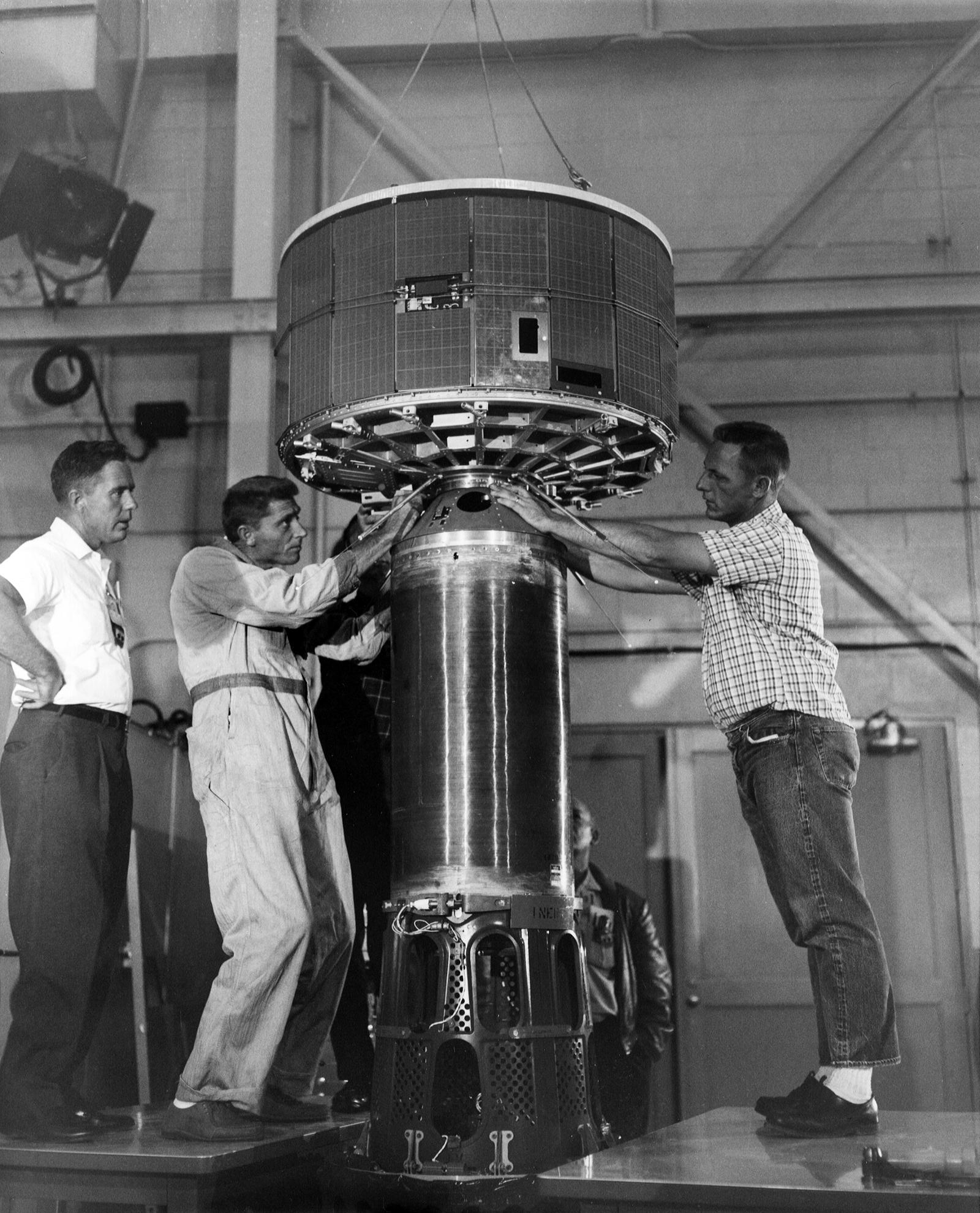
Launched April 1, 1960, NASA’s first satellite designed to determine if Earth could be studied from space was TIROS-1. The mission, managed and operated by NASA’s Goddard Space Flight Center, was a spiritual predecessor to today’s expansive Earth-observing satellite fleet.…
Article
Studying the Van Allen Belts 60 Years After America’s First Spacecraft
5 min read

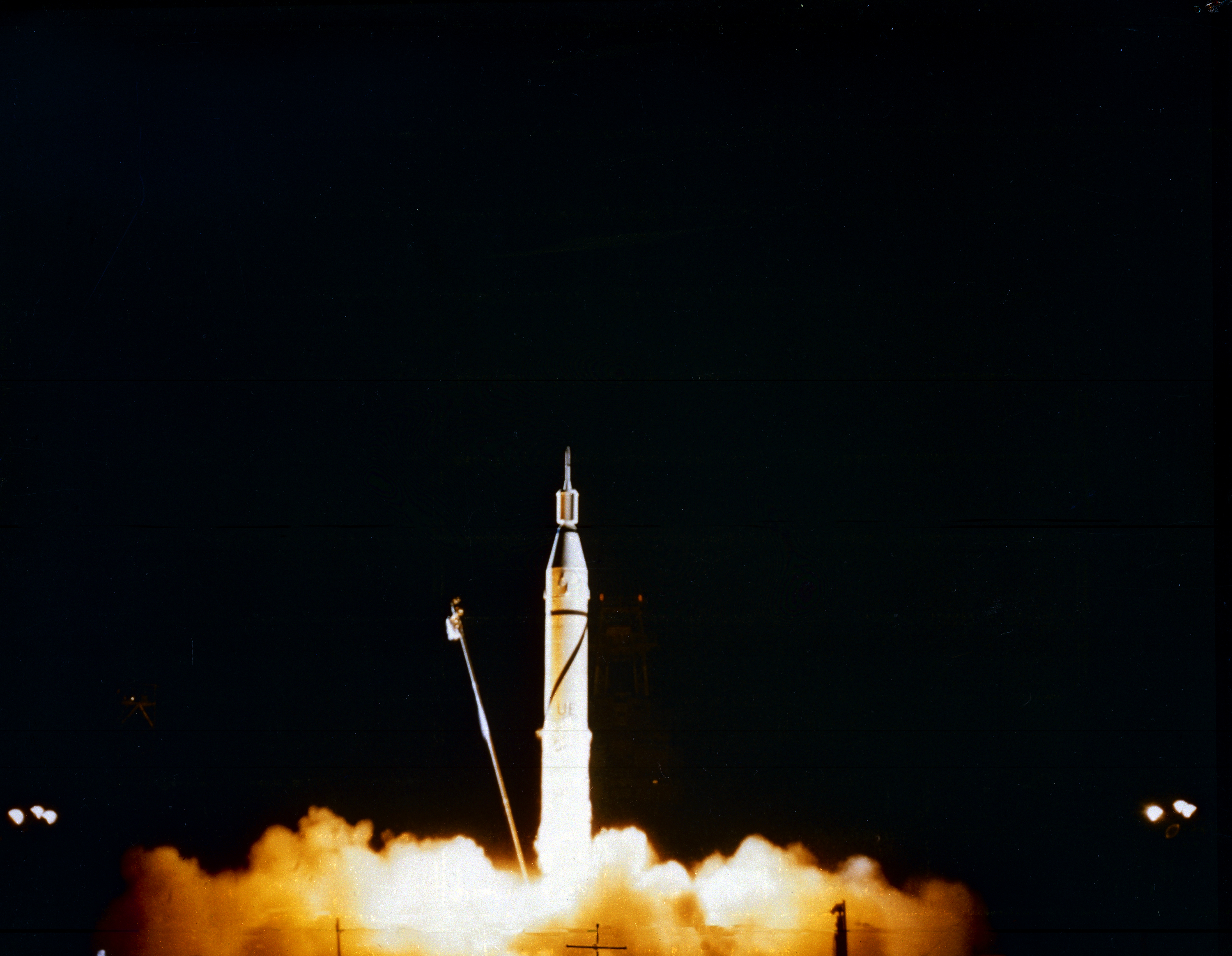
Tick, tick, tick. The device — a Geiger counter strapped to a miniature tape recorder — was registering radiation levels a thousand times greater than anyone expected. As the instrument moved higher, more than 900 miles above the surface, the…

Article

  • Remembering Explorer 1 and James Van Allen

    In NASA’s “Gravity Assist” podcast, Jim Green, the agency’s director of Planetary Science, recalls his time as student under James Van Allen, the University of Iowa physicist who developed the science experiment that flew on the U.S.’s first successful satellite, Explorer 1. Green recounts some of the “secrets” behind Explorer 1 (what did that “UE” on the casing mean?), and how the discovery of what’s now called The Van Allen Belts has affecting space science. Listen to the podcast here.

    Explore

    A smiling man with glasses, a suit, and a yellow-and-blue striped tie stands with his arms outstretched behind a large model of the Explorer 1 satellite. He is positioned in a grand, stone-walled hall featuring an inscription on the upper wall and a large wooden doorway in the background. The rocket model is white and black with thin wire antennas extending from its midsection, resting on black display stands in the foreground.
  • Measuring the Big Bang with the COBE satellite

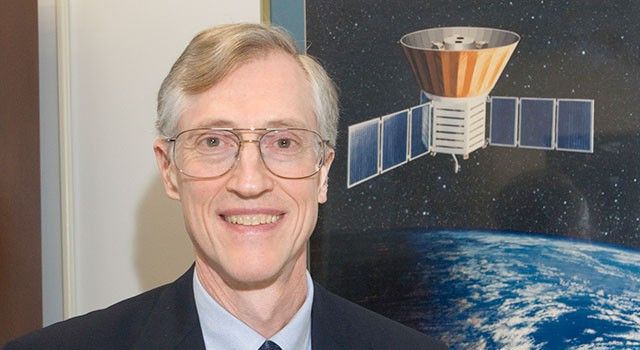
    Nobel Prize winner John C. Mather, a senior astrophysicist in the Observational Cosmology Laboratory at NASA's Goddard Space Flight Center, recalls discovering the cosmic microwave and infrared background light that comes from the distant universe. It came to be known as precision cosmology, and was called the most important scientific discovery of the century -- and possibly all time -- by Stephen Hawking.
    Explore

    A head-and-shoulders portrait of a smiling man with fair skin, light brown hair swept to the side, and gold-rimmed glasses. He is wearing a dark suit jacket over a light blue dress shirt and a dark tie. Behind him is a poster or illustration depicting a satellite with solar panels orbiting Earth against a dark, starry space background. The lighting is bright and professional, suggesting an office or academic setting.
  • The Gestation of the Hubble

    Nancy Grace Roman, the first chief of astronomy of the newly formed NASA’s Office of Space Science, describes what it was like to develop the large space telescope known as Hubble, and how NASA pushed back against lawmakers who called the expense “frivolous.”
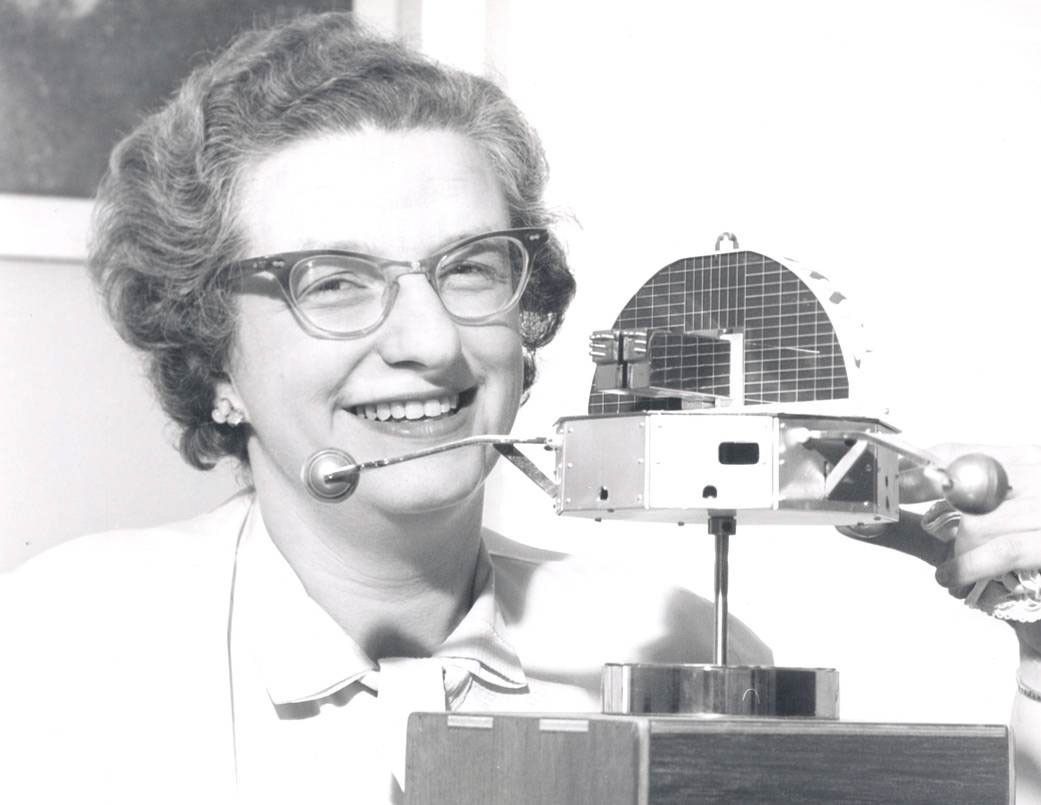
    Explore

    A black-and-white historical photograph shows a smiling woman with short, wavy hair and cat-eye glasses looking toward the camera. She is positioned next to a technical model of a satellite, which features a grid-patterned dish and protruding scientific instruments. The woman is wearing a light-colored button-down shirt, and the background is a simple, bright indoor space, highlighting her and the model as the primary subjects.
  • The Sky Belongs to All of Us

    From a little girl watching Sputnik pass overhead, to being program scientist for NASA’s Hubble Space Telescope, and the first female program scientist for the James Webb Space Telescope, Stratospheric Observatory for Infrared Astronomy (SOFIA), Gravity Probe B, and other astrophysics flight missions, Hashima Hasan recounts how she followed her dream of scientific adventure.
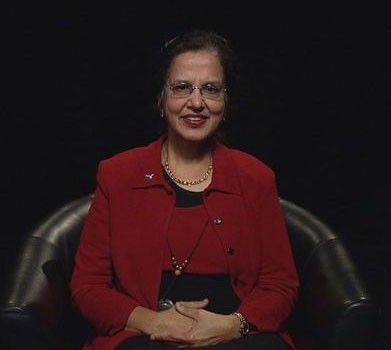
    Explore

    A medium-shot portrait of a woman with dark hair and glasses, sitting in a black leather armchair against a solid black background. She is wearing a vibrant red blazer over a black top, accessorized with a gold necklace and a thin lanyard. She has a warm smile and her hands are calmly clasped in her lap. The lighting is focused on her, creating a professional and formal atmosphere.
  • Notes from the Field, Looking at Chlorophyll from Space

    Compton “Jim” Tucker, a senior scientist in the Earth Sciences Division at NASA’s Goddard Spaceflight Center, explains how researchers moved from studying vegetation in the field to looking at it from space.
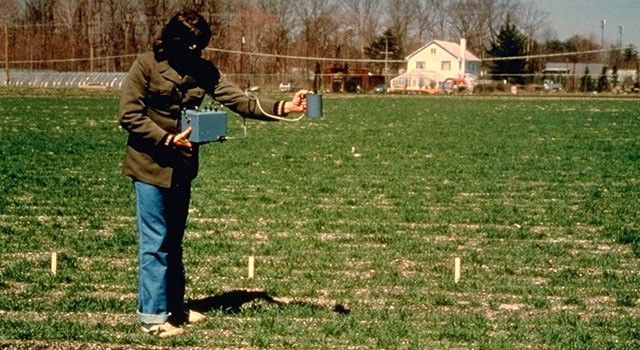
    Explore

    A wide outdoor shot shows a person standing in a grassy field, holding a scientific instrument used for field measurements. The individual is wearing a dark olive jacket and blue jeans, with their face partially obscured by a shadow. They hold a blue rectangular device in one hand, connected by a cable to a handheld cylindrical sensor pointed toward the ground. In the background, a residential house and a line of bare trees are visible under a clear sky.
  • My NASA Experience

    University of Arizona astronomy professor Marcia J. Rieke, the principal investigator for the near-infrared camera (NIRCam) on the James Webb Space Telescope, describes her journey from proposal to opportunity as she goes from looking at space with 1 pixel arrays to the possibility of 4 megapixel arrays.

    Explore

    A close-up, professional headshot of a woman with fair skin, blue eyes, and light brown hair pulled back from her forehead. She is wearing thin, oval-shaped glasses and green hoop earrings that match her light green, floral-patterned button-down shirt. She has a gentle, closed-mouth smile and is set against a soft, neutral brown gradient background.
  • Peering Homeward, 1972

    On July 23, 1972 the first civilian satellite designed to image Earth’s land surfaces was launched from Vandenberg Air Force Base in California.
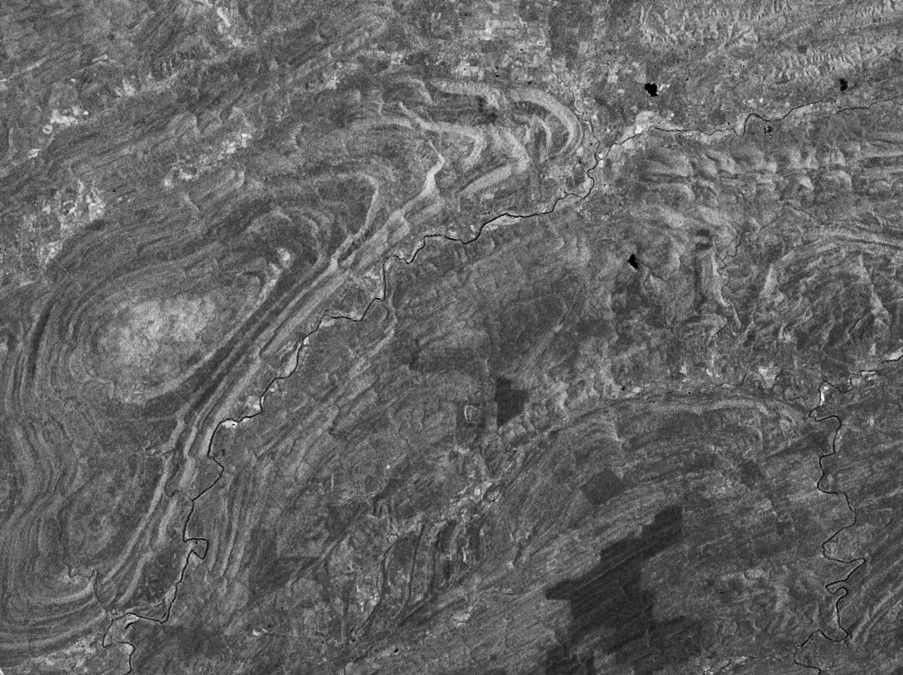
    Explore

    A grayscale satellite image shows a vast, textured landscape from a high-altitude top-down perspective. The terrain is characterized by prominent, winding geological folds and ridges that create a series of concentric, wavy patterns across the surface. A dark, thin river or stream meanders through the center of the image, cutting across the rugged topography. The varied shades of gray indicate different types of land cover or rock formations, with some darker patches likely representing water or dense vegetation and lighter areas highlighting the crests of the ridges.
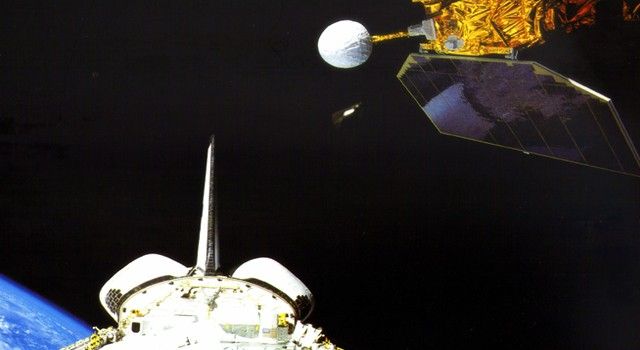
  • Earth’s Energy Budget: 42 Years of Measuring the Sun, Earth and the Energy in Between

    For more than four decades, NASA scientists have been studying the energy interactions between the Sun, clouds and Earth to understand their impact on climate, solar variability and ozone, among other things.
    Explore

    An action shot from space shows the Earth Radiation Budget Satellite (ERBS) being deployed from the cargo bay of a Space Shuttle. In the upper right, the ERBS satellite is visible, covered in gold foil with a large, dark rectangular solar panel extended and a white spherical instrument protruding from its side. Below it, the white tail fin and open cargo bay doors of the Space Shuttle are prominent against the pitch-black void of space. In the bottom left corner, the curved limb of the blue Earth with white clouds is visible, providing a sense of scale and orbit.