
















petitSat
petitSat was a CubeSat developed with the intention of studying Medium-Scale Traveling Ionosphere Disturbances (MSTIDS) and their ability to generate large plasma enhancements, which can interfere with radio communications and navigation.
Mission Type
Launch
Objective
Reentry
petitSat's Mission
petitSat was a GSFC 6U CubeSat led by Principal Investigator Dr. Jeffrey Klenzing. The mission was funded by the NASA Science Mission Directorate Heliophysics Division. It was developed in collaboration with Utah State University, Virginia Polytechnic Institute and State University, and Boston University. Its primary goal was to study the link between Medium-Scale Traveling Ionosphere Disturbances (MSTIDS), also referred to as electrobouyancy waves, and plasma enhancements and determine conditions under which MSTIDS generate large plasma enhancements, which can interfere with radio waves used for communication and navigation. Observations from the C/NOFS satellite suggest that multiple mechanisms are responsible for forming plasma enhancements, with wave action in the thermosphere as a significant driver of the enhanced densities. Statistical analysis of enhancements observed from satellites resembles statistics of MSTIDS with respect to seasonal variability and solar activity. In order to investigate the link between these two phenomena, both in situ data of the plasma enhancement and remote data of the MSTIDS at the magnetic footprint are required. petitSat was designed to provide in situ measurements of the plasma density, 3D ion drift, as well as ion and neutral composition. The instrument suite included a combined retarding potential analyzer and cross-track drift meter and a neutral spectrometer.
Results
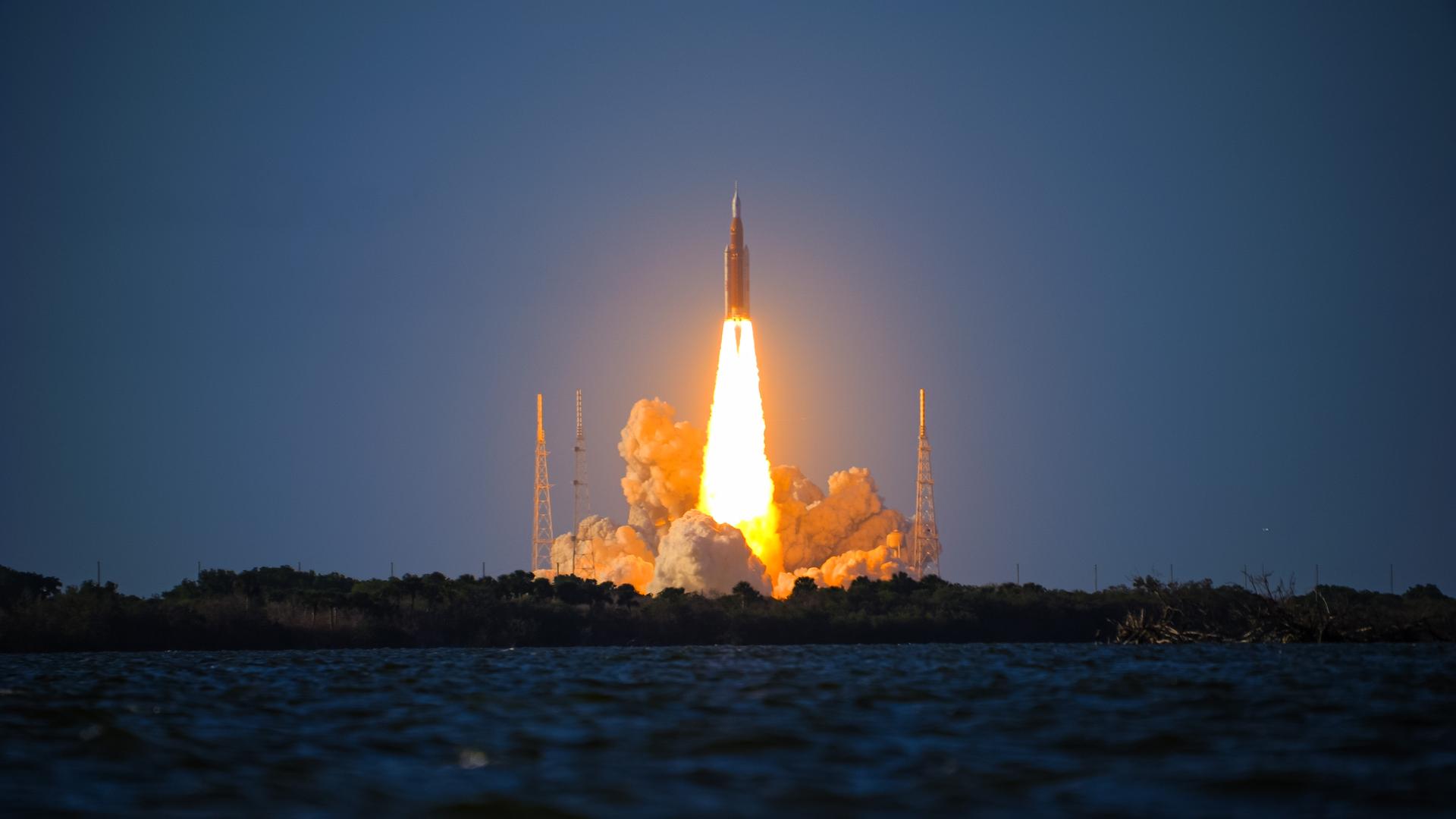
The petitSat spacecraft launched to the International Space Station with SpaceX CRS-26 on November 26, 2022, and was released from the station on December 29, 2022. The commissioning team was unable to establish communication with the spacecraft and it re-entered in early April, 2023. A Failure Review Board determined the likely technical cause of the failure to be a mix of undetected degradation of battery performance during Integration & Testing, and a problematic autonomous recovery scheme. petitSat was a tremendous learning experience for everyone involved and helped to pave the way for the rest of the CubeSat missions at GSFC.