















AWE
Atmospheric Waves Experiment
Type
Launch
Location
Objective
NASA Mission Catching AWEsome Waves in Earth’s Airglow
NASA’s Atmospheric Waves Experiment, or AWE, studied airglow, an ethereal radiance at the boundary between Earth’s atmosphere and space, to look for an invisible phenomenon called atmospheric gravity waves.
Video credit: NASA’s Goddard Space Flight Center
Overview
The Atmospheric Waves Experiment (AWE) studied atmospheric gravity waves (AGWs) to understand the flow of energy through Earth’s atmosphere to space. Its observations provided key information about how the lower atmosphere is connected to the upper atmosphere, and how, in turn, the upper atmosphere connects to this complex space system. It belonged to NASA’s fleet of heliophysics missions studying a vast interconnected system from the space surrounding Earth and other planets to the farthest limits of the Sun’s constantly flowing stream of solar wind.
Starting in the lowest level of the atmosphere, AGWs may be caused by strong weather events such as tornadoes, hurricanes, thunderstorms, or winds rushing upward over massive obstacles at Earth’s surface like the towering Andes mountain range. These weather events can momentarily push pockets of high-density air upward into the atmosphere before the air sinks back down. This up-and-down bobbing often leaves behind distinctive ripple patterns in the clouds.
The waves eventually deposit their energy, like an ocean wave breaking on the beach, as they ripple up into space where they contribute to what’s known as space weather — the tumultuous exchange of energy in the area surrounding our planet. Because gravity waves haven’t been well-studied from space, their impacts are little understood, though they’re known to affect the atmosphere, weather, and climate across the globe — as well as weather in space. The better we understand the physics of these waves, the better we understand our atmosphere and ultimately, can better forecast space weather.
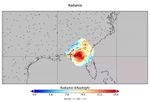
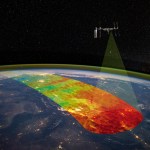
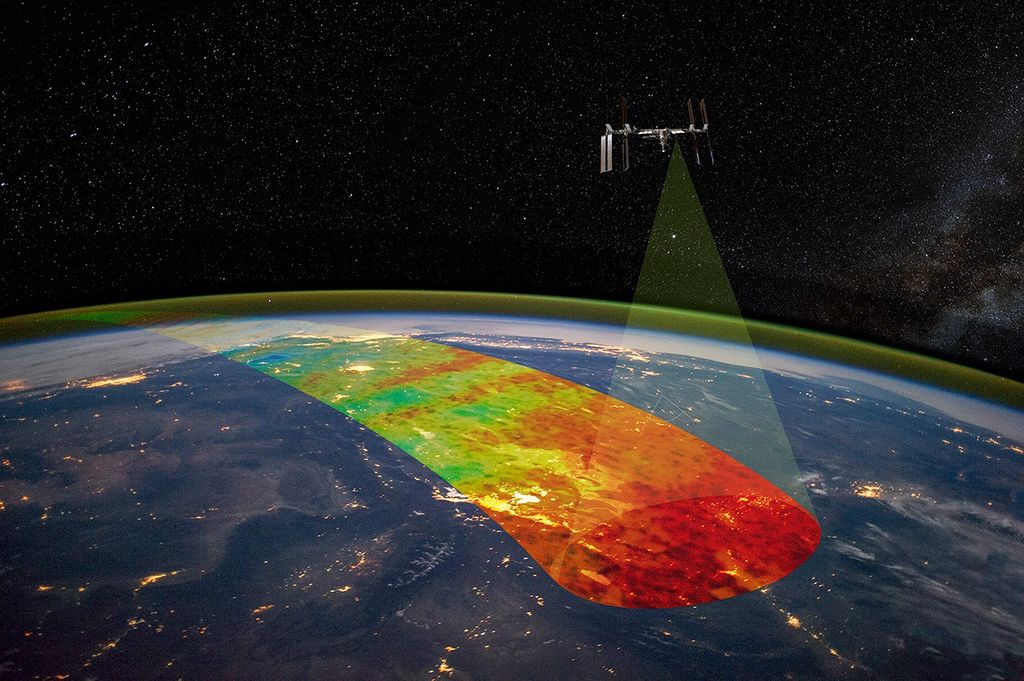
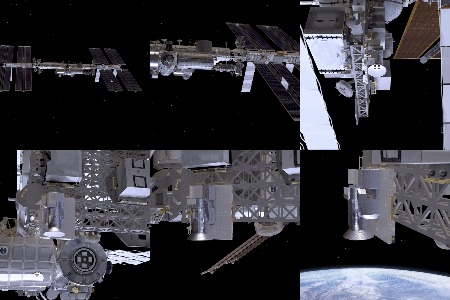
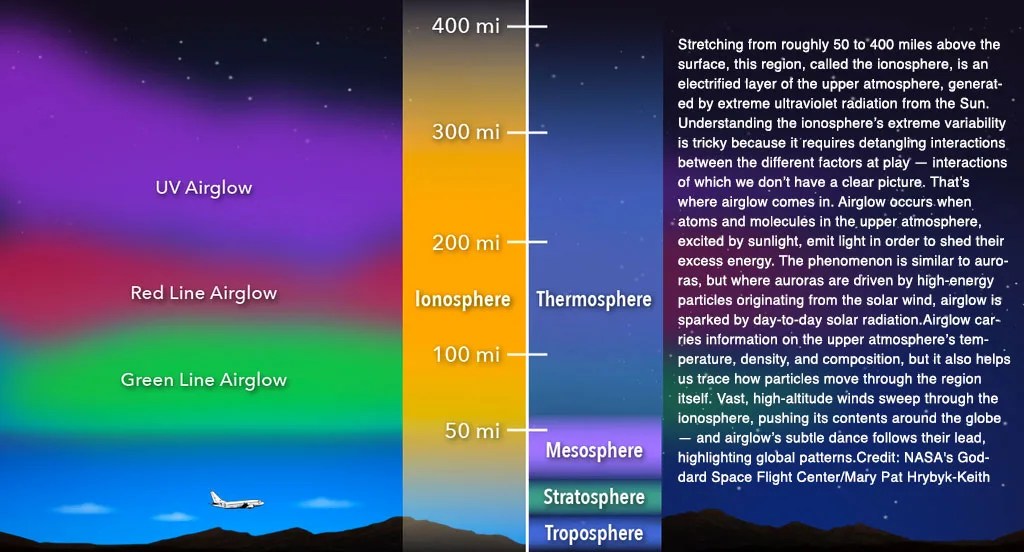
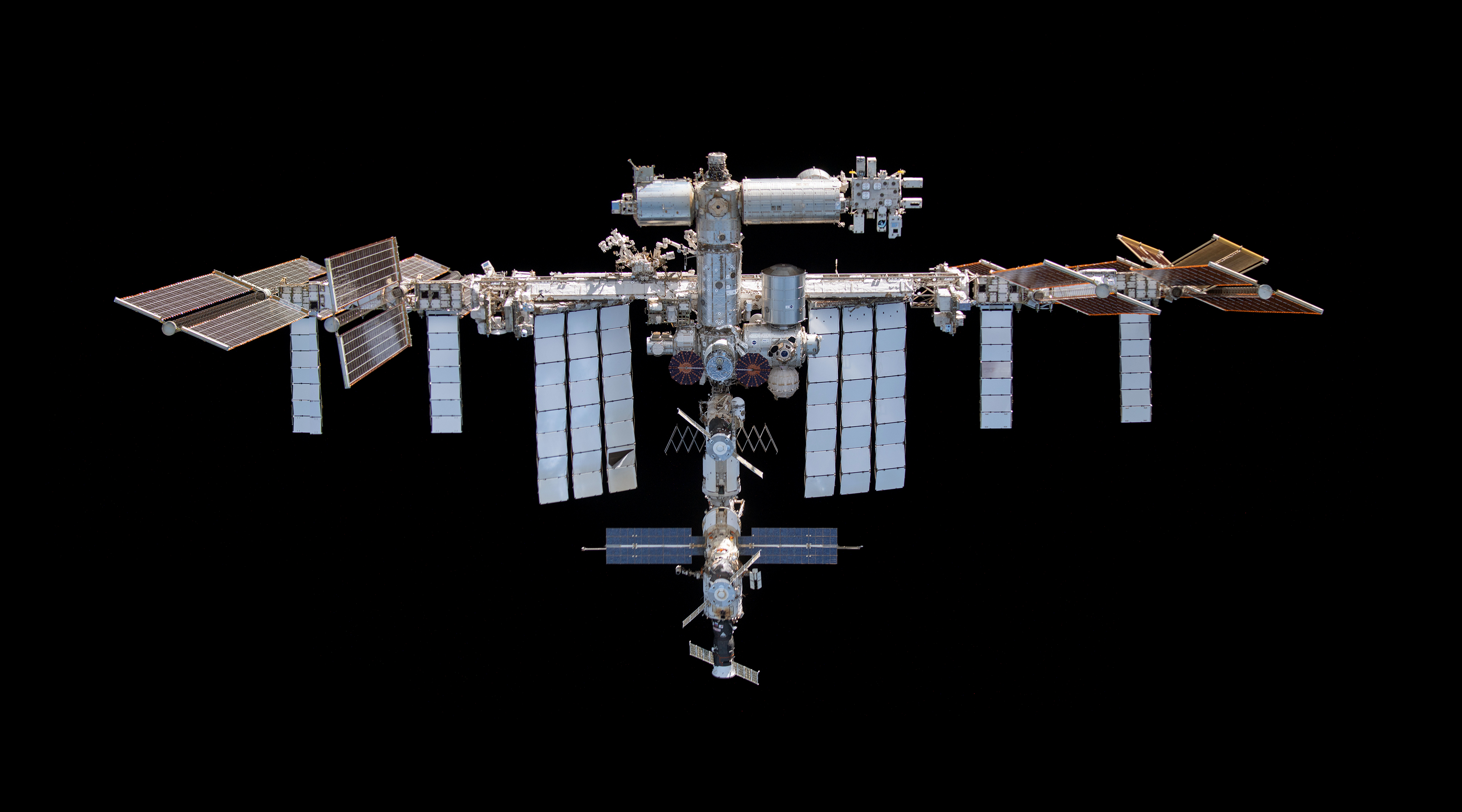
The AWE mission flew on the International Space Station. Taking advantage of the space station’s orbit, AWE looked directly down at an atmospheric layer that is located near 54 miles (87 kilometers) in altitude, known as the mesopause. Near the mesopause, where AWE made its measurements, AGWs are revealed by colorful bands of light in our atmosphere known as airglow. The AWE mission “saw” these waves by recording variations of airglow in infrared light, a wavelength range too long for human eyes to see. At these altitudes our atmosphere dips to its coldest temperatures — reaching as low as -150 degrees Fahrenheit (-101 degrees Celsius) — and the faint glow of infrared light is at its brightest.
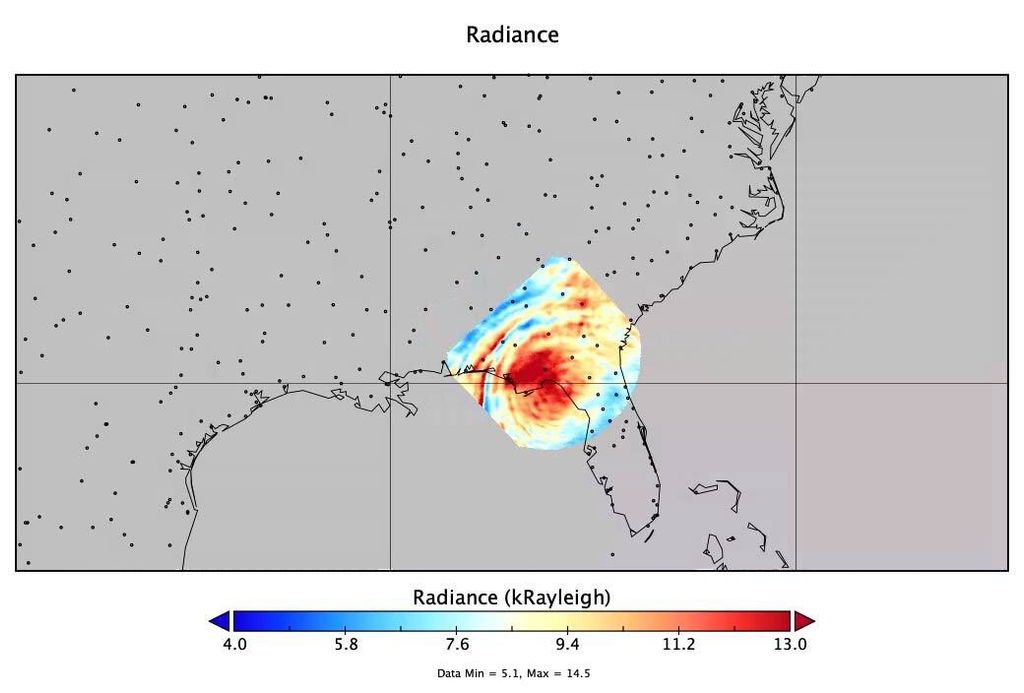
By watching that infrared airglow grow brighter and dimmer as waves move through it, AWE allowed scientists to compute the size, power, and dispersion of AGWs like never before. By carefully looking at a complicated system driven by both terrestrial and space weather, AWE helped pave the way in protecting our technology, communication systems, astronauts, and society.
Science Goals and Objectives
- Understand How AGWs Vary in Space and Time: The AWE data will reveal where and when AGWs occur throughout the year. The AWE team will focus on the energy and momentum carried by AGWs during the different seasons and across the globe.
- Study How AGWs Are Formed & Transported: Using two global and two regional models, the science team will seek to understand the connection between the sources, pathways, and appearances of AGWs. The models include the following:
- NAVGEM: Provides global weather predictions from 0–110 km altitude. It focuses on atmospheric winds and temperatures that define the AGW propagation environment.
- WACCM-X: Provides high-resolution simulations for AGW case studies.
- CGCAM: Identifies how sources and background conditions define what part of the AGW spectrum reaches the ionosphere-thermosphere-mesosphere region of the atmosphere.
- MAGIC: Uses computer simulations to predict the effects of AWE-observed gravity waves on the higher atmosphere.
- Understanding How AGWs Affect Space Weather: Radio frequency waves in the Ionosphere-Thermosphere-Mesosphere region interact heavily with solar wind that can affect radio communication and satellite navigation. The AWE team investigates the effects and impacts of AGWs on this region. Initial research on AGWs in the atmosphere has already shown how they introduce ionospheric variability that affects GPS navigation, tracking, and communication systems. Data from AWE will reveal more about how AGWs affect the component of space weather that is not driven by disturbances on the Sun and ultimately how AGWs impact the environment that our communications and navigation systems use.
Stats
| Nation | United States of America (USA) |
| Location | International Space Station |
| Instrument Mass | 58 kilograms (128 pounds) |
| Mission Design and Management | NASA / Goddard Space Flight Center |
| Launch Vehicle | Falcon 9 |
| Launch Date and Time | November 9, 2023, at 8:28 p.m. EST |
| Launch Site | NASA’s Kennedy Space Center |
| Installation Date and Time | November 18, 2023, at 2:00 p.m. EST |
| Prime Mission Length | Two years |
| Scientific Instrument | Advanced Mesospheric Temperature Mapper |
What Are Atmospheric Gravity Waves?
Atmospheric gravity waves are different from gravitational waves.
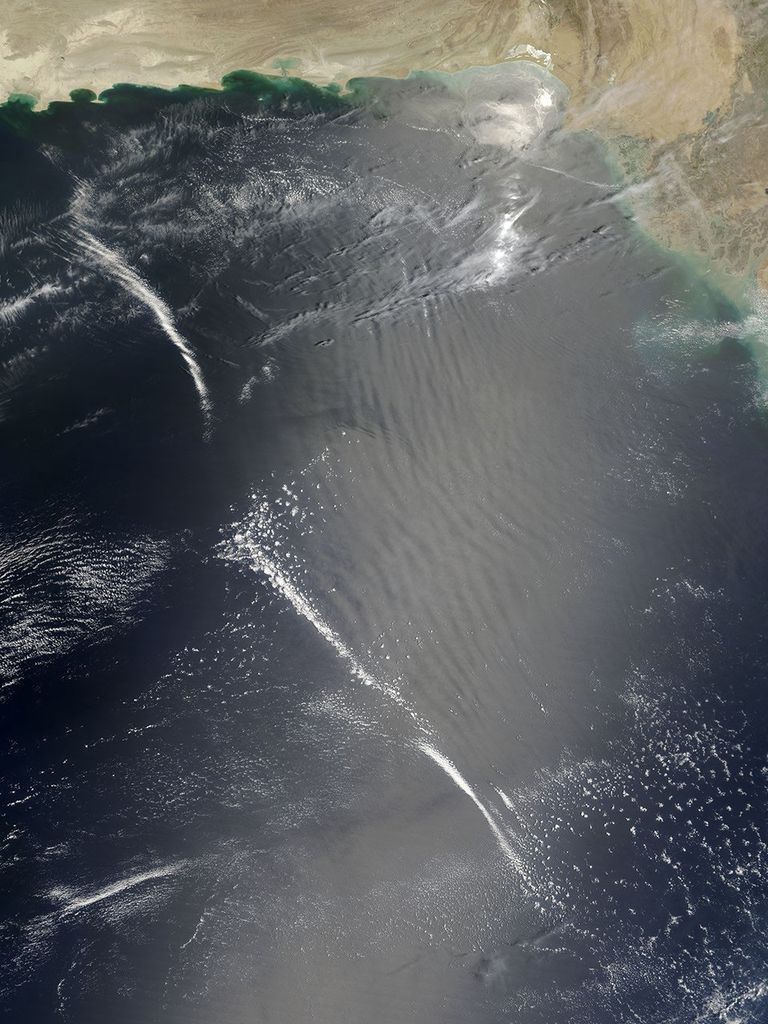
Atmospheric gravity waves are not ripples in space-time associated with supernovae and black holes (gravitational waves). They are waves of air that form when winds rush over disturbances at Earth’s surface — severe thunderstorms or mountaintops — and swell up through the atmosphere. They quickly carry energy and momentum up through Earth’s atmosphere.
Why Are They Important?
Starting in the lowest level of the atmosphere, atmospheric gravity waves (AGWs) may be caused by strong weather events such as tornadoes, hurricanes, or even thunderstorms. These weather events can momentarily push pockets of high-density air upward into the atmosphere before the air sinks back down. This up-and-down bobbing often leaves behind distinctive ripple patterns in the clouds.
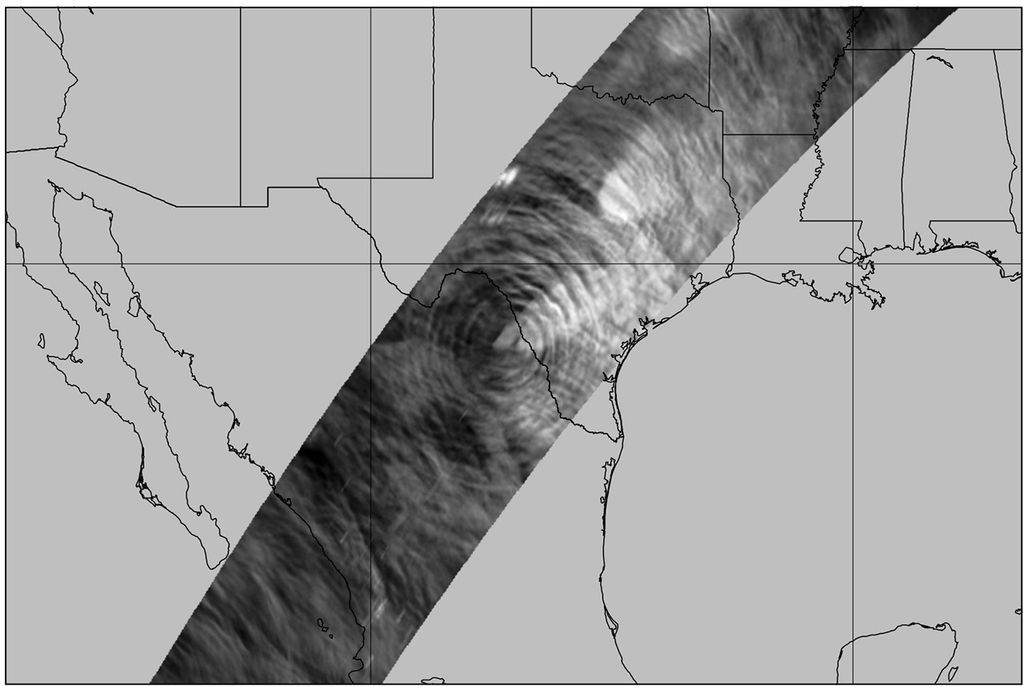
But AGWs continue all the way to space, where they contribute to what’s known as space weather — the tumultuous exchange of energy in the area surrounding our planet that can disrupt satellite and communications signals. The AWE mission measured AGWs at an atmospheric layer that is located some 54 miles (87 kilometers) in altitude, known as the mesopause.
How Did AWE Work?
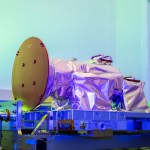
The AWE mission was a single instrument, the Advanced Mesospheric Temperature Mapper.
Attached to the International Space Station, this instrument was a wide-field-of-view infrared imager that had four identical telescopes that simultaneously measure the airglow layer and atmospheric background to build a high-quality temperature map of atmospheric gravity waves.

Why AWE Matters
The AWE mission’s research on atmospheric gravity waves and near-Earth space is important to protect our space-based resources, as space weather can disrupt communications and navigation systems and impact spacecraft in orbit.