













Description
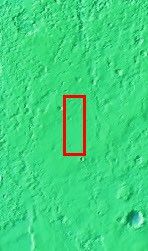
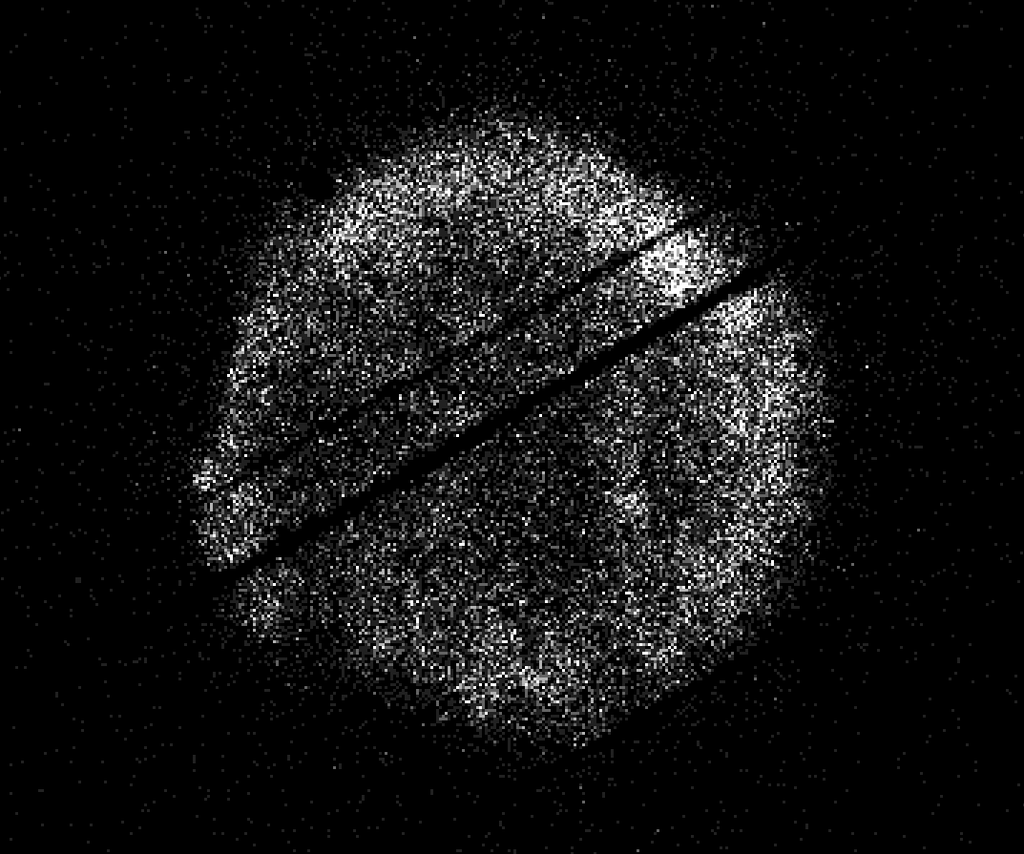
Context image for PIA10250
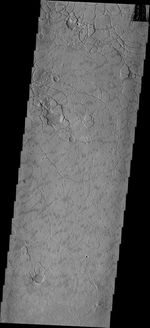
Arcuate Collapse
This region near the highland/lowland boundary appears to be breaking into curved-edged blocks. If one looks closely you will see that the block edges are created by arcs of collapse pits which expand until a complete margin is created.
Image information: VIS instrument. Latitude -2.2N, Longitude 172.3E. 18 meter/pixel resolution.
Please see the THEMIS Data Citation Note for details on crediting THEMIS images.
Note: this THEMIS visual image has not been radiometrically nor geometrically calibrated for this preliminary release. An empirical correction has been performed to remove instrumental effects. A linear shift has been applied in the cross-track and down-track direction to approximate spacecraft and planetary motion. Fully calibrated and geometrically projected images will be released through the Planetary Data System in accordance with Project policies at a later time.
NASA's Jet Propulsion Laboratory manages the 2001 Mars Odyssey mission for NASA's Office of Space Science, Washington, D.C. The Thermal Emission Imaging System (THEMIS) was developed by Arizona State University, Tempe, in collaboration with Raytheon Santa Barbara Remote Sensing. The THEMIS investigation is led by Dr. Philip Christensen at Arizona State University. Lockheed Martin Astronautics, Denver, is the prime contractor for the Odyssey project, and developed and built the orbiter. Mission operations are conducted jointly from Lockheed Martin and from JPL, a division of the California Institute of Technology in Pasadena.