






















Description
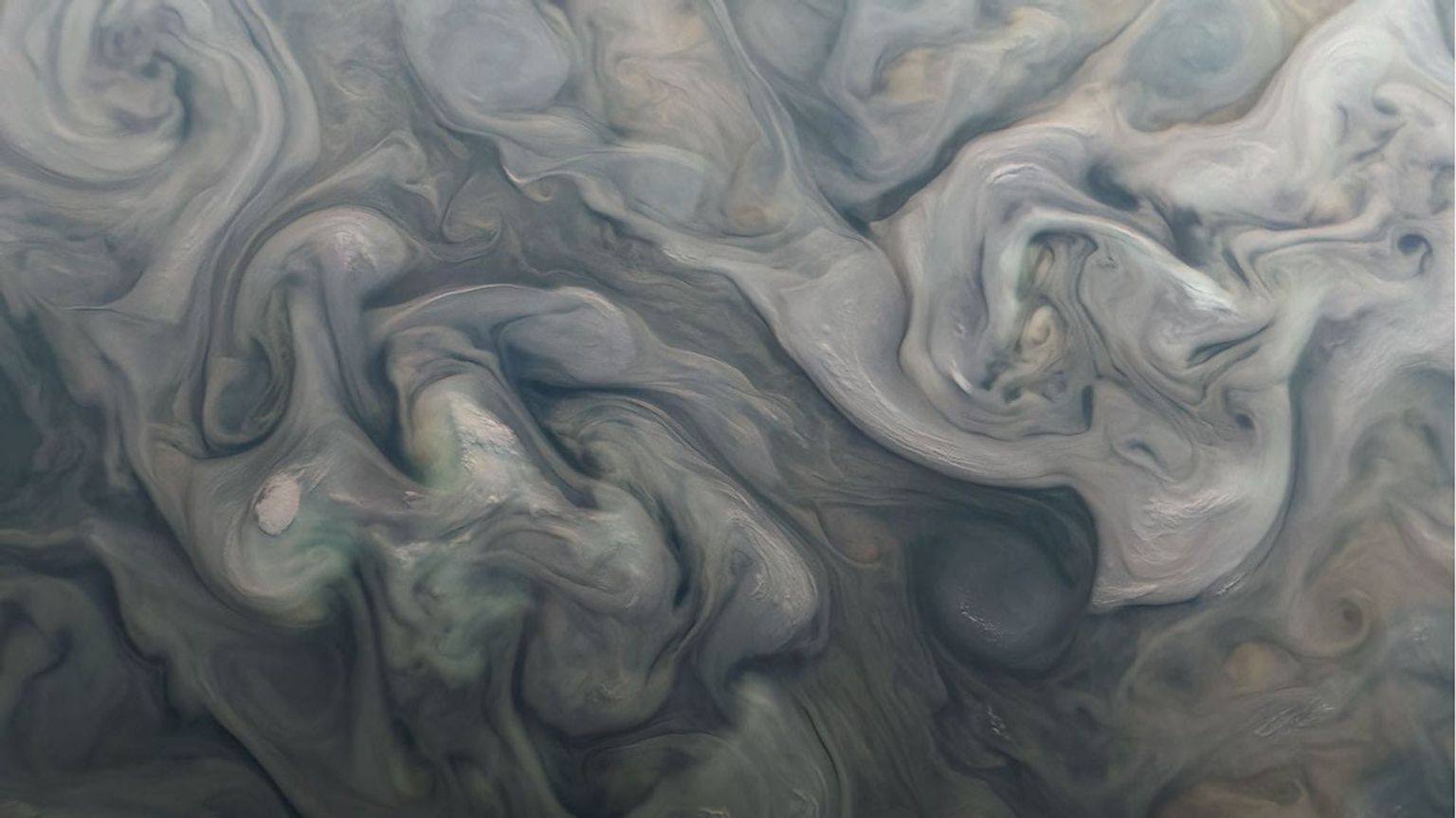
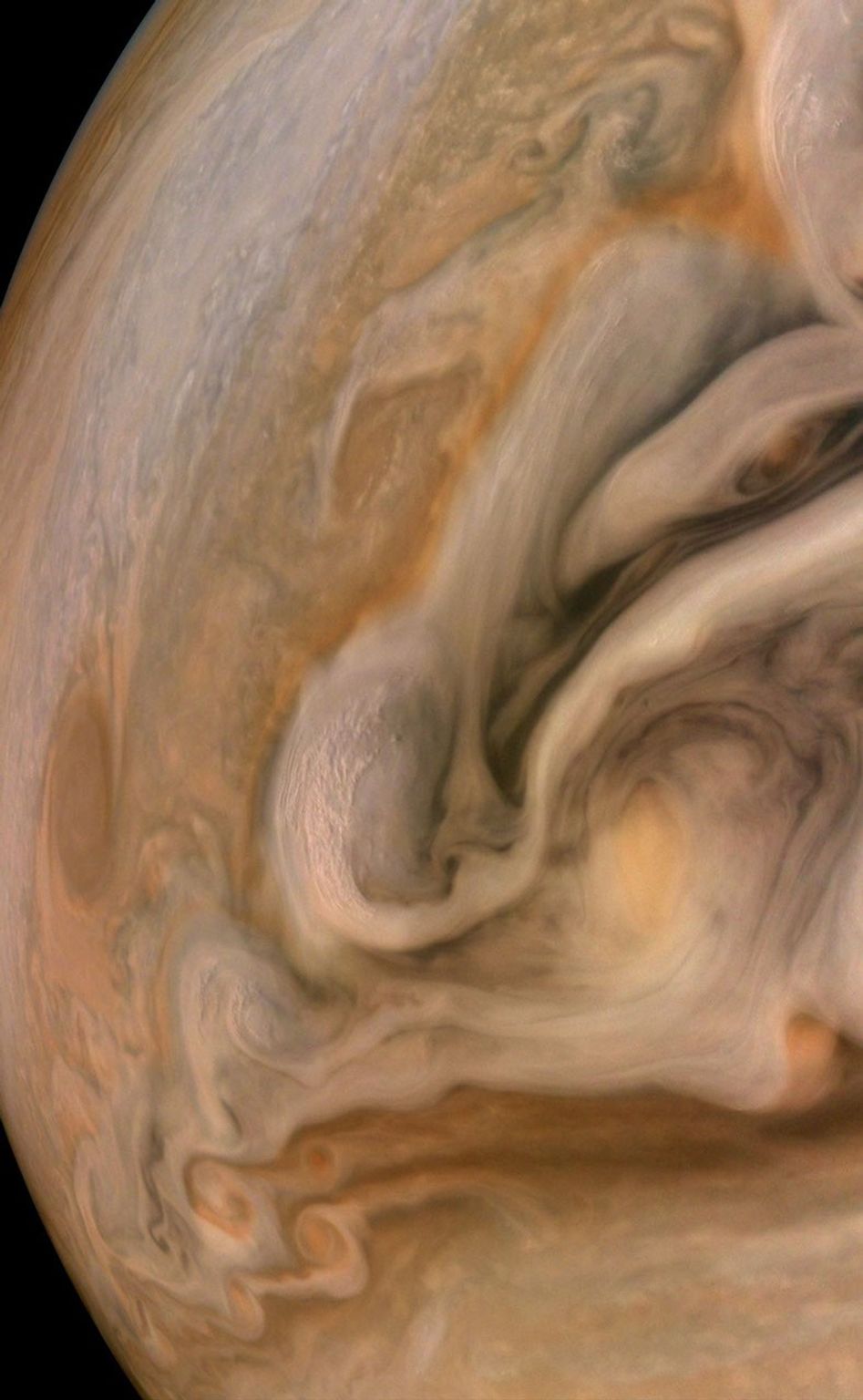
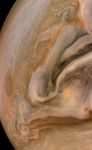
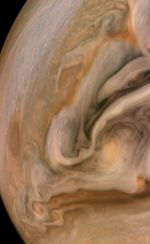
Jupiter's zonal winds, going in opposite directions, generate eddies of all sizes that manifest in storms swirling in the atmosphere. At the highest level "pop-up clouds," the small, bright clouds that amass at the edge of one of these fronts, are thought to be parcels of air pushed up to the altitude at which ammonia ice condenses. Although they appear to be small, these bright storms may be 16 to 31 miles (25 to 50 kilometers) across.
This image captures Jupiter's North Temperate Belt. It was taken Oct. 16, 2021, at 10:11 a.m. PDT (1:11 p.m. EDT) as NASA's Juno spacecraft performed its 37th close flyby of Jupiter. At the time the image was taken, the spacecraft was about 2,454 miles (3,950 kilometers) from the planet's cloud tops at a latitude of 38.57 degrees. The original product is available here: https://www.missionjuno.swri.edu/junocam/processing?id=11484.
JunoCam's raw images are available for the public to peruse and process into image products at https://missionjuno.swri.edu/junocam/processing. More information about NASA citizen science can be found at https://science.nasa.gov/citizenscience and https://www.nasa.gov/solve/opportunities/citizenscience.
More information about Juno is at https://www.nasa.gov/juno and https://missionjuno.swri.edu.