




























Description
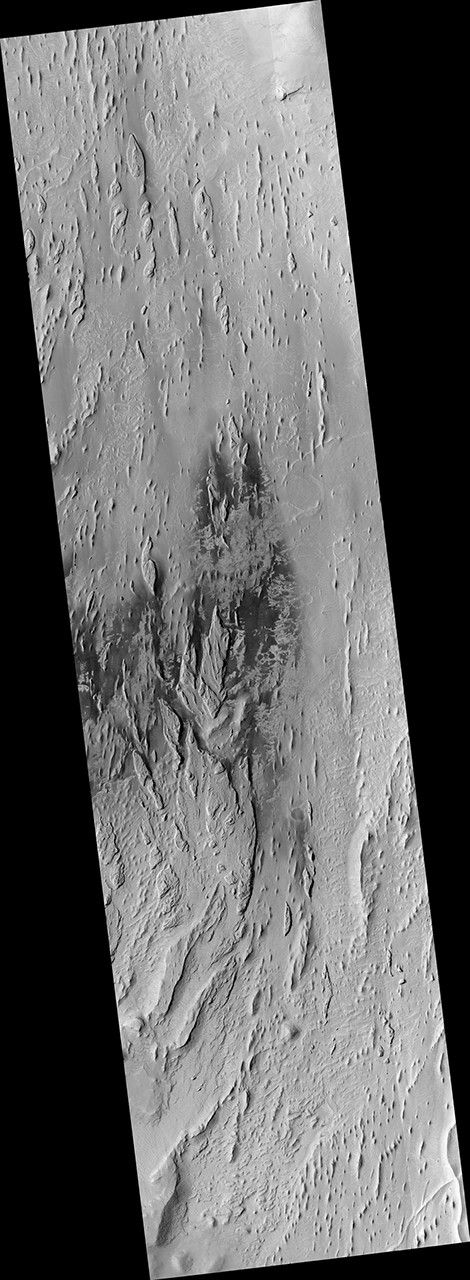
Map Projected Browse Image
Click on the image for larger version
This beautifully contrasted infrared-color image shows an area approximately 600 by 900 meters. This is a close-up of the western Medusa Fossae formation where we can see dust-covered rocky, bedrock surfaces (beige) and a bluish-tinted sand sheet that transitions into several dunes.
The bluish sand is thought to originate from the bedrock that lies beneath the dust. If true, this has implications for the composition of the formation, which has been highly debated over the years.
The University of Arizona, Tucson, operates HiRISE, which was built by Ball Aerospace & Technologies Corp., Boulder, Colo. NASA's Jet Propulsion Laboratory, a division of the California Institute of Technology in Pasadena, manages the Mars Reconnaissance Orbiter Project for NASA's Science Mission Directorate, Washington.