





















About RPS
Choosing between solar and nuclear power for a space mission has everything to do with where a spacecraft needs to operate and what the mission must accomplish when it gets there.
What Is Radioisotope Power and Why Does NASA Use It?
Power is the one thing a spacecraft cannot do without. Without the technology to reliably power space missions, our knowledge of the solar system would be only a fraction of what it is today. It might sound surprising, but there are currently only two practical options for providing a long-term source of electrical power for exploring space: the light of the sun or heat from a nuclear source such as a radioisotope.
Solar power is an excellent way to generate electricity for most Earth-orbiting spacecraft, and for certain missions to the Moon and places beyond that offer sufficient sunlight and natural heat. However, many potential NASA missions given a high priority by the scientific community would visit some of the harshest, darkest, coldest locations in the solar system, and these missions could be impossible or extremely limited without the use of nuclear power.
RPS — short for radioisotope power systems — are a type of nuclear energy technology that uses heat to produce electric power for operating spacecraft systems and science instruments. That heat is produced by the natural radioactive decay of plutonium-238.
This technology has been a game-changer in our exploration capabilities.

Nicola Fox
Associate Administrator of NASA's Science Mission Directorate
Choosing between solar and nuclear power for a space mission has everything to do with where a spacecraft needs to operate and what the mission must accomplish when it gets there. Radioisotope power is used only when it will enable or significantly enhance the ability of a mission to meet its science goals.
A Critical Technology
RPS offer several important benefits. They are compact, rugged and provide reliable power in harsh environments where solar arrays are not practical. For example, Saturn is about ten times farther from the sun than Earth, and the available sunlight there is only one hundredth, or one percent, of what we receive at Earth. At Pluto, the available sunlight is only six hundredths of a percent of the amount available at Earth. The ability to utilize radioisotope power is important for missions to these and other incredibly distant destinations, as the size of solar arrays required at such distances is impractically large with current technology.
RPS offer the key advantage of operating continuously over long-duration space missions, largely independent of changes in sunlight, temperature, charged particle radiation, or surface conditions like thick clouds or dust.
In addition, some of the excess heat produced by some RPS can be used to enable spacecraft instruments and on-board systems to continue to operate effectively in extremely cold environments.
A 60-year Legacy
RPS are not a new part of the U.S. space program. They have made historic contributions to the United States' exploration of space for more than 60 years. NASA is directed by its original 1958 charter and by ongoing guidance from the White House and Congress to explore space for the peaceful benefit of all humankind. And RPS have enabled NASA's exploration of the solar system since the Apollo era of the late 1960s.
The missions that carry out this exploration are prioritized by a vigorous strategic planning process that incorporates the best ideas from internal and external scientific experts. These experts have consistently identified RPS as a fundamentally important technology.
An Evolving Technology
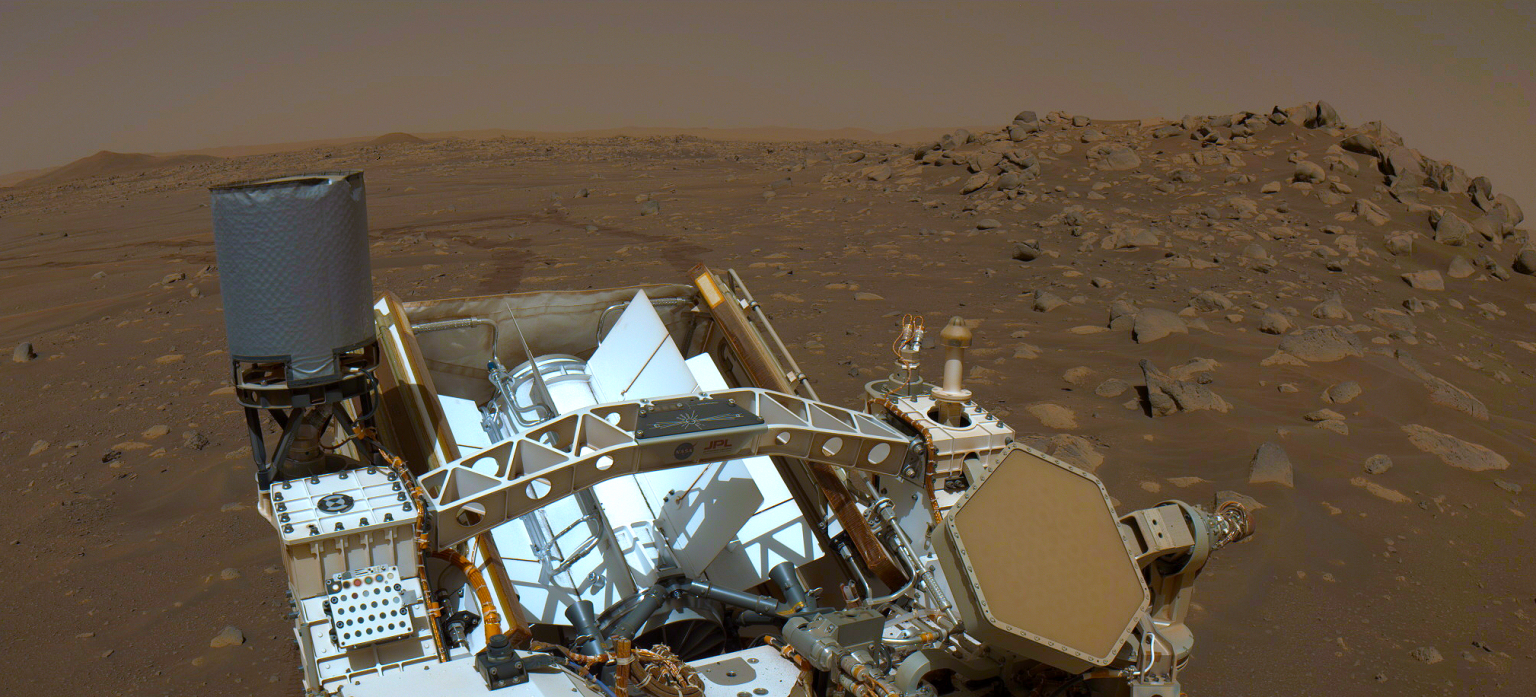
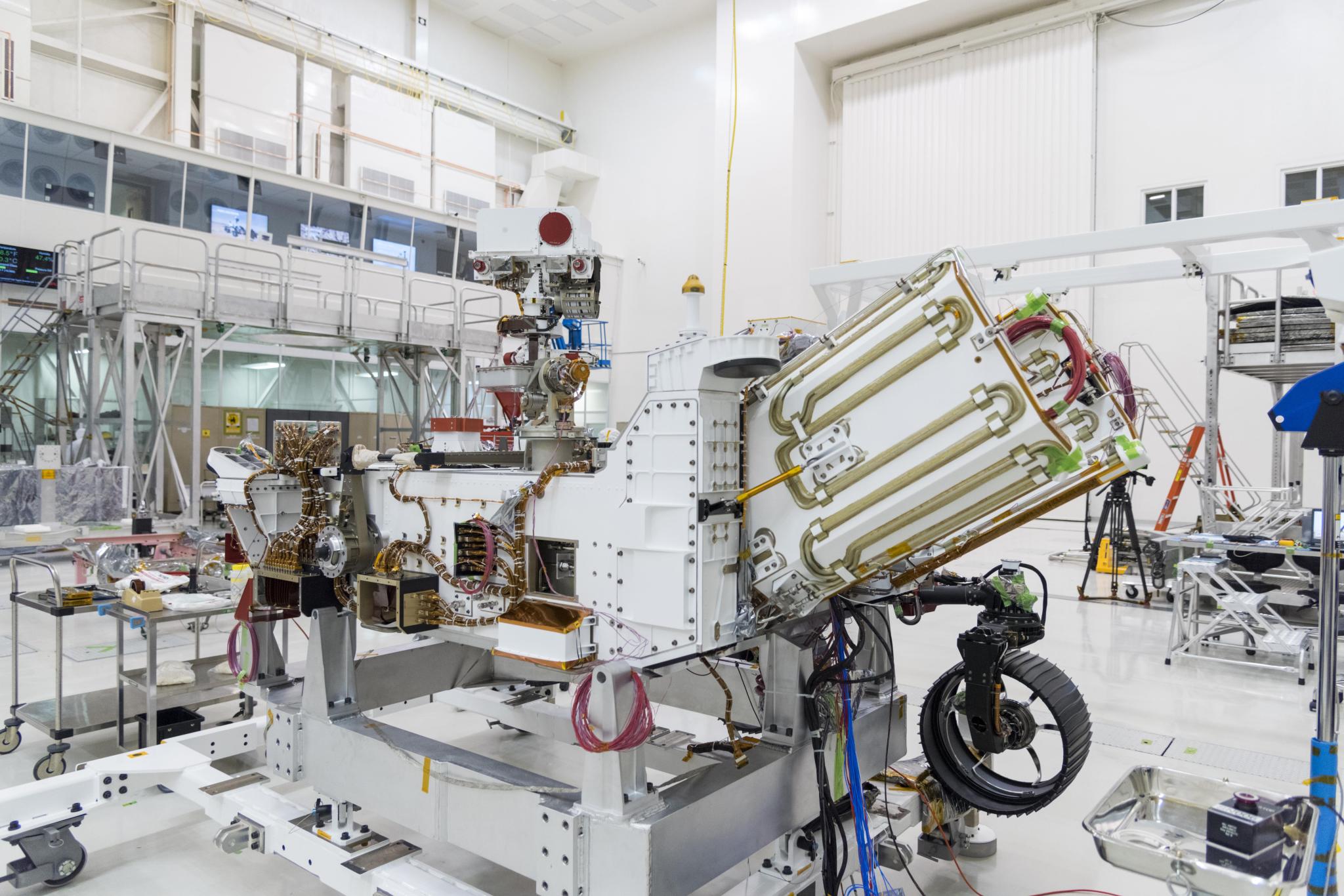
The latest RPS to be qualified for flight, called the Multi-Mission Radioisotope Thermoelectric Generator (MMRTG), provides both power and heat for the Perseverance and Curiosity rovers on Mars.
In 2011 the National Academy of Sciences completed a major study of the priorities for the next decade of U.S. exploration of the solar system, and several of the highest-ranked missions may require the use of an RPS.
As part of an ongoing partnership with the U.S. Department of Energy, NASA is conducting a mission-driven RPS program — a technology development effort that is strategically investing in nuclear power technologies that would maintain NASA's current space science capabilities and enable future space exploration missions.
NASA works in partnership with the Department of Energy to maintain the capability to produce the MMRTGs and to develop higher-efficiency energy conversion technologies, such as more efficient thermoelectric converters as well as Stirling converter technology.
In the future, RPS could continue to support missions to some of the most extreme environments in the solar system, probing the secrets of Jupiter's ocean moon Europa, floating in the liquid lakes of Saturn's moon Titan or touring the rings and moons of the ice giant planet Uranus. With this vital technological capability, the possibilities for exploration and discovery are limited only by our imaginations.