















Iceland: "Team Gas"
You're exploring a collection of snapshots from the Goddard Instrument Field Team's 2025 expedition in Southwest Iceland.
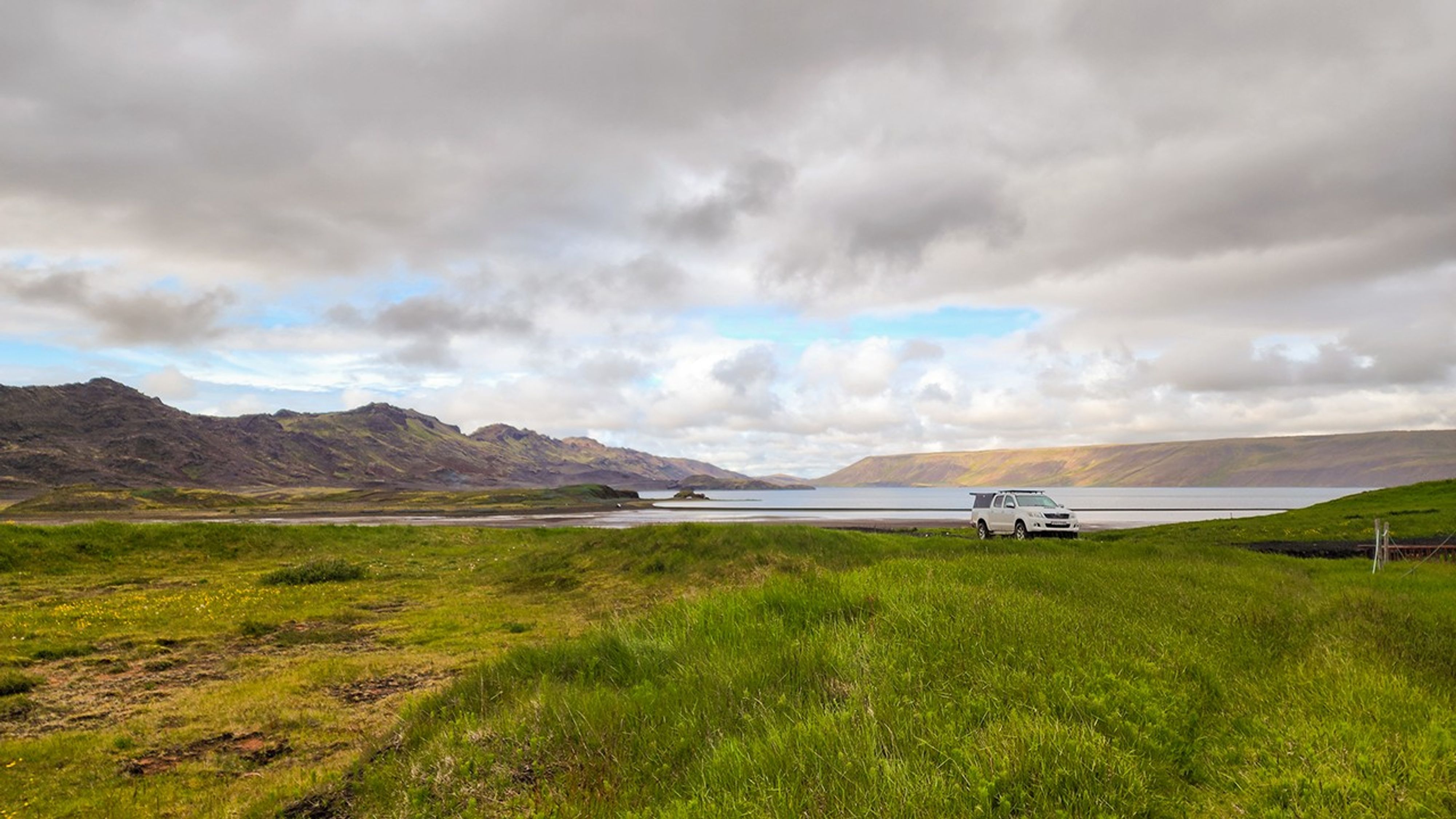
"Team Gas" | Lake Kleifarvatn, Lake Grænavatn
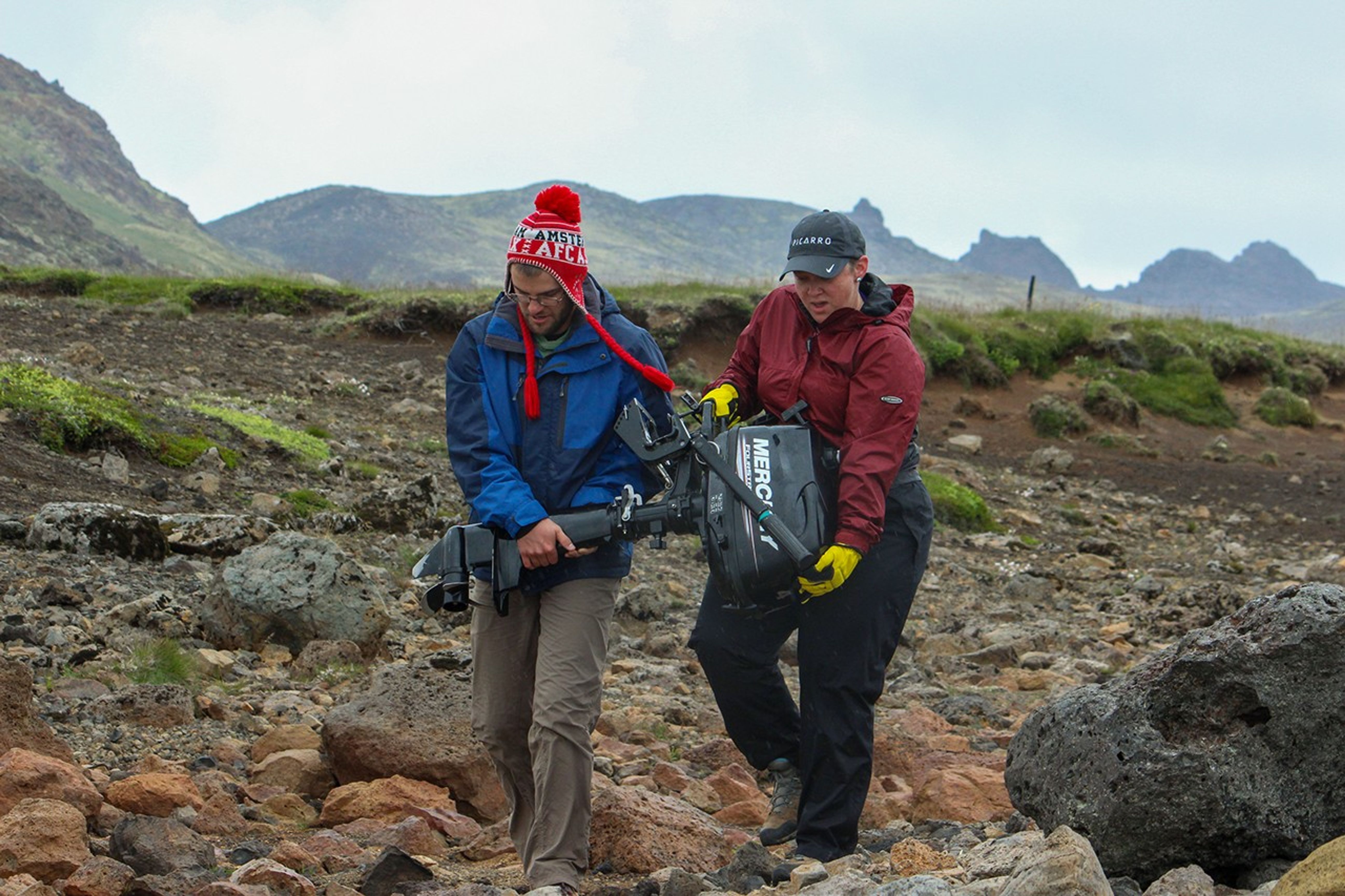
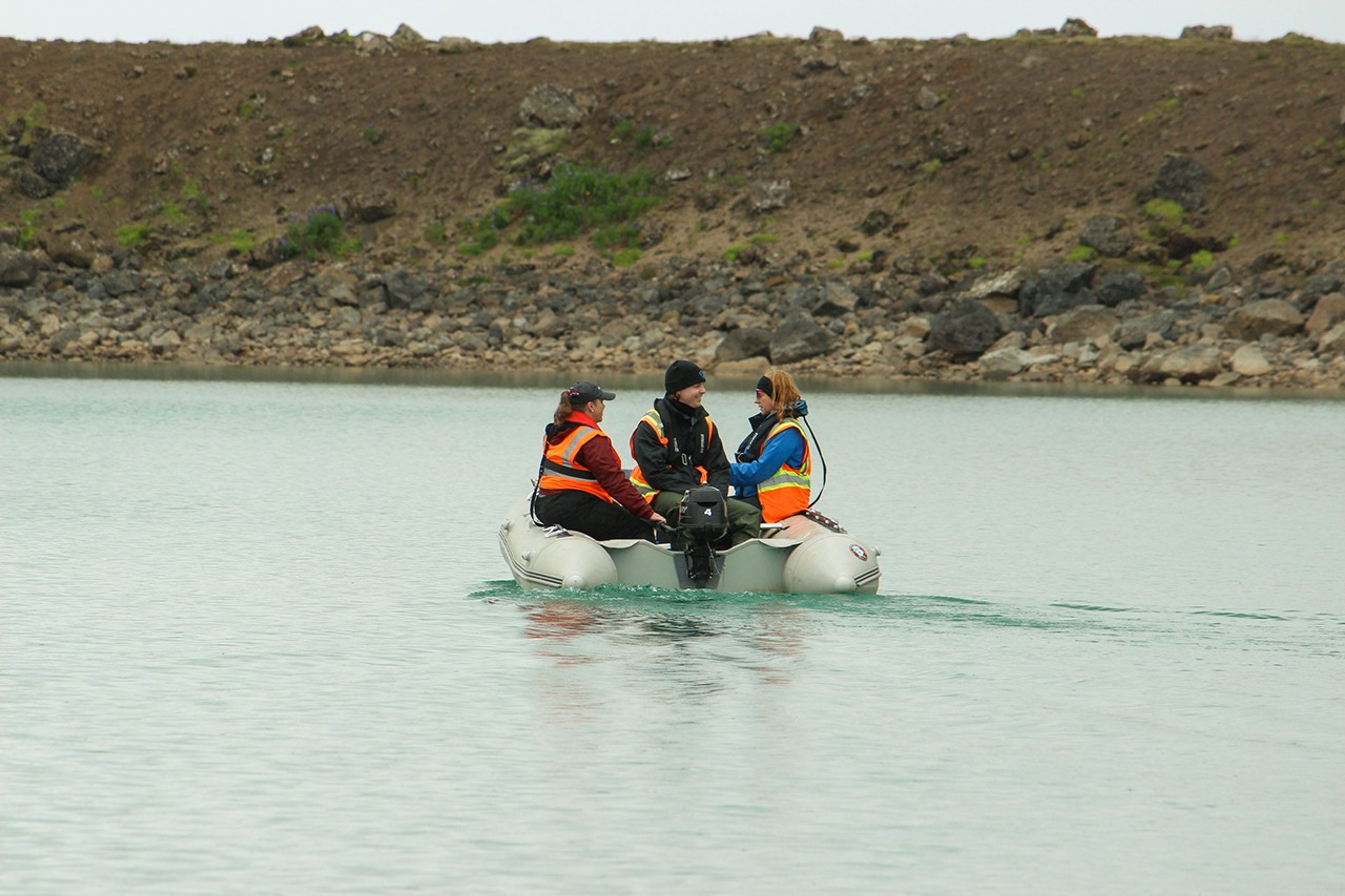
The Gas team's work began with one large, inflatable, logistical challenge: carrying a very heavy boat, motor and all, to the water’s edge. Principal Investigator Jen Stern and team member Bethany Theiling scouted potential launch points at Lake Kleifarvatn, only to find that Iceland’s weather had its own plans. Rain spattered the boat, and wind rippled the lake surface, making every step of the setup more difficult. Even getting the motor started proved tricky, but with patience (and a little persistence), the boat was soon afloat.
Once on the water, the team’s focus turned to deploying their probe for the first time. Like any new scientific instrument, it had a few quirks, but trial and error quickly smoothed out the process. On the lake, teamwork was key. The Gas team coordinated with the Carb team, offering extra support and even sharing samples to maximize the science. With their forces combined, the Gas team achieved their stretch goal of launching on Lake Grænavatn. This lake is a remnant of a maar-type volcanic explosion, which leaves behind a crater and is typically filled and transformed into a lake. As its name hints, the water at Grænavatn is green, a result of its high sulfur content.
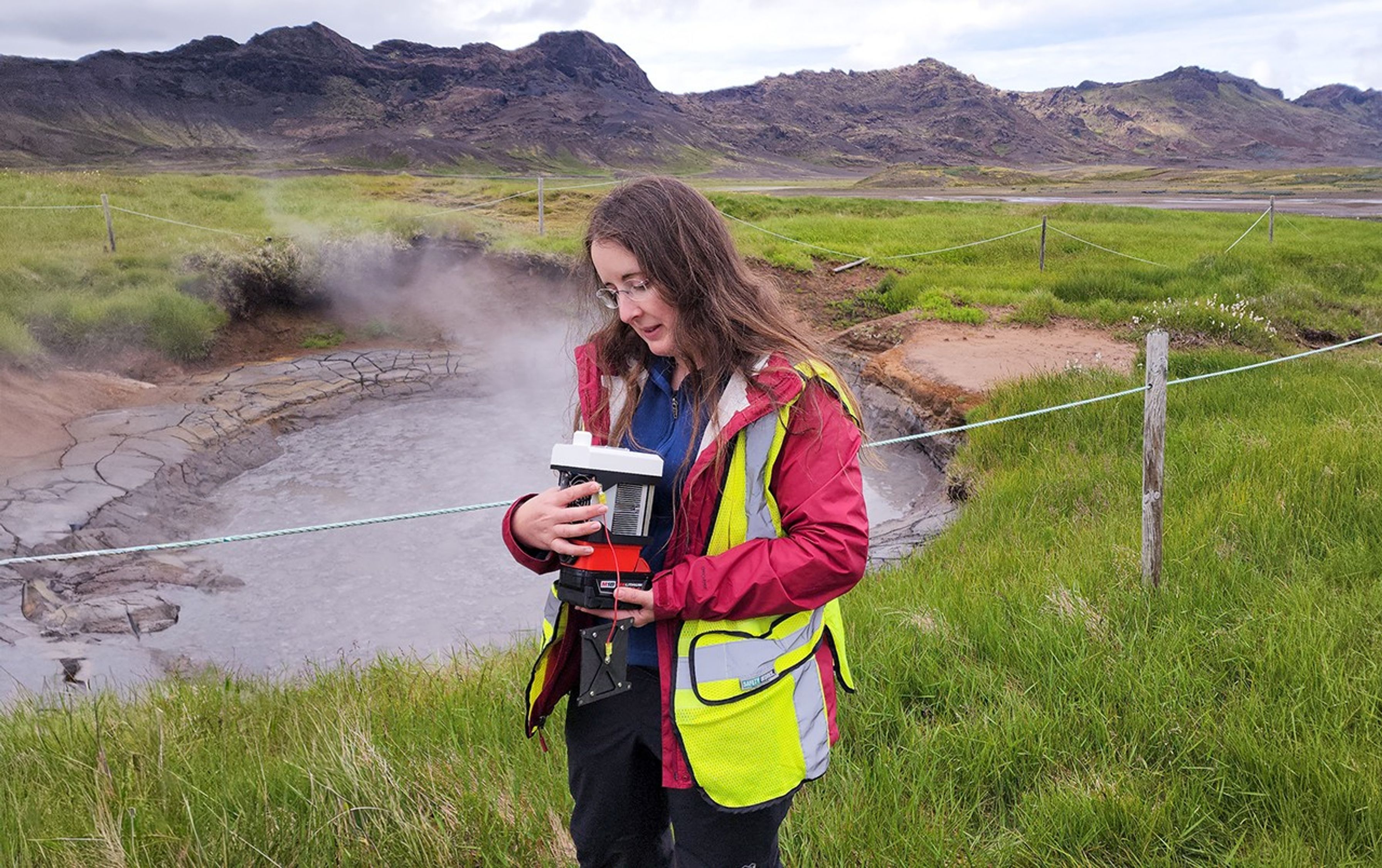
The Gas team also collected gas samples at geothermal sites, such as Seltún and Engjahver, where sampling involved drawing open air into a syringe from multiple vents and trusting that there was enough of the desired gas in the mix. Luckily, the tests require only tiny amounts to yield valuable results.
Every successful sample brings the team closer to understanding how volcanic environments cycle carbon. Carbon cycling is the movement of carbon atoms through Earth’s atmosphere, oceans, land, and living organisms. This cycle is essential to understanding ocean worlds because it provides the basic building blocks for life and helps to regulate chemical conditions, both key factors for habitability. These insights could one day inform studies of how carbon might travel through potentially habitable zones on ocean worlds, such as Jupiter’s moon Europa or Saturn’s moon Enceladus.
Yesenia Arroyo
NASA's Goddard Space Flight Center