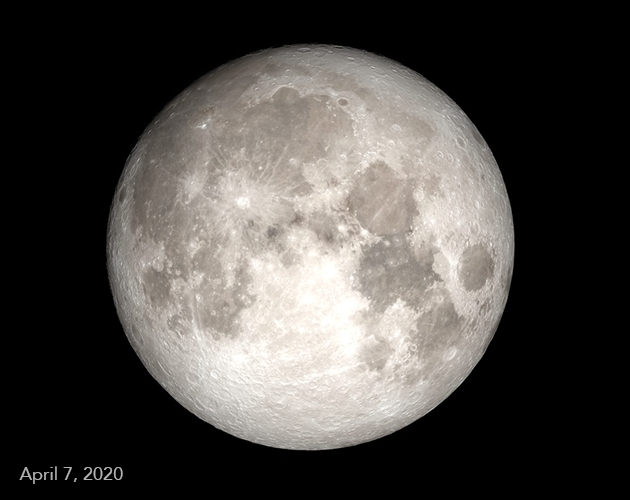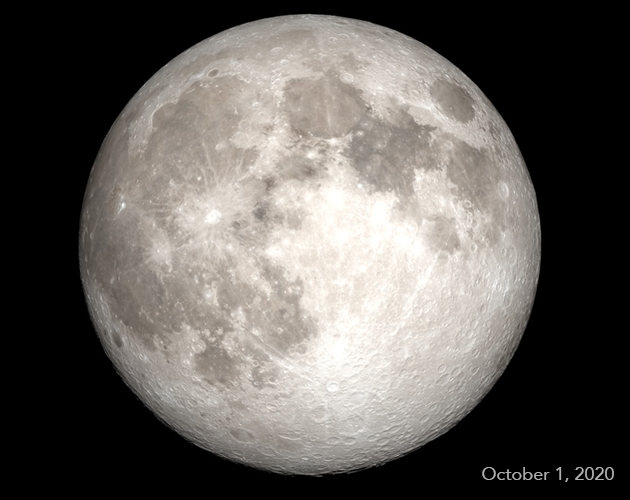














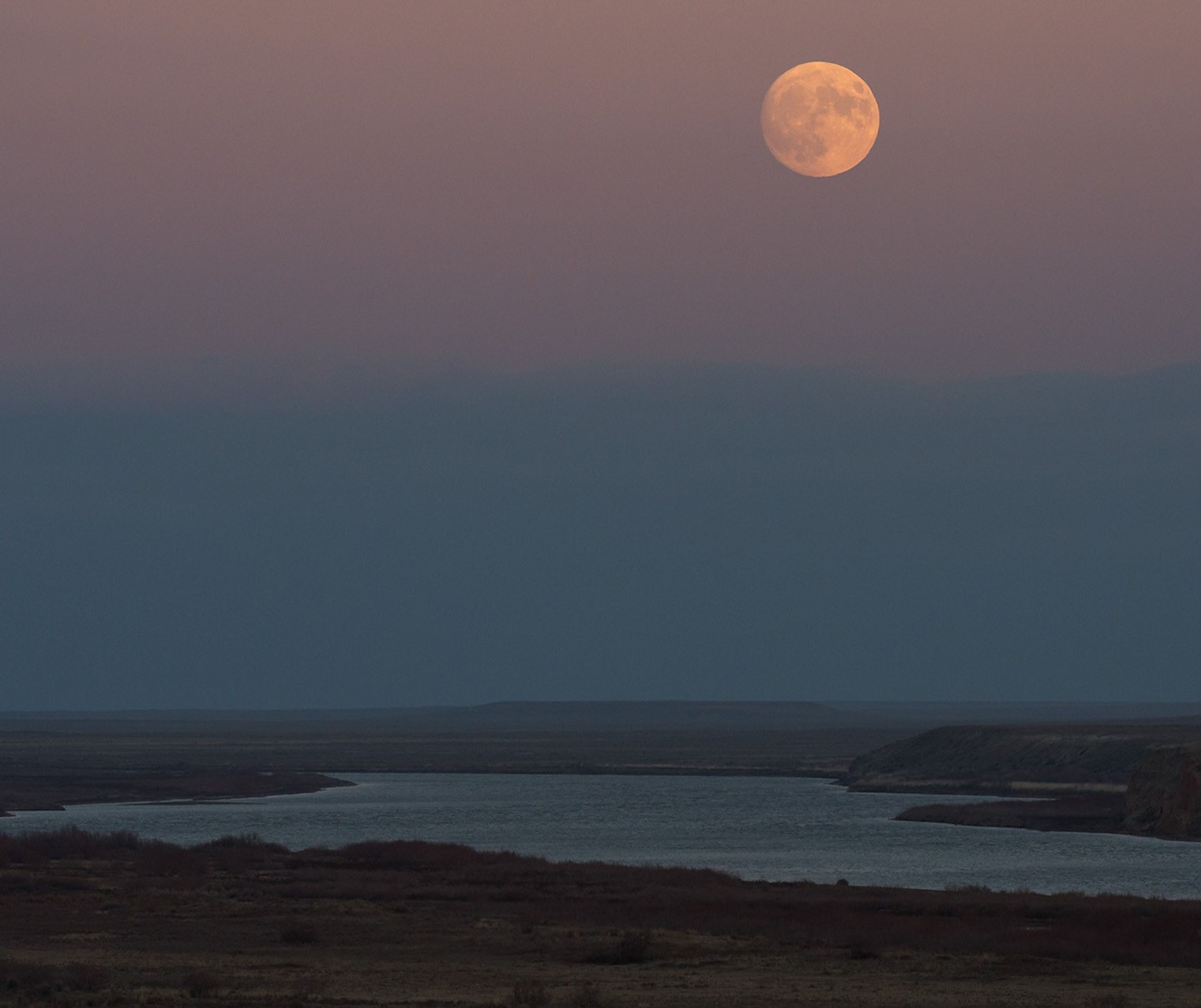
A trifecta of labels is being applied to the Moon of Aug. 19, 2024. It’s a full moon, a supermoon, and finally a blue moon. You may hear it referred to as a super blue moon or blue supermoon as a result. It sounds exciting, but what does that really mean? We’ve got you covered.
What is a supermoon?
The Moon travels around our planet in an elliptical orbit, or an elongated circle, with Earth closer to one side of the ellipse. Each month, the Moon passes through the point closest to Earth (perigee) and the point farthest from Earth (apogee). When the Moon is at or near its closest point to Earth at the same time as it is full, it is called a “supermoon.” During this event, because the full moon is a little bit closer to us than usual, it appears especially large and bright in the sky.
Because the Moon’s orbit wobbles and differs depending on where the Sun and Earth are in their orbits, the exact distance of these closest and furthest points varies. But the Moon can look up to 14 percent bigger at perigee than apogee.
OK, so what is a blue moon?
A monthly blue moon occurs when we see the full moon twice in a single month. The Moon's cycle is 29.5 days, so just a bit shorter than the average length of a calendar month. Eventually that gap results in a full moon happening at the beginning of a month with enough days still remaining for another full cycle ― so a second full moon in the same month. In other words, a full moon that happens on the 1st or 2nd of a month will probably be followed by a second full moon on the 30th or 31st. This happens every two to three years.
A seasonal blue moon occurs when there are four full moons in a single season (spring, summer, fall and winter) instead of the usual three. The third moon in this lineup is a blue moon. This Aug. 19 moon is a seasonal blue moon.
Will the Moon be blue?
No, that’s just the term for two full moons in a month, or the third full moon in a season with four.
Is the Moon ever blue?
On rare occasions, tiny particles in the air ― typically of smoke or dust ― can scatter away red wavelengths of light, causing the Moon to appear blue.
Will this Moon be bigger and more “super?”
You probably won’t notice a big difference in size. When the Moon is closest to Earth (a “supermoon”), it can look up to 14 percent bigger than when it’s farthest from Earth. This is similar to the size difference between a quarter and a nickel. Because the Moon will be close to us in its orbit, it will appear a bit brighter than usual.