























Mooring Deployment
By Eric Lindstrom

The central mooring at the SPURS site is a critical piece of gear. It will provide us with a time series of upper ocean properties at one location over the entire year. We’ll build the other SPURS measurements around this spot on this and future voyages. We’ll “fly” the gliders in patterns centered on this location.
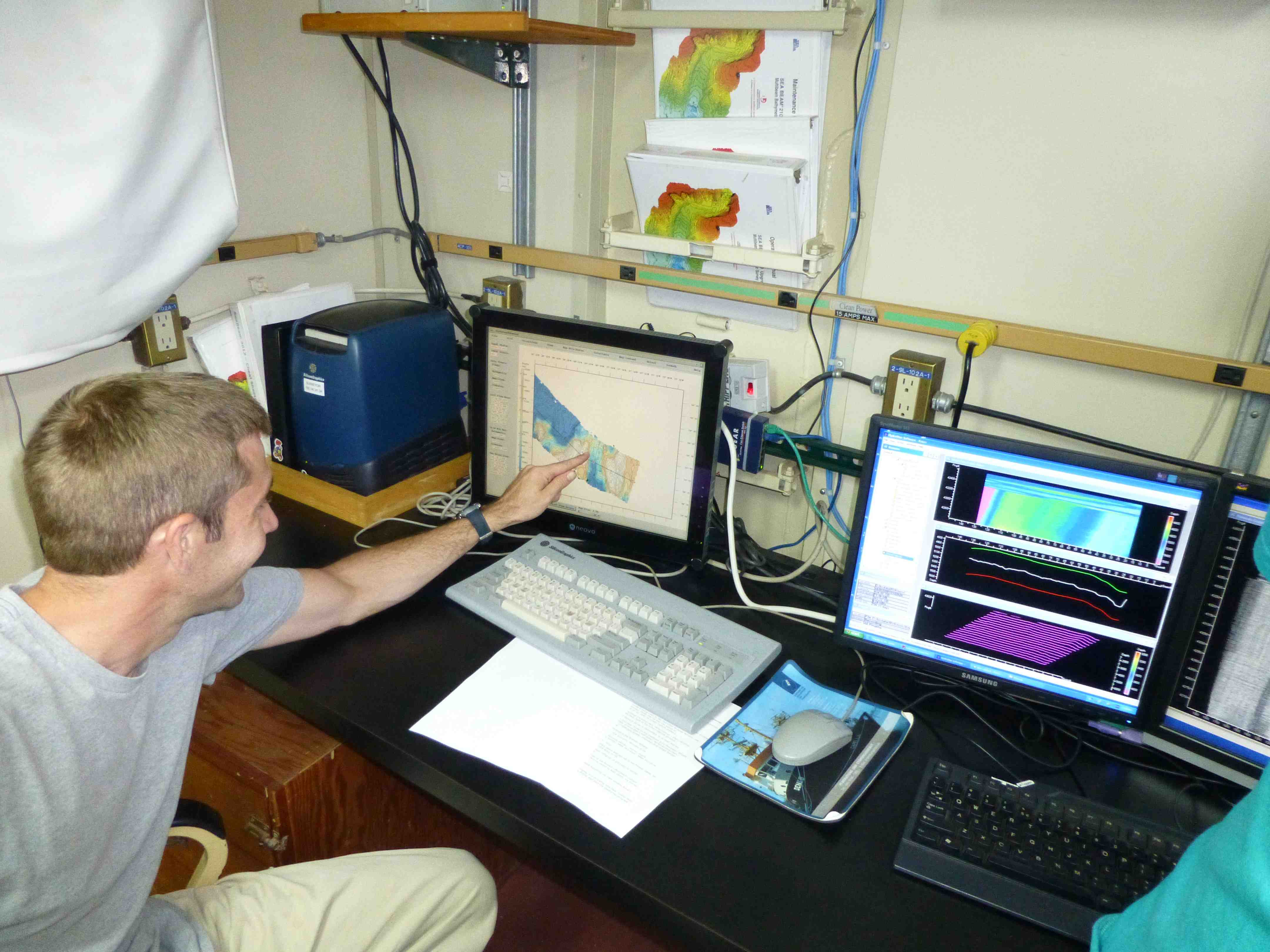
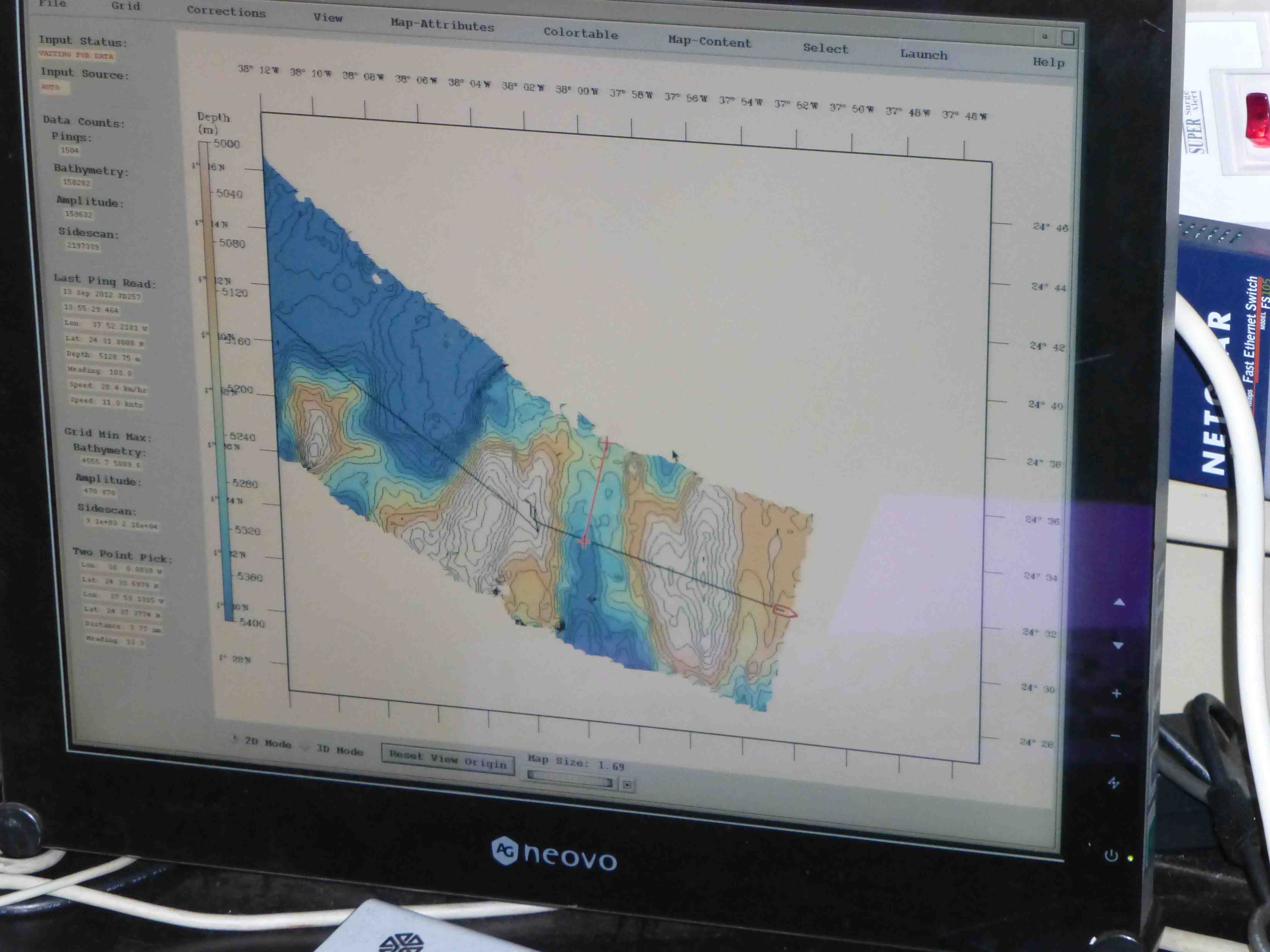
Our first order of business is to survey the bottom depth in the vicinity of the proposed mooring location (near 25N, 38W). The water depth we are aiming for is near 17,390 feet (5,300 meters).
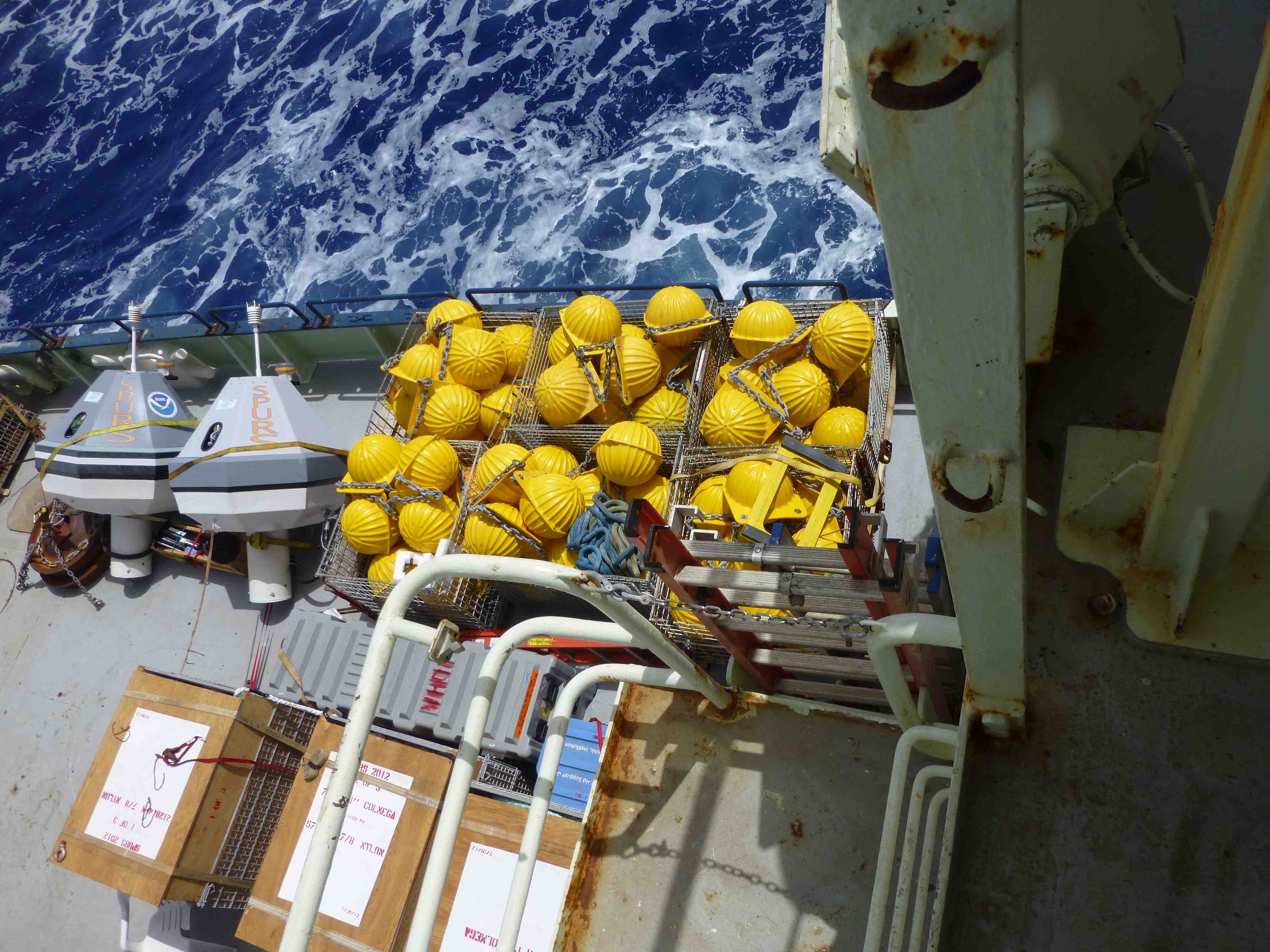
The mooring is anchored to the bottom (with a 10,000 pound anchor). A large, heavily-instrumented buoy at the surface holds the entire string of instruments below. Just above the anchor is an acoustic release mechanism that can disengage the mooring from the anchor on command from the ship next year. Above the release are 80 glass floats (inside hardhats) that serve to float the bottom of the mooring to the surface after release.
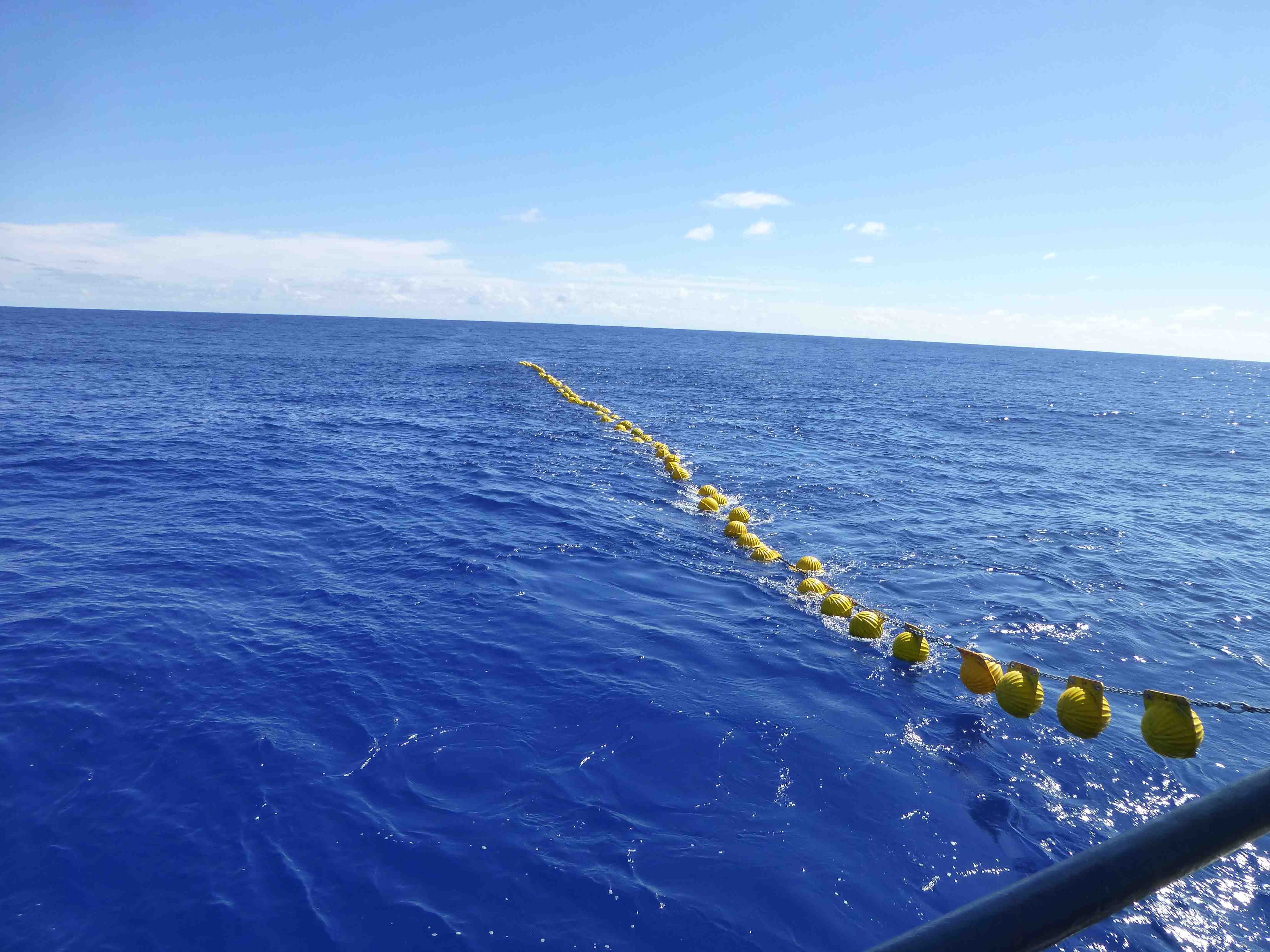
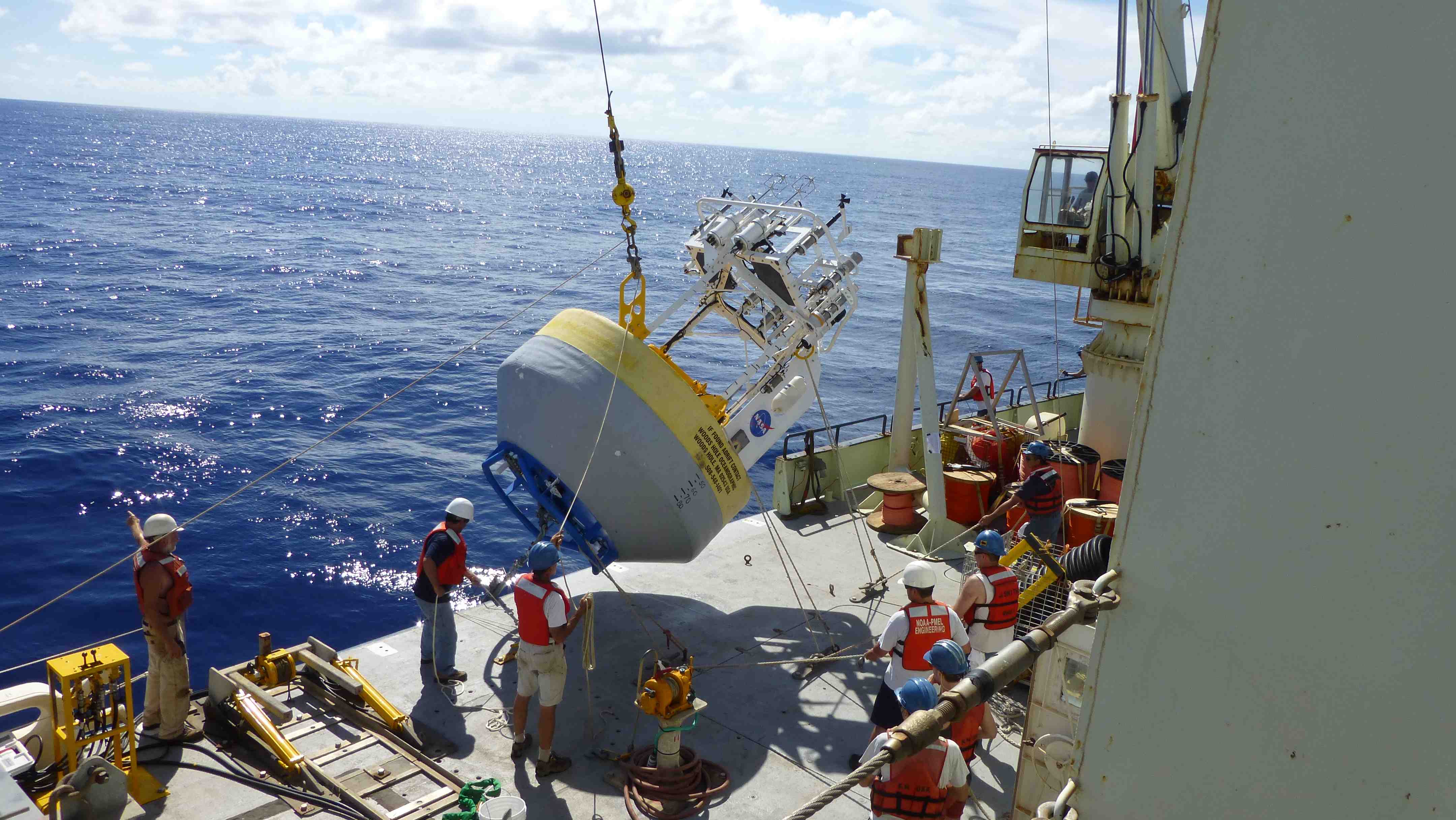
It’s a process of many hours to deploy the mooring. The ship will position itself some miles from the proposed anchoring site (depending on wind and currents) and start steaming toward the spot very slowly. The length of mooring and gear are then deployed over the stern starting with the top of the mooring, the surface buoy. After that various current meters, salinity and temperature sensors are attached in turn with various lengths of chain and shackles. As they are joined, they are in turn lowered over the stern and the surface buoy begins to distance itself in the ship’s wake. About 8 hours after the start of the deployment, the 16,000 feet of mooring is laid out on the surface behind the ship, and all that’s left on deck is the anchor.
At this point, location is everything. If timed correctly, the ship will be some distance past the location mooring intended to land on the bottom (say 10 percent of the water depth). If so, it is time to drop the anchor. As it falls, the length of mooring will drag it back toward the spot it will finally come to rest. We will see the surface buoy begin to rush swiftly back toward the ship (hopefully finishing up at its intended target location).
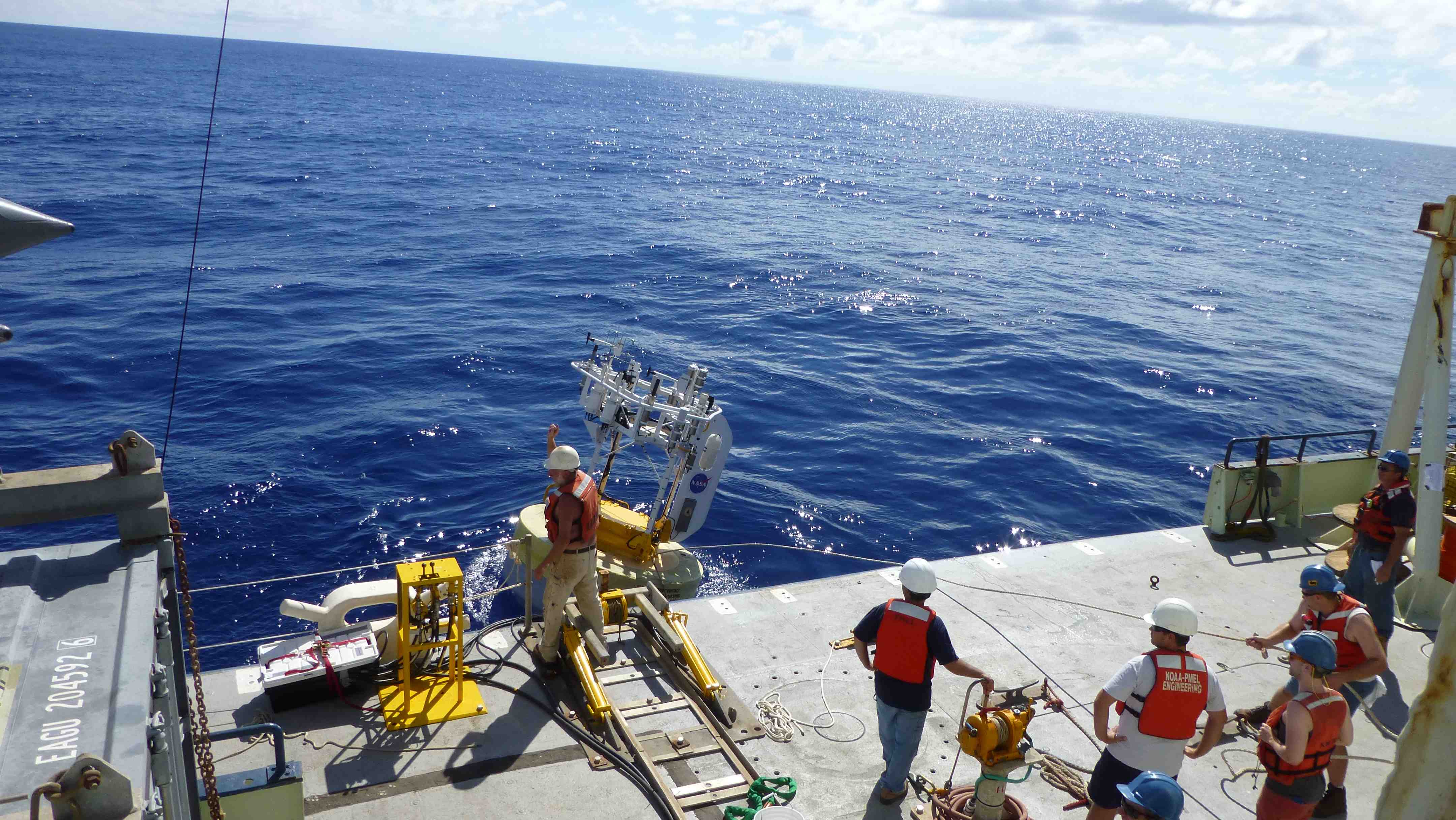
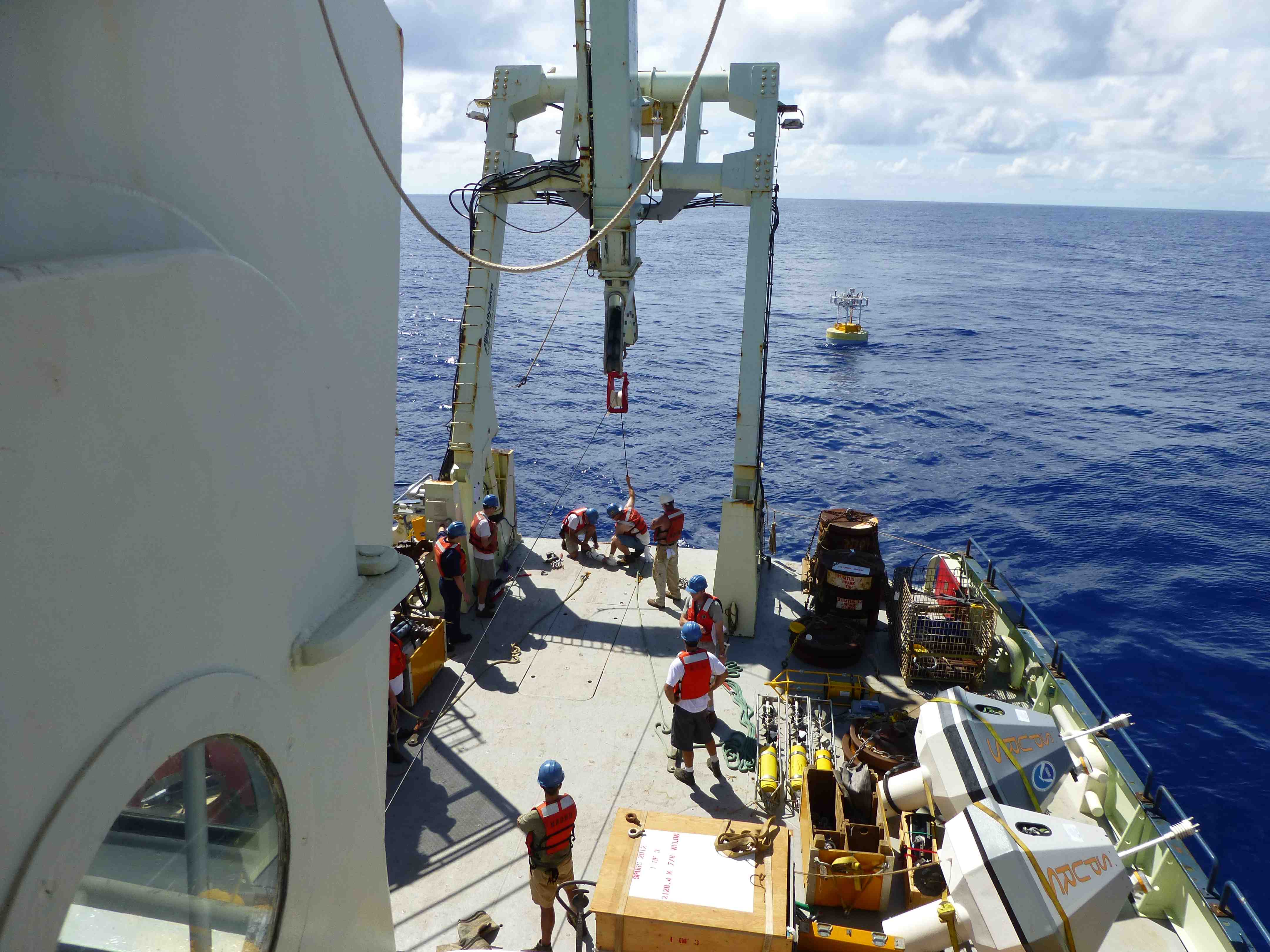
Such work has been done thousands of times over the decades, but every deployment presents its own challenges of ocean bottom topography, wind, currents, and equipment. The length of the mooring needs to precisely cut for the water depth in which it is anchored. If it is too long, the mooring swings around too much at the surface. If it is too short, the mooring may be under too much stress or snap.
