









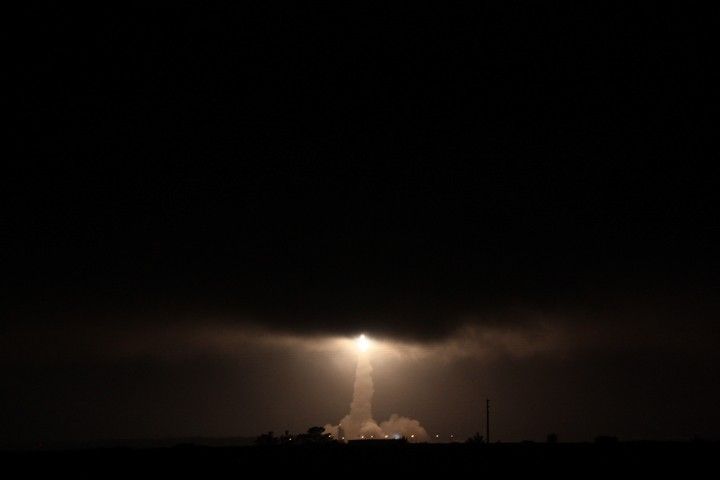

In the pre-dawn hours of January 31, 2015, a Delta II rocket lifted off from Vandenberg Air Force Base and carried NASA’s Soil Moisture Active Passive (SMAP) satellite into orbit. Instruments on the satellite will make global measurements of soil moisture—an important component of Earth's water, carbon, and energy cycles.
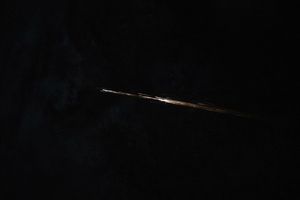
The photographs above were taken just after liftoff at 6:22 a.m. Pacific Standard Time. The top photograph shows the Delta II blasting away from Vandenberg's Space Launch Complex 2; the rocket was visible for just a few seconds before disappearing into a bank of low clouds. NASA photographer Bill Ingalls captured the second photograph, a long exposure that shows the arc traveled by the rocket after emerging from the clouds.
"We had a terrific ride into space this morning aboard the Delta II rocket," said SMAP project manager Kent Kellogg, who spoke at a post-launch press briefing. "This is a fantastic start to the Soil Moisture Active Passive system."
After launch, the satellite will be placed in a sun-synchronous polar orbit, explained payload system engineer Mike Spenser at a SMAP science forum on January 28. The orbit is a common choice for missions that provide global maps of the planet.
The global maps from SMAP—which will be completed every two to three days—will show moisture in the top few inches of the soil. The information is expected to improve weather forecasts and seasonal climate projections, and to provide data for a wide range of applications already in development.
"SMAP is going to make a big difference in the way people around the world make decisions," said Susan Moran who chairs the SMAP applications working group.
SMAP is NASA's fifth of five Earth science missions to launch within the span of 12 months.
References & Resources
- NASA Jet Propulsion Laboratory (2015) Soil Moisture Active Passive. Accessed January 31, 2015.
- NASA Blogs (2015) Soil Moisture Active Passive (SMAP). Accessed January 31, 2015.
- NASA (2014, January 22) Overview: A Big Year for NASA Earth Science. Accessed January 31, 2015.
Bottom image by Bill Ingalls. Top image and caption by Kathryn Hansen.