














SAGE III/ISS Level 2 Aerosol Auxiliary Product Release Announcement
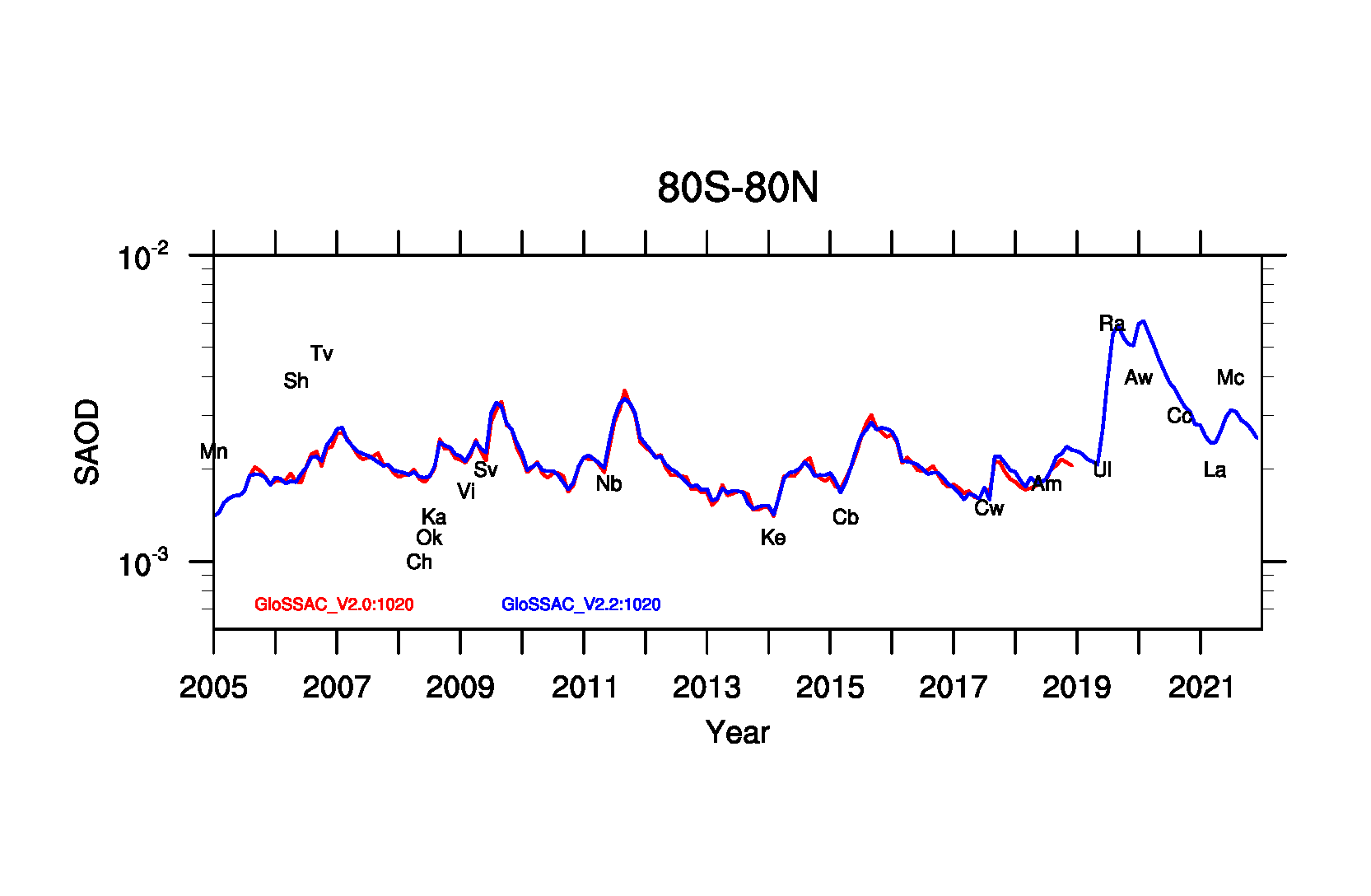
Stratospheric aerosol plays an important role in chemistry and climate. Space-based observations of their optical properties have been key elements of the study of the effects of major volcanic and extreme fire events. To aid users of SAGE III/ISS Level 2 aerosol data, the mission is releasing a Level 2 aerosol auxiliary product that identifies cloud-free observations using the method of Kovilakam et al. 2023 (https://doi.org/10.5194/amt-16-2709-2023). The algorithm is similar to that developed for the Global Space-based Stratospheric Aerosol Climatology (GloSSAC), in which SAGE III/ISS data plays a crucial role alongside other space-based measurements (asdc.larc.nasa.gov/project/GloSSAC). The new Level 2 aerosol auxiliary product is released at the same cadence as the L2 solar products. For general ease of use, the results are grouped into monthly netcdf file.
Information about these new data products can be found at the following ASDC link: https://asdc.larc.nasa.gov/project/SAGE III-ISS
These data products are available from the ASDC via the following options: